Rubio cites India as key US ally in defence of 60-day Russia sanctions waiver
Synopsis
US Secretary of State Marco Rubio openly cited India as an important American ally to justify a 60-day pause on Russia-linked sanctions, acknowledging that New Delhi's dependence on Russian energy — and the impossibility of an overnight pivot — made an immediate enforcement untenable. The remarks mark a rare public convergence of US geopolitical strategy and India's energy calculus, and signal Washington's effort to manage major partners while keeping pressure on Moscow.
Key Takeaways
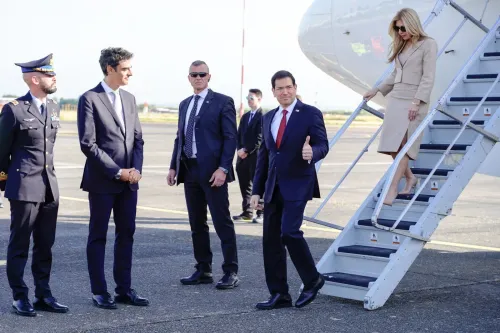
US Secretary of State Marco Rubio defended President Trump 's 60-day waiver on Russia-linked sanctions on 18 October 2026 at Joint Base Andrews .
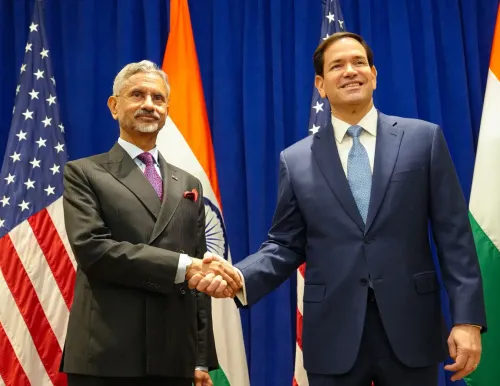
Rubio explicitly named India as 'an important ally and partner of the United States' that has voluntarily diversified its energy portfolio but still relies substantially on Russian supplies.
He warned that enforcing tariffs and sanctions simultaneously could have 'serious consequences for the global economy.' Republican Senator Ted Cruz had criticised the waiver as a mistake benefiting Russian President Vladimir Putin .
Rubio cited overlapping conflicts — in Ukraine , around the Strait of Hormuz , and Houthi attacks on Saudi Arabia — as compounding pressure on global energy markets.
India has imported significant Russian crude since February 2022 , guided by affordability and supply security considerations.
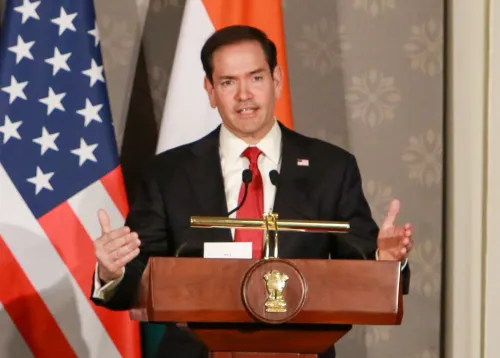
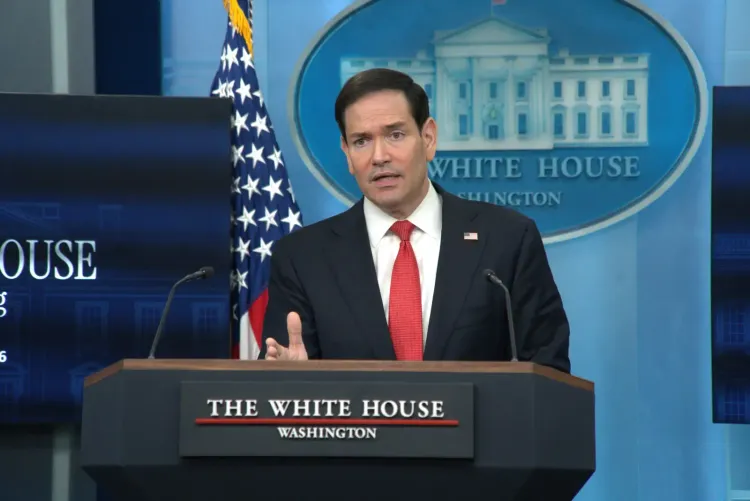
US Secretary of State Marco Rubio on Saturday, 18 October 2026, defended President Donald Trump's decision to grant a 60-day waiver from sanctions linked to Russia, explicitly naming India as an important ally and partner of the United States whose dependence on Russian energy made an abrupt cutoff impractical. Speaking to reporters at Joint Base Andrews, Rubio warned that imposing tariffs and sanctions simultaneously could carry serious consequences for the global economy.
Why India Featured in Rubio's Remarks
Rubio was responding to criticism from Republican Senator Ted Cruz, who described the waiver as a mistake that would benefit Russian President Vladimir Putin. Pushing back, Rubio argued that the sanctions in question were not narrowly targeted at Russia but also encompassed tariffs affecting multiple countries, including India.
'And then you've got countries like India, for example, that have voluntarily diversified their energy portfolio but are still getting a substantial amount of energy from Russia because it's hard to pivot from one day to the next, but they're also an important ally and partner of the United States,' Rubio said.
He added that Trump wanted to use the 60-day period to examine the potential consequences of enforcing both sanctions and tariffs concurrently — a combination he suggested could generate outsized economic disruption.
Global Energy Pressures Behind the Decision
Rubio outlined a range of overlapping geopolitical pressures weighing on international energy markets, citing the conflict involving Iran, disruptions around the Strait of Hormuz, Houthi attacks on Saudi Arabia, and damage to energy infrastructure caused by the Russia-Ukraine war. He argued these developments were compounding global price pressures and complicating any straightforward enforcement of sanctions.
'So yeah, these conflicts around the world are starting to crash into each other, and they're having an impact not just on global oil and diesel prices, but on economics,' Rubio said.
He acknowledged that Americans were already paying higher energy prices, while suggesting that several other nations faced considerably more acute economic strain.
On Russian Diesel and Concessions to Moscow
When asked whether the waiver — along with a separate arrangement involving Russian diesel — amounted to concessions to Putin, Rubio dismissed the framing. 'Well, that diesel was going to be sold one way or the other,' he said, arguing that restricting American access would not prevent Russian diesel from reaching global markets through other channels.
He also noted that the United States had previously issued a 60-day waiver covering Russian oil when shipping through the Strait of Hormuz faced difficulties, framing the current measure as consistent with established practice.
India's Energy Stance and What It Means
India has consistently maintained that its energy procurement decisions are guided by national requirements, affordability, and supply security. Russian crude became a significant component of India's import basket after the disruption of international energy markets that followed Russia's invasion of Ukraine in February 2022. Rubio's remarks represent a notable acknowledgement from Washington that India's position is understood — and factored into — US policy calculations.
This comes amid broader diplomatic signalling from the Trump administration that it is seeking to balance pressure on Moscow with the economic realities facing large energy-importing partners. How the administration resolves that tension once the 60-day window closes will be closely watched in both New Delhi and Washington.
Point of View
Not just adversary behaviour. The tension this creates is real: the harder the US leans on India as a strategic rationale for Russia leniency, the more it legitimises India's continued Russian energy purchases in the eyes of third parties. Senator Cruz's pushback also reveals a fracture within the Republican party on how hard to press Moscow, and the 60-day clock now functions as a political deadline as much as a policy review window. When that window closes, the administration will face the same dilemma — only with less room to punt.
NationPress
18 Oct 2026
Frequently Asked Questions
Why did Marco Rubio cite India in his defence of the Russia sanctions waiver?
Rubio cited India to illustrate that the sanctions in question also intersected with tariffs affecting major US partners, making immediate enforcement economically risky. He noted that India has voluntarily diversified its energy portfolio but still depends substantially on Russian supplies, and that it is 'an important ally and partner of the United States.'
What is the 60-day Russia sanctions waiver granted by President Trump?
It is a temporary pause from sanctions linked to Russia, granted by President Donald Trump to allow the administration time to assess the wider economic consequences of enforcing both sanctions and tariffs simultaneously. Rubio said the waiver provisions reflected an understanding that the government might need time to examine the consequences of the legislation.
Who criticised the waiver and why?
Republican Senator Ted Cruz criticised the waiver, describing it as a mistake that would benefit Russian President Vladimir Putin. Rubio pushed back, arguing that the sanctions affected not just Russia but also tariffs on countries like India, and that an abrupt enforcement could damage the global economy.
Why does India still import Russian energy despite diversification efforts?
India has maintained that its energy procurement is driven by national requirements, affordability, and supply security. Russian crude surged as a share of India's import basket after the disruption of global energy markets following Russia's invasion of Ukraine in February 2022, and Rubio acknowledged that a sudden pivot is not feasible.
What happens when the 60-day waiver period ends?
The Trump administration has indicated it will use the 60-day window to study the full consequences of simultaneously enforcing sanctions and tariffs. No specific post-waiver policy has been announced, and the outcome will likely depend on conditions in global energy markets and ongoing conflicts in Ukraine and the Middle East.