Bank of Korea set to hold rate at 3% this week, hike eyed for November
Synopsis
All six economists surveyed agree: the Bank of Korea will hold its benchmark rate at 3% on Thursday after two consecutive hikes — but a November increase looks near-certain, with inflation stubbornly above target and semiconductor-led growth keeping pressure on the central bank to keep tightening.
Key Takeaways
All six economists surveyed expect the Bank of Korea to hold its benchmark rate at 3 percent at Thursday's policy meeting.
The expected pause follows back-to-back hikes in July and August ; a third consecutive move was seen as too burdensome for households and businesses.
Core inflation eased to 2.8% in September from 3.4% in August, reducing the urgency for an immediate hike.
The Korean won hovering near 1,330 won per US dollar has helped offset higher oil prices.
All six economists forecast a rate hike at the November meeting, citing inflation remaining above the 2% target and strong semiconductor-driven growth.
BOK Governor Shin Hyun-song signalled caution at a parliamentary audit last week while maintaining a hawkish longer-term outlook.
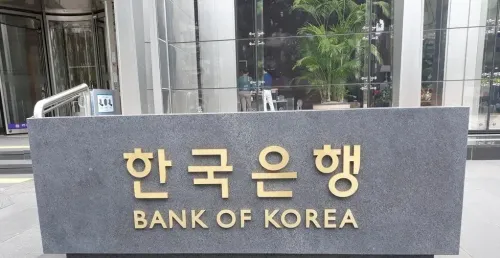
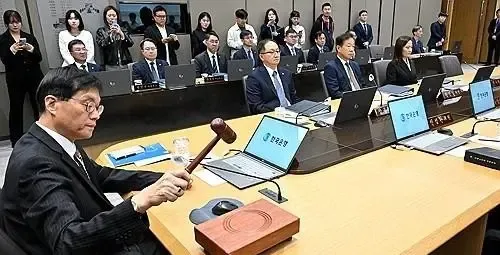
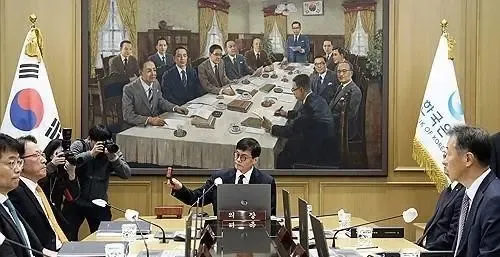
The Bank of Korea (BOK) is widely expected to keep its benchmark interest rate unchanged at 3 percent at its Monetary Policy Board meeting scheduled for Thursday, 18 October, according to a survey of six local economists. All six analysts polled agreed on a pause, while unanimously forecasting a rate hike at the BOK's November meeting.
Why the BOK Is Expected to Pause
Economists argue that the central bank needs breathing room after raising the benchmark rate twice in consecutive meetings in July and August. Three back-to-back hikes, they say, would impose an outsized burden on households and domestic businesses still absorbing the impact of previous tightening.
'Three consecutive rate hikes could place a significant burden on households and domestic companies,' said Joo Won, senior researcher at Hyundai Research Institute. 'It is highly likely that the central bank will pause this time to assess the effects of previous rate hikes.'
Park Seok-gil, an economist at JPMorgan Korea, added that the BOK would scrutinise recent economic indicators carefully. He pointed to core inflation — which strips out volatile food and energy prices — easing to 2.8 percent in September from 3.4 percent the month before. The Korean won hovering around 1,330 won against the US dollar has also helped cushion the effect of elevated oil prices, Park noted.
'Although growth momentum is strong and there is significant room to further raise this year's growth forecast, core inflation has stabilised to some extent and the exchange rate is holding steady in the 1,330 won range, so there is insufficient justification for an additional hike,' said Ahn Jae-kyun, analyst at Korea Investment & Securities Co.
BOK Governor Signals a Pause
BOK Governor Shin Hyun-song appeared to lay the groundwork for a hold during a parliamentary audit last week. 'When we conduct monetary policy, we always assess how much time economic agents need to adapt and evaluate their ability to do so,' Shin said — remarks widely read by analysts as signalling caution on an immediate further move.
Notably, Governor Shin had earlier reaffirmed the central bank's hawkish overall stance, stating: 'Inflation is expected to remain above the target level for a considerable period. We plan to determine the timing and pace of additional hikes while closely monitoring inflation, economic trends and financial stability.' The dual messaging underscores the BOK's difficult balancing act between cooling prices and shielding an economy already under financing pressure.
November Hike Still on the Table
Despite the expected pause, all six economists in the survey forecast the BOK will resume tightening in November. Consumer price inflation is projected to stay well above the central bank's 2 percent target, underpinned by robust semiconductor exports that continue to drive strong growth momentum.
'As growth driven by the semiconductor sector continues and inflationary pressures from high oil prices persist, the trend of interest rate hikes is likely to continue,' said Ahn Ye-ha, senior researcher at Kiwoom Securities Co.
Broader Context
The BOK's current tightening cycle reflects a global pattern of central banks navigating the last mile of inflation — slowing the pace of hikes without signalling an all-clear. South Korea's exposure to global commodity prices and its export-heavy semiconductor industry make the policy calculus especially sensitive to external shocks. This comes amid the US Federal Reserve also remaining in a data-dependent posture, which limits the BOK's room to diverge sharply in either direction.
Thursday's decision will be closely watched for any shift in forward guidance that could either confirm the November hike or push it further out.
Point of View
Cautious on the immediate — reflects a central bank trying to preserve optionality rather than commit to a clear terminal rate. The real question markets should be asking is not whether November brings a hike, but where the BOK sees its ceiling, and whether it has the stomach to hold rates high enough for long enough to bring inflation credibly back to 2%.
NationPress
18 Oct 2026
Frequently Asked Questions
What is the Bank of Korea expected to decide at its October 2026 meeting?
The Bank of Korea is widely expected to hold its benchmark interest rate steady at 3 percent at its Monetary Policy Board meeting on Thursday. All six economists surveyed agreed on a pause following two consecutive rate hikes in July and August.
Why is the BOK pausing its rate hikes in October?
Analysts say the central bank needs time to assess the impact of its two previous hikes before tightening further, as three consecutive increases would place significant strain on households and domestic companies. A cooling in core inflation to 2.8% in September and a stable Korean won also reduce the immediate case for another move.
Will the Bank of Korea raise rates in November?
All six economists surveyed expect the BOK to raise its benchmark rate again in November. Consumer price inflation is forecast to remain well above the 2% target, driven by strong growth momentum tied to robust semiconductor exports.
What did BOK Governor Shin Hyun-song say about the rate outlook?
Governor Shin Hyun-song signalled a possible pause during a parliamentary audit last week, noting that the BOK assesses how much time economic agents need to adapt. He has also maintained a hawkish medium-term stance, saying inflation is expected to remain above target for a considerable period and that the bank will monitor inflation, growth, and financial stability before deciding on further hikes.
How has South Korean core inflation trended recently?
Core inflation in South Korea — which excludes volatile food and energy prices — eased to 2.8% in September from 3.4% in August, according to data cited by economists. Despite this moderation, inflation remains above the BOK's 2% target, keeping the door open to further tightening.