Indian EB-2 green card queue stuck at 2013 as 179-year wait flagged
Synopsis
The October 2026 US Visa Bulletin places the Indian EB-2 final action date at November 2013 — over 11 years behind most countries — while researchers at NFAP project a staggering 179-year wait for new Indian applicants. With nearly one million Indians estimated to be in the queue and a House bill that passed 365-65 in 2019 still stuck in the Senate, the per-country cap debate is back at the centre of US immigration politics.
Key Takeaways
The October 2026 US Visa Bulletin sets the Indian EB-2 final action date at 1 November 2013 , against 1 January 2025 for most other countries.
The National Foundation for American Policy (NFAP) projects a 179-year wait for Indian nationals filing EB-2 applications from January 2026 onward.
Indians account for approximately 79 per cent — about 996,599 people — of the 1,264,495 -person employment-based preference backlog as of December 2025 , according to NFAP.
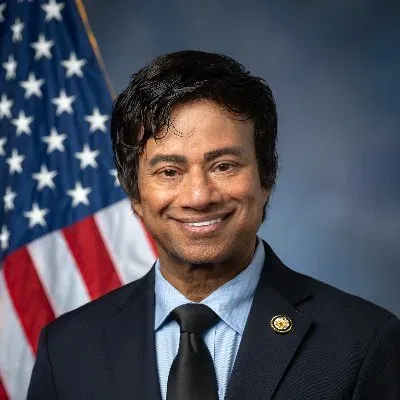
US Congressman Josh Gottheimer posted on X calling for an end to the 7 per cent per-country cap enshrined in Section 202 of the Immigration and Nationality Act .
The Fairness for High-Skilled Immigrants Act passed the House 365-65 in July 2019 but never became law.
India's annual employment-based green card allotment for fiscal year 2027 is capped at 25,620 , against a worldwide limit of at least 140,000 .
Indian professionals holding advanced degrees are only now seeing their US employment-based green card applications from November 2013 reach the front of the queue, as the State Department's October 2026 Visa Bulletin — the first of fiscal year 2027 — lays bare the scale of a backlog that researchers project could keep new applicants waiting for 179 years. The figure has prompted US Congressman Josh Gottheimer, a Democrat from New Jersey, to renew his call to scrap per-country caps on employment-based green cards.
What the October 2026 Visa Bulletin Shows
The October 2026 Visa Bulletin sets a final action date of 1 November 2013 for Indian EB-2 applicants — the category reserved for advanced-degree holders and those with exceptional ability. For most other nationalities, the EB-2 cut-off stands at 1 January 2025, a gap of roughly 11 years. The disparity in the EB-3 category is similarly stark: India's cut-off is 1 January 2014, compared with 15 May 2024 for most countries.
Notably, the September 2026 Visa Bulletin — the last of fiscal year 2026 — had listed the EB-2 category as 'U' for India, meaning no visa numbers were authorised at all during that month. The November bulletin had not been published at the time of reporting.
The 179-Year Projection and How It Was Calculated
The striking 179-year estimate originates from an August 2026 analysis by the National Foundation for American Policy (NFAP), an Arlington, Virginia-based research organisation. NFAP projected that an Indian national filing in January 2026 or later faces a potential wait of 179 years in the EB-2 category and 38 years in EB-3. Crucially, the estimate excludes government processing time, meaning the real-world wait could be even longer.
According to NFAP, using US Citizenship and Immigration Services (USCIS) data on approved principal applicants and its own estimates of accompanying spouses and children, Indians account for approximately 79 per cent — or about 996,599 people — of the 1,264,495 individuals waiting in the first three employment-based preference categories as of December 2025.
A separate analysis by David Bier of the Cato Institute placed the figure at roughly 1.1 million Indians, or 63 per cent of a 1.8 million-case backlog across all employment-based categories as of 2023. Bier estimated a 134-year combined wait for new Indian applicants in the EB-2 and EB-3 categories.
What Congressman Gottheimer Said
'Imagine waiting 179 years for a green card. That's the projected wait for Indian green card applicants,' Gottheimer wrote in a post on X. 'I voted to end the per-country caps to expedite the process, because we can enforce our laws and still live up to our immigrant values as Americans,' he added.
Gottheimer was among the 365 members who voted for the Fairness for High-Skilled Immigrants Act in July 2019, according to the House Clerk's roll call. The bill, which proposed scrapping the per-country cap for employment-based green cards, passed by 365-65 in the House but ultimately did not become law.
The Per-Country Cap Rule and Annual Limits
The bottleneck is structural. Under Section 202 of the Immigration and Nationality Act, the per-country limit for preference immigrants is capped at 7 per cent of the combined family and employment-based annual totals. For fiscal year 2027, that translates to 25,620 green cards available to Indians across all employment-based categories, against a worldwide employment-based level set at 'at least 140,000', according to the bulletin.
This comes amid broader US debate over high-skilled immigration policy, with Indian tech professionals — many on H-1B visas and legally barred from changing employers or starting businesses while in the queue — among the most directly affected. The prolonged wait has real professional and personal consequences: applicants can be locked into the same job for decades, unable to exercise the labour market mobility that US immigration policy formally permits after a green card is granted.
What Happens Next
The Fairness for High-Skilled Immigrants Act has cleared the House before but repeatedly stalled in the Senate. Without legislative action to raise or eliminate the per-country cap, the backlog is projected to deepen further as new applicants continue to be approved and added to the queue. Advocates argue the current system effectively penalises Indian and Chinese nationals for the size of their countries' workforces. How the 119th Congress responds to renewed pressure from lawmakers like Gottheimer will determine whether the wait shortens or extends further into the century.
Point of View
And that is precisely what makes it devastating. The per-country cap was designed for an era when no single nationality dominated high-skilled immigration demand; applied to today's tech-driven backlog, it functions as a structural penalty on Indian nationals for being numerous and in-demand. What is underreported is the secondary economic cost: hundreds of thousands of skilled workers are effectively indentured to their current employers, unable to exercise the labour mobility that drives innovation. Congress has shown it can pass a fix — a 365-seat majority is not slim — but Senate inaction has let the queue grow by years with each failed session. The longer this persists, the more likely talented applicants redirect to Canada, Australia, or the EU, taking their contributions elsewhere.
NationPress
18 Oct 2026
Frequently Asked Questions
Why is the Indian EB-2 green card wait so long?
The wait is driven by a 7 per cent per-country cap on employment-based green cards set by Section 202 of the Immigration and Nationality Act , which limits India — regardless of how many Indian nationals are approved — to the same annual allotment as any other country. Because Indian professionals make up roughly 79 per cent of the employment-based backlog, the fixed cap creates a queue that researchers project will take 179 years to clear for new EB-2 applicants.
What does the October 2026 Visa Bulletin say about Indian EB-2 applicants?
The October 2026 Visa Bulletin — the first bulletin of fiscal year 2027 — lists a final action date of 1 November 2013 for Indian EB-2 applicants, meaning only applications filed on or before that date are currently eligible to receive a green card. For most other nationalities, the EB-2 cut-off is 1 January 2025 , an 11-year difference.
Where does the 179-year wait estimate come from?
The figure comes from an August 2026 analysis by the National Foundation for American Policy (NFAP) , which used USCIS data on approved principal applicants and added its own estimate of accompanying spouses and children. NFAP projected that an Indian national filing in January 2026 or later faces a 179-year wait in EB-2 and a 38-year wait in EB-3, excluding government processing time.
What is the Fairness for High-Skilled Immigrants Act?
It is a US House bill that would eliminate the per-country cap for employment-based green cards, allowing visas to be allocated on a first-come, first-served basis regardless of nationality. The bill passed the House by 365-65 in July 2019 but did not advance in the Senate and has not become law.
How many Indian nationals are waiting for US employment-based green cards?
According to NFAP , approximately 996,599 Indians — about 79 per cent of the total — were waiting in the first three employment-based preference categories as of December 2025 . A separate Cato Institute analysis by David Bier estimated roughly 1.1 million Indians in a 1.8 million-case backlog across all employment-based categories as of 2023.