US Green Card rule change may force legal immigrants to apply from abroad
Synopsis
The Trump administration's new USCIS directive effectively dismantles a decades-old pathway that allowed legal immigrants to obtain Green Cards without leaving the US. For Indian-origin H-1B workers already navigating multi-year backlogs, this could mean forced departures, family separations, and career disruptions — all while complying fully with US law.
Key Takeaways
The Trump administration issued a new USCIS policy memo declaring that adjustment of status is 'a matter of discretion,' not a guaranteed right.
Temporary visa holders — including H-1B workers, students, and tourists — may now be required to leave the US and apply for Green Cards through consular processing abroad.
FWD.us President Todd Schulte called it an 'upheaval of more than 70 years of legislative, administrative, and judicial precedent.' Representative Grace Meng warned that immigrants from more than 100 countries could face separations lasting 'years, if not indefinitely.' Indian technology professionals are disproportionately affected due to long Green Card backlogs and country-specific visa caps.
Legal challenges are widely anticipated; enforcement timeline and definition of 'extraordinary circumstances' remain unspecified.
The Trump administration has issued a sweeping new immigration policy directive that could compel thousands of legal immigrants already residing in the United States to exit the country and seek permanent residency through consular processing abroad — a sharp departure from decades of established practice that has triggered fierce condemnation from advocacy groups, Democratic legislators, and local government officials.
What the New Policy Says
The policy memo, issued by the US Citizenship and Immigration Services (USCIS), reiterates that adjustment of status — the mechanism allowing eligible immigrants to apply for Green Cards without leaving the US — is described as 'a matter of discretion and administrative grace' rather than a statutory right. USCIS officers are now directed to evaluate each application on a 'case-by-case basis,' weighing whether applicants merit what the agency characterised as an 'extraordinary form of relief.'
USCIS spokesman Zach Kahler framed the shift as a return to legislative intent. 'We're returning to the original intent of the law to ensure aliens navigate our nation's immigration system properly,' Kahler said. 'From now on, an alien who is in the US temporarily and wants a Green Card must return to their home country to apply, except in extraordinary circumstances,' he added. Kahler said the policy would help curb visa overstays and allow the agency to redirect resources toward 'visas for victims of violent crime and human trafficking, naturalisation applications, and other priorities.'
Who Is Affected
The directive carries significant implications for a broad range of temporary visa holders — including students, researchers, tourists, and H-1B skilled workers — many of whom have historically adjusted their status from within the US after securing employer or family sponsorship. The USCIS memo argues that adjustment of status 'was not designed to supersede the regular consular visa-issuing process' and that immigrants admitted on a temporary basis are generally expected to depart once the stated purpose of their stay concludes.
Indian technology professionals are among those most acutely exposed. Given persistent Green Card backlogs and country-specific visa caps, Indian-origin applicants have long depended on in-country adjustment of status. Immigration lawyers and advocacy organisations have repeatedly warned that forcing applicants to leave during processing could upend jobs, family stability, and long-term residency plans for thousands of Indian-origin families.
Sharp Criticism from Advocates and Lawmakers
Immigration advocacy group FWD.us condemned the move in strong terms. 'Today's announcement is a stark, deeply harmful, upheaval of more than 70 years of legislative, administrative, and judicial precedent,' said FWD.us President Todd Schulte. 'It will create chaos and impose massive costs on immigrants who have lived and worked legally in the United States for many years,' he added. Schulte accused the administration of attempting to 'make America a cruel place for immigrants' and warned the policy would 'massively disrupt our legal immigration system.' He noted that 'the majority of people who are approved for green cards each year adjust their status from within the US, as provided under law since the 1950s.'
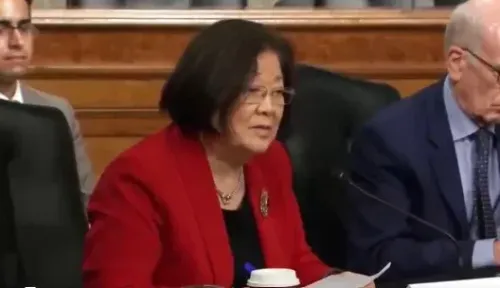
Representative Grace Meng, Chair of the Congressional Asian Pacific American Caucus (CAPAC), also criticised the directive. 'The Trump administration is once again proving that they are not going after the 'worst of the worst.' Instead, they are blatantly attacking legal immigration, with family separation at the center of its agenda,' Meng said. She warned that immigrants from more than 100 countries affected by Trump-era travel and immigrant visa restrictions could face separations lasting 'for years, if not indefinitely.'
Local Officials Warn of Economic Fallout
Montgomery County Executive Marc Elrich said the policy would generate fear and uncertainty among immigrant families and skilled workers. 'These are our neighbors, coworkers, business owners, researchers, health care workers, teachers, and entrepreneurs,' Elrich said. 'When the federal government treats legal immigrants as disposable or unwelcome, it weakens our ability to attract and retain the people who help drive innovation, create jobs, and strengthen our economy,' he added.
What Happens Next
It remains unclear how USCIS will define 'extraordinary circumstances' warranting in-country processing, a detail that immigration lawyers say will be critical in determining the policy's real-world impact. Legal challenges from advocacy groups are considered likely, given critics' argument that the directive conflicts with statutory provisions in place since the 1950s. The policy's full enforcement timeline has not been publicly specified.
Point of View
It merely reframes it as exceptional rather than routine. But the practical effect, if enforced broadly, is a structural barrier for hundreds of thousands of legal immigrants who built careers and families in the US under an established framework. For Indian-origin professionals, the timing is particularly punishing: they already face the longest Green Card queues of any nationality, sometimes stretching decades, and a forced departure mid-queue could reset the clock entirely. The administration's framing of consular processing as the 'proper' channel ignores that Congress itself embedded adjustment of status in statute in the 1950s precisely to avoid such disruption. Whether courts agree will be the decisive question.
NationPress
23 Sept 2026
Frequently Asked Questions
What is the new US Green Card policy announced by the Trump administration?
The new policy, issued via a USCIS memo, reframes adjustment of status — the process allowing eligible immigrants to apply for Green Cards while remaining inside the US — as a discretionary 'extraordinary form of relief' rather than a standard option. Under this directive, most temporary visa holders would be required to return to their home countries and apply through consular processing abroad.
Who is most affected by the new USCIS Green Card rule?
Temporary visa holders including H-1B skilled workers, students, researchers, and tourists are directly in the crosshairs. Indian-origin technology professionals are among the most vulnerable, given existing multi-year Green Card backlogs and country-specific caps that have historically made in-country adjustment of status the only practical pathway.
Why are immigration advocates and lawmakers criticising the policy?
FWD.us President Todd Schulte described it as an 'upheaval of more than 70 years' of legal precedent, warning it would impose massive costs on immigrants who have lived and worked legally in the US for years. Representative Grace Meng called it an attack on legal immigration and warned of family separations lasting years for nationals of more than 100 countries.
How does this policy affect Indian immigrants specifically?
Indian nationals face some of the longest Green Card wait times globally due to per-country caps. Immigration lawyers warn that forcing Indian-origin applicants to leave the US during processing could disrupt employment, uproot families, and indefinitely delay residency plans for thousands of people who are otherwise fully compliant with US immigration law.
What happens next — will the policy face legal challenges?
Legal challenges are widely anticipated, with advocacy groups arguing the directive conflicts with statutory provisions embedded in US immigration law since the 1950s. The enforcement timeline and the precise definition of 'extraordinary circumstances' — which would allow in-country processing — have not yet been publicly detailed by USCIS .