US Democrats demand reversal of green card policy shift by USCIS
Synopsis
A single USCIS memo dated 21 May is quietly rewriting how thousands of immigrants get their green cards — shifting the default from domestic adjustment to overseas consular processing. Congressional Democrats say it has no legal basis and could separate families for years. The Trump administration has yet to respond.
Key Takeaways
A USCIS policy memorandum dated 21 May labels adjustment of status an 'extraordinary form of relief' and signals preference for consular processing abroad.
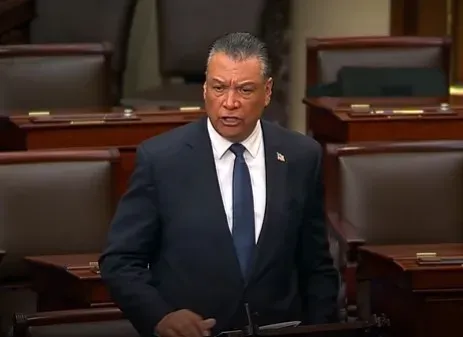
Senator Alex Padilla , Senator Dick Durbin , Representative Jamie Raskin , and Representative Pramila Jayapal led a multi-member Democratic letter demanding the policy be reversed.
The memo introduces 'national interest' and 'economic benefit' tests that Democrats say have no basis in statute.
Affected groups could include skilled workers, researchers, medical professionals, entrepreneurs , and family-sponsored applicants.
The letter poses nine questions to USCIS, including on effective date, applicant scope, and whether the State Department was consulted.
Adjustment of status has been a feature of US immigration law since the Immigration and Nationality Act of 1952 .
Congressional Democrats have formally urged the Trump administration to roll back what they describe as a sweeping change to the US green card process, warning that a May 21 USCIS policy memorandum could compel thousands of eligible immigrants to pursue permanent residence from outside the United States rather than adjusting their status from within the country. The letter, addressed to US Citizenship and Immigration Services (USCIS) Director Joseph Edlow, was signed by dozens of Democratic senators and House members and sent on 3 July.
What the USCIS Memorandum Changes
The disputed memorandum, issued on 21 May, characterises adjustment of status as an 'extraordinary form of relief' and introduces what the lawmakers say are new discretionary standards not authorised by Congress. Specifically, applicants may now be required to demonstrate that their presence in the United States serves the 'national interest' or provides an 'economic benefit' — tests that, the Democrats argue, have no basis in existing statute.
The memorandum also signals a policy preference for consular processing abroad over domestic adjustment, a departure that critics say contradicts decades of settled practice. Notably, the document contains no effective date, no transition period, and no guidance on how pending applications will be handled — gaps the lawmakers flagged as creating immediate legal uncertainty.
Democrats' Legal Argument
Led by Senator Alex Padilla, Senator Dick Durbin, Representative Jamie Raskin, and Representative Pramila Jayapal, the lawmakers argued that adjustment of status has been a statutory right since the Immigration and Nationality Act of 1952 and was later expanded precisely because many eligible applicants already resided in the United States.
'Without any basis in the law and in a departure from decades of precedent, this guidance creates a policy preference for consular processing abroad over adjustment of status in the United States, requiring applicants to meet new, undefined discretionary criteria to be processed domestically,' the lawmakers wrote. They called on USCIS to 'reverse this new policy and restore adjudications of adjustment of status applications in a manner consistent with the law, longstanding practice, and congressional intent.'
The letter directly contested the memorandum's framing: 'This is simply incorrect. There is no statutory preference for consular processing, and legislative history shows that Congress has long maintained a strong preference in favour of allowing eligible noncitizens to adjust status in the United States.'
Who Could Be Affected
The policy's practical consequences, according to the letter, could be significant. Existing visa appointment backlogs at US consulates overseas mean applicants forced into consular processing could be separated from spouses, children, and employers for extended periods. The change could affect skilled workers, entrepreneurs, researchers, medical professionals, and businesses that depend on foreign talent — categories that span both employment-based and family-sponsored immigration pathways.
The Democrats also warned that the shift could sharply increase demand for immigrant visa processing at overseas consulates, further straining an already backlogged system.
Nine Questions Put to USCIS
The letter asks USCIS to answer nine specific questions, including when the policy takes effect, which applicants it covers, how 'national interest' and 'economic benefit' will be defined, whether adjudicators have received implementation guidance, and whether the agency consulted the State Department before adopting the policy.
The lawmakers concluded that the memorandum 'undermines the very purposes Congress sought to advance when enacting and amending section 245 of the INA,' adding that 'any effort to dismantle that statutory framework through internal agency policy is unacceptable.' This move is part of a broader pattern: the Trump administration has pursued multiple changes to legal immigration procedures during its second term, arguing that immigration benefits should be administered more strictly and with greater discretion. How USCIS responds — and whether it provides the requested clarifications — will be closely watched by immigration lawyers and advocacy groups in the weeks ahead.
Point of View
Giving adjudicators sweeping and largely unreviewable discretion. That ambiguity is likely deliberate: it allows the administration to slow or redirect green card approvals without triggering the formal notice-and-comment process that a regulatory change would require. Democrats are right to flag the procedural gap, but their letter also exposes a structural weakness — Congress has repeatedly failed to codify immigration procedures in ways that are resistant to executive reinterpretation. Until it does, a memo can undo decades of settled practice overnight.
NationPress
1 Oct 2026
Frequently Asked Questions
What is the USCIS adjustment of status policy change?
A USCIS memorandum dated 21 May now describes adjustment of status — the process by which eligible immigrants apply for a green card from within the United States — as an 'extraordinary form of relief,' and signals a policy preference for consular processing abroad. Critics say this departs from decades of practice and introduces discretionary standards not authorised by Congress.
Why are Congressional Democrats objecting to the new USCIS memo?
Democrats argue the memo has no basis in law, contradicts the Immigration and Nationality Act of 1952, and creates new 'national interest' and 'economic benefit' tests without congressional authorisation. They say it could force eligible immigrants to leave the United States to complete their green card process, separating them from families and employers.
Who could be affected by the green card policy change?
According to the Democratic letter, the policy could affect skilled workers, entrepreneurs, researchers, medical professionals, and businesses that rely on foreign talent, as well as family-sponsored applicants. Existing consulate backlogs could mean prolonged separations from spouses, children, and employers.
What is adjustment of status and how long has it existed?
Adjustment of status is the statutory process allowing eligible immigrants already in the United States to apply for lawful permanent residence — a green card — without travelling abroad. It was established under the Immigration and Nationality Act of 1952 and later expanded because many eligible applicants already lived in the country.
What has the Trump administration said about the new USCIS policy?
The Trump administration has not publicly responded to the Democratic letter as of the date of reporting. More broadly, the administration has argued during its second term that immigration benefits should be administered more strictly and with greater discretion, framing the changes as consistent with that approach.