US Democrats move to block Trump's 'public charge' immigration rule
Synopsis
With the Trump administration's revived 'public charge' rule set to take effect on 18 September, Democrats are moving to defund it entirely — arguing the policy's deliberate vagueness hands immigration officers unchecked power to deny green cards, and risks pushing eligible families, including US citizens in mixed-status households, away from benefits they are legally entitled to claim.
Key Takeaways
Representative Judy Chu and Senator Mazie Hirono introduced the Protect American Values Act on 7 August to block federal funding for the Trump 'public charge' rule.
The rule is scheduled for implementation on 18 September and rescinds a 2022 Biden-era policy that shielded non-cash benefits from public charge assessments.
More than 50 House members are co-sponsoring the bill, including Indian American lawmakers Pramila Jayapal and Raja Krishnamoorthi .
The new rule does not specify which benefits officers may consider, critics say, granting broad and unchecked discretion to deny green card applications.
Over 100 organisations — including the American Academy of Pediatrics and National Immigration Law Center — have endorsed the legislation.
Experts warn the rule could deter eligible families, including US citizens in mixed-status households, from accessing legally entitled assistance.
US Democratic lawmakers on 7 August introduced legislation to cut off federal funding for the Trump administration's revived 'public charge' immigration rule, warning the policy could push immigrant families away from essential services including health care, food assistance, and housing support ahead of its 18 September implementation date.
The Legislation
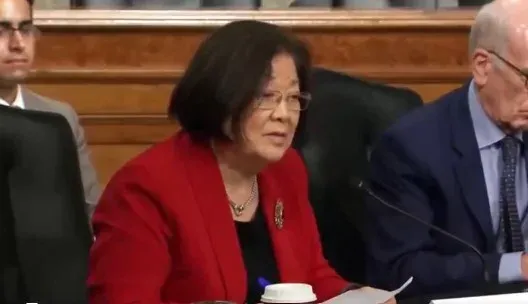
Representative Judy Chu and Senator Mazie Hirono introduced the Protect American Values Act, which would prohibit federal funds from being used to implement, administer, enforce, or otherwise carry out the rule. More than 50 House members have signed on as co-sponsors, including Indian American lawmakers Representative Pramila Jayapal and Representative Raja Krishnamoorthi.
The bill has drawn endorsements from more than 100 organisations, among them the American Academy of Pediatrics, Asian Americans Advancing Justice, the National Immigration Law Center, Stop AAPI Hate, and the National Women's Law Center Action Fund.
What the Rule Changes
The Trump administration's rule rescinds a 2022 policy put in place under the Biden administration, which had explicitly excluded non-cash benefits — including Medicaid, food assistance under SNAP, and housing aid — from consideration in public charge determinations.
The new rule, by contrast, does not specify which benefits immigration officers may factor into their assessments. Critics argue this grants officers sweeping discretion to deny green card applications without clear or consistent legal standards. The rule also removes a safeguard that had previously barred officers from considering benefits used by an immigrant's family members — a provision opponents say could deter US citizens and lawful permanent residents in mixed-status households from claiming assistance they remain legally entitled to.
What Lawmakers Said
'Donald Trump is once again weaponizing our immigration system against families who are simply trying to build better lives in America,' Chu said. She added: 'Unlike the previous rule, this finalized policy does not even identify which benefits will be considered in a public charge test, giving Trump's immigration officers sweeping discretion to deny green card applications based on subjective judgement instead of clear legal standards.'
Hirono warned that the absence of clear guidance would generate fear across immigrant communities. 'By removing any guidance for what qualifies as 'public charge' the Trump Regime's rule creates fear and prevents immigrants and their families from accessing services they need — even if they are still entitled to them,' she said.
Expert Concern: A Chilling Effect on Eligible Families
Wendy Cervantes of the Center for Law and Social Policy said research consistently shows that fear of immigration consequences causes eligible families to forgo critical programmes. 'When families fear immigration consequences, many avoid services that they or their children are eligible for, putting children's health and development at risk,' she said.
The public charge standard has long been embedded in US immigration law, permitting the government to deny admission or permanent residence to applicants deemed likely to depend primarily on public support. This is the second major revision to the standard in recent years, reflecting the sharp policy divergence between the Biden and Trump administrations on immigration enforcement. With the 18 September implementation date approaching, the bill's prospects in a divided Congress will be closely watched.
Point of View
More consequentially, a chilling effect that extends well beyond those actually subject to the rule. Research cited by advocates confirms what past public charge expansions have shown: eligible families, including US-born children, reduce their uptake of food, health, and housing assistance when immigration consequences feel unpredictable. The Biden rule attempted to draw a clear line; the new rule erases it. Democrats face long odds in a divided Congress, but the legislative push serves a second purpose — putting the rule's ambiguity on the public record before courts inevitably weigh in.
NationPress
21 Sept 2026
Frequently Asked Questions
What is the Trump administration's new 'public charge' rule?
The rule, set to take effect on 18 September, revives a stricter public charge standard for green card applicants by rescinding a 2022 Biden-era policy that had excluded non-cash benefits such as Medicaid, SNAP food assistance, and housing aid from public charge assessments. Unlike its predecessor, the new rule does not specify which benefits immigration officers may consider, giving them broad discretion.
What is the Protect American Values Act?
It is a bill introduced by Representative Judy Chu and Senator Mazie Hirono that would prohibit federal funds from being used to implement, administer, or enforce the Trump administration's public charge rule. More than 50 House members are co-sponsoring the measure, and over 100 organisations have endorsed it.
Why are critics concerned about the rule's lack of specific guidance?
Because the rule does not identify which benefits count against an applicant, immigration officers can exercise subjective judgement when evaluating green card applications. Critics, including Chu and Hirono, argue this creates legal uncertainty and is likely to cause immigrant families — including those legally entitled to benefits — to avoid essential services out of fear.
How does this rule affect US citizens in mixed-status households?
The new rule removes a safeguard that previously barred officers from considering benefits used by an immigrant's family members. Opponents warn this could discourage US citizens and lawful permanent residents living in mixed-status households from claiming assistance they are legally eligible for, harming children's health and development.
Which Indian American lawmakers are backing the bill?
Representatives Pramila Jayapal and Raja Krishnamoorthi are among more than 50 House co-sponsors of the Protect American Values Act.