DHS expands green card path for US-born children of foreign govt workers
Synopsis
DHS has quietly expanded one of US immigration law's oldest exceptions — the diplomatic-birth carve-out — to cover a far broader class of foreign government workers. Effective 4 September, the rule could reshape permanent-residency pathways for thousands of US-born children, but a federal court injunction in Casa Inc. v. Trump is already drawing the boundaries of what DHS can actually enforce.
Key Takeaways
DHS issued an interim final rule effective 4 September expanding green card eligibility for US-born children of foreign government employees .
The rule implements President Trump's Executive Order 14418 and replaces the narrow 'foreign diplomatic officer' category with the broader 'foreign government employee'.
Eligible children may be considered lawful permanent residents from birth ; registration is voluntary.
Excluded groups include personal attendants, chauffeurs, housekeepers, state-owned-enterprise employees, and third-country nationals working for foreign governments.
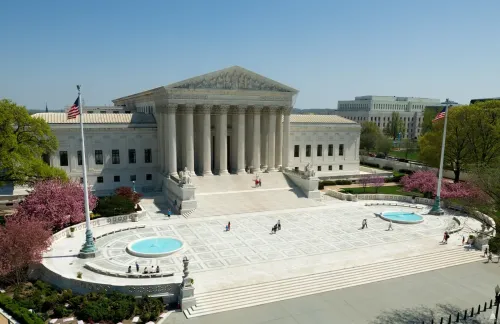
A preliminary injunction from the US District Court in Maryland in Casa Inc. v.
Trump limits the rule's implementation until the court grants relief.
Federal practice of registering such children as permanent residents dates to at least the 1940s ; formal regulations were first issued in 1982 .
The US Department of Homeland Security (DHS) has broadened a registration process allowing certain US-born children of foreign government employees to obtain lawful permanent resident status, even as a federal court injunction continues to constrain the rule's full implementation. The interim final rule took effect on 4 September and applies only to children born on or after that date.
What the New Rule Changes
The rule implements President Donald Trump's Executive Order 14418 and amends an existing regulation that previously covered only children born to accredited foreign diplomatic officers. Under the revised framework, the narrower term 'foreign diplomatic officer' is replaced with the broader category of 'foreign government employee'.
The updated definition encompasses accredited foreign diplomatic officers, nationals employed by their country's embassy or consulate, individuals working for foreign governments in an official capacity, and employees of international organisations possessing international-organisation immunity. The rule applies when neither parent holds US citizenship and at least one parent was employed by a foreign government at the time of the child's birth.
Who Is Excluded
Several categories are explicitly carved out. Personal employees and attendants of foreign officials — including personal assistants, chauffeurs, and housekeepers — do not qualify. Also excluded are certain employees of state-owned enterprises, third-country nationals working for foreign governments, some contractors, and foreign government employees visiting the United States in a personal rather than official capacity.
How Registration Works
An eligible person may be considered a lawful permanent resident from birth. Registration is voluntary, but those who are not US citizens may still be subject to alien-registration requirements under the Immigration and Nationality Act. DHS is updating Form I-485 and its instructions to reflect the new language, replacing references to persons born under diplomatic status with broader coverage for children born to foreign government employees. Form G-325R is also being revised to cover US-born children who do not acquire citizenship at birth and do not use the amended permanent-residence process.
The Court Injunction Constraint
DHS has acknowledged that a preliminary injunction issued by the US District Court in Maryland limits how far the rule can be applied. The agency stated it will not apply the rule to members of the certified class in Casa Inc. v. Trump and will not act in any way that conflicts with the court's order. The restriction remains in place unless the government obtains relief from the court.
Historical and Legal Context
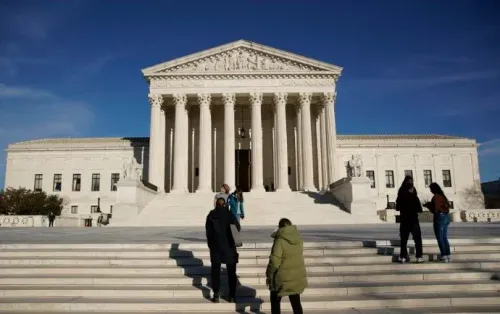
The Fourteenth Amendment grants citizenship to persons born in the United States and subject to its jurisdiction. The US Supreme Court has historically recognised limited exceptions, including children born to accredited foreign diplomatic representatives. Federal immigration authorities have permitted such children to register as permanent residents since at least the 1940s, with formal regulations first established in 1982. Those earlier rules required applicants to demonstrate they had not abandoned residence in the United States.
The latest expansion marks the most significant broadening of this pathway in decades, with its ultimate reach still contingent on ongoing federal litigation.
Point of View
But without court clearance, the rule is more a statement of intent than a functioning pathway. The gap between what DHS has written and what it can implement deserves more scrutiny than the rule itself.
NationPress
20 Oct 2026
Frequently Asked Questions
What does the new DHS rule on green cards for US-born children of foreign government employees do?
The rule expands an existing registration process to allow US-born children of a broader category of foreign government employees — not just accredited diplomats — to register as lawful permanent residents. It took effect on 4 September and applies only to children born on or after that date.
Who qualifies under the new DHS interim final rule?
Children qualify if neither parent is a US citizen and at least one parent was employed by a foreign government at the time of birth. Covered categories include embassy and consulate staff, officials working in an official government capacity, and employees of international organisations with immunity. Personal attendants, chauffeurs, housekeepers, and certain contractors are excluded.
Why does a court injunction limit the new rule?
A preliminary injunction issued by the US District Court in Maryland in the case Casa Inc. v. Trump restricts DHS from applying the rule to members of the certified class in that lawsuit. DHS has said it will not act in any way that conflicts with the court's order until it obtains judicial relief.
Is registration for permanent residence mandatory under the new rule?
No. Registration for permanent residence is voluntary under the rule. However, children who are not US citizens and do not register may still be subject to alien-registration requirements under the Immigration and Nationality Act.
How does this rule relate to the Fourteenth Amendment?
The Fourteenth Amendment grants citizenship to persons born in the United States and subject to its jurisdiction. The Supreme Court has historically recognised narrow exceptions, including children of accredited foreign diplomats. This rule expands that exception administratively, though its constitutional dimensions remain subject to ongoing litigation.