CM Yogi hands appointment letters to 28 new forensic officers
Synopsis
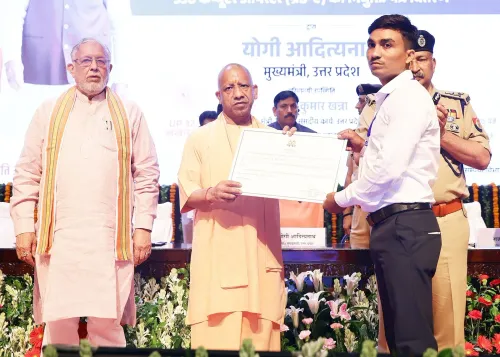
Uttar Pradesh's Chief Minister Yogi Adityanath congratulated 28 newly appointed forensic officers on receiving their appointment letters on 5 November 2026, underlining the state government's push to strengthen scientific evidence capacity within the criminal-justice system.
Key Takeaways
28 newly selected forensic officers in Uttar Pradesh received appointment letters on 5 November 2026 .
CM Yogi Adityanath personally congratulated the recruits, stressing the critical role of forensic officers in upholding the rule of law.
The induction is part of Uttar Pradesh's broader, ongoing effort to modernise policing through scientific evidence collection.
Forensic officers support investigations across the state's 75 districts , working alongside UP Police to build court-ready cases.
Further recruitment batches and new forensic laboratory infrastructure announcements are expected as the state scales capacity.
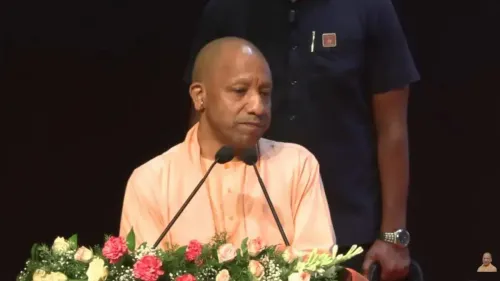
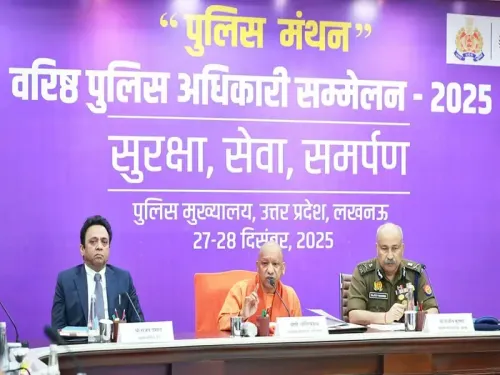
Twenty-eight newly selected forensic officers in Uttar Pradesh received their appointment letters on Thursday, 5 November 2026 — a quiet but consequential step toward anchoring the state's criminal-justice machinery more firmly in science. The Chief Minister's Office of Uttar Pradesh announced the event, sharing congratulations from Chief Minister Yogi Adityanath for the fresh recruits.
Posting on X, the CMO quoted the Chief Minister: 'विधि के शासन को वास्तविक जीवन में प्रभावी रूप से लागू करने में फॉरेंसिक अधिकारियों की भूमिका अत्यंत महत्वपूर्ण है।' ('The role of forensic officers in effectively implementing the rule of law in real life is extremely important.') CM Yogi extended heartfelt congratulations to the 28 newly appointed officers on receiving their appointment letters.Why forensic capacity matters for UP's law-and-order push
Uttar Pradesh, India's most populous state, has made police modernisation a recurring priority under CM Yogi Adityanath, who has held office since 2017. Scientific evidence — DNA analysis, fingerprint matching, digital forensics, ballistics — is widely understood to be the difference between a case that collapses in court and one that secures conviction. Forensic officers sit at exactly that fault line, translating crime-scene evidence into courtroom proof.
The state government has periodically inducted specialised forensic personnel to plug gaps in evidence collection, reduce dependence on eyewitness testimony, and push conviction rates higher. Each recruitment batch signals a continued institutional commitment to that direction.
28 officers, one appointment ceremony
The distribution of appointment letters to 28 forensic officers marks the formal induction of this cohort into the state's forensic services. Such ceremonies carry procedural weight: they mark the transition from selection to deployment, after which officers can be posted to forensic laboratories or field units supporting police investigations across the state's 75 districts.
Forensic units work alongside the Uttar Pradesh Police, processing evidence from crime scenes — a role that has grown in visibility as courts increasingly demand scientific corroboration alongside witness accounts.
With more recruits joining the ranks, the pressure now shifts to infrastructure — laboratories equipped to handle caseload volume and training pipelines that keep skills current. The appointment letter is the beginning, not the finish line.
Point of View
The government signals that scientific policing is a political priority, not just a bureaucratic exercise. The move also reflects a broader national pattern of states investing in forensic infrastructure to reduce acquittals caused by weak evidence chains. The real test will be whether laboratory capacity and officer deployment keep pace with recruitment, translating appointments into measurable gains in conviction rates.
NationPress
5 Nov 2026
Frequently Asked Questions
How many forensic officers were appointed in Uttar Pradesh in November 2026?
28 newly selected forensic officers received their appointment letters in Uttar Pradesh on 5 November 2026 , as announced by the Chief Minister's Office.
What is the role of forensic officers in UP Police?
Forensic officers process scientific evidence — such as DNA samples, fingerprints, and digital data — from crime scenes, providing court-admissible proof that supports Uttar Pradesh Police investigations and strengthens conviction rates.
What did CM Yogi Adityanath say about forensic officers?
CM Yogi Adityanath said the role of forensic officers in effectively implementing the rule of law in real life is 'extremely important,' and extended heartfelt congratulations to the 28 new appointees.
Is Uttar Pradesh expanding its forensic science capacity?
Yes. The Uttar Pradesh government has periodically recruited specialised forensic personnel as part of a broader police-modernisation push under CM Yogi Adityanath since 2017, with further batches and laboratory expansions anticipated.
Why does scientific evidence matter for criminal cases in UP?
Courts increasingly require scientific corroboration alongside eyewitness testimony. Forensic evidence — from ballistics to digital forensics — reduces the risk of acquittals due to weak evidence chains, directly improving conviction rates across Uttar Pradesh's 75 districts .