CM Yogi Distributes Appointment Letters to 930 UP Police Computer Operators
Synopsis
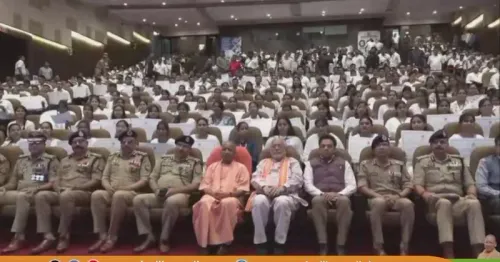
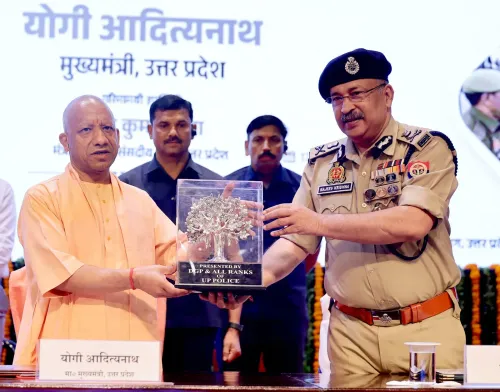
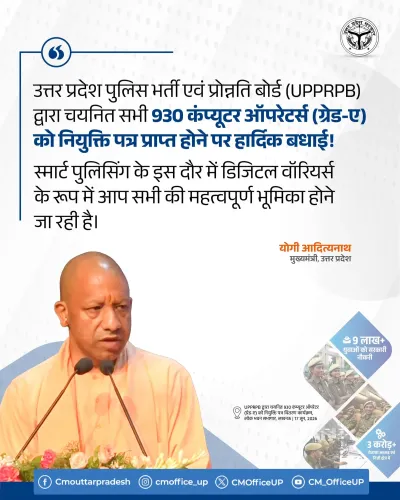
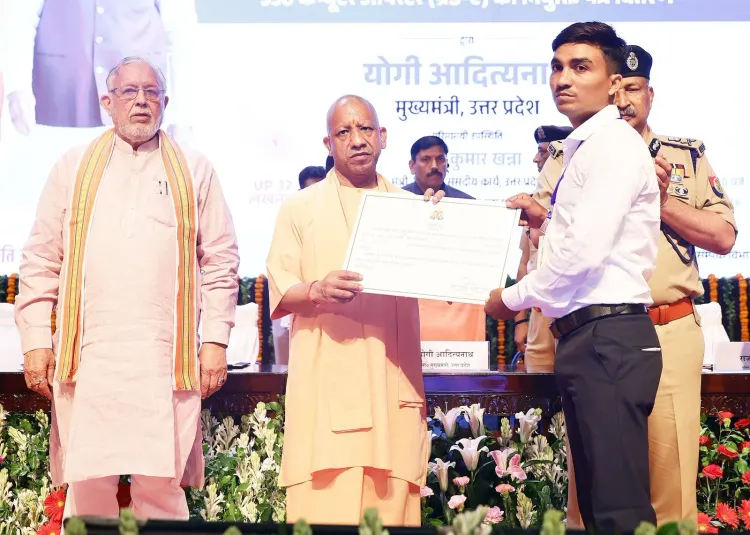
Uttar Pradesh Chief Minister Yogi Adityanath on 17 June 2026 handed appointment letters to 930 Computer Operators (Grade-A) selected by UPPRPB in Lucknow, calling them 'digital warriors of smart policing' and reaffirming the government's push for transparent, technology-driven police recruitment.
Key Takeaways
930 Computer Operators (Grade-A) received appointment letters in Lucknow on 17 June 2026 .
Recruitment was conducted by the Uttar Pradesh Police Recruitment and Promotion Board (UPPRPB) under a transparent, merit-based process.
CM Yogi Adityanath described the new recruits as 'digital warriors of smart policing.' The induction supports the UP Police modernisation programme launched around 2018–2020 , which incorporates CCTV networks and data analytics.
The Yogi government has prioritised biometric and exam-based police recruitment since taking office in 2017 to curb irregularities.
Further UPPRPB notifications for technical roles are expected as the state continues to build smart-policing capacity.
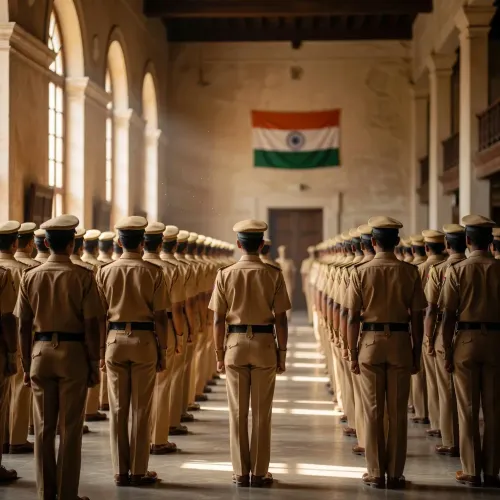
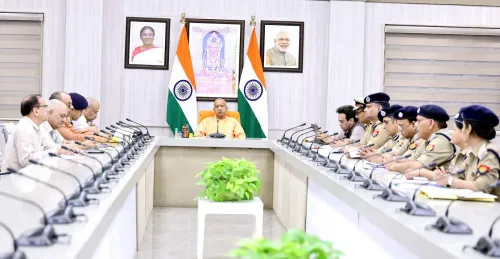
Uttar Pradesh Chief Minister Yogi Adityanath on Wednesday, 17 June 2026, distributed appointment letters to 930 newly selected Computer Operators (Grade-A) in Lucknow, marking a fresh cohort of technical staff joining the Uttar Pradesh Police through the state's recruitment board.
Context
The appointment letters were handed out under the aegis of the Uttar Pradesh Police Recruitment and Promotion Board (UPPRPB), the statutory body responsible for merit-based inductions into the state police. CM Yogi described the recruits as 'smart policing ke digital warriors' ('digital warriors of smart policing'), underlining the government's framing of the hire as a technology-forward move.
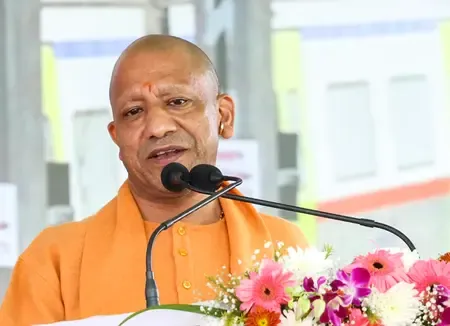
In his post, CM Yogi expressed 'full confidence' that the new operators would discharge their responsibilities towards their department, state, and country 'with complete dedication and honesty.' He extended warm congratulations and wished all 930 appointees a bright future.
Policy Backdrop
The Yogi Adityanath government, in office since 2017, has consistently emphasised transparent, examination-based recruitment in the police to address past irregularities. Post-2017 drives introduced written tests and biometric verification as standard safeguards, a model the UPPRPB has applied across multiple cadres.
A parallel Uttar Pradesh Police modernisation programme, initiated around 2018–2020, brought in digital tools including CCTV networks and data analytics platforms to enable what the administration calls 'smart policing.' The induction of dedicated Computer Operators (Grade-A) is positioned as a direct extension of that infrastructure build-out.
Stakeholders and Impact
The 930 newly appointed computer operators will be deployed across Uttar Pradesh Police units to manage digital records, data systems, and technology-enabled law-enforcement tools. Their induction is expected to reduce the burden on field officers who have historically handled administrative and data-entry functions alongside policing duties.
For the recruits themselves — drawn through a process the government describes as 'impartial and transparent' — the appointment letters represent confirmed government employment, a high-value outcome in one of India's most populous states. The UPPRPB's role as the conducting authority lends institutional credibility to the selection process.
What's Next
Attention will now turn to the deployment of these operators across Uttar Pradesh districts and the specific digital-policing modules they will be assigned to manage. Any follow-on recruitment notifications from the UPPRPB for additional technical or support roles will signal the pace at which the state intends to staff its broader smart-policing infrastructure.
The exercise also sets a template: transparent, board-conducted technical recruitment feeding directly into a modernisation agenda — a pattern the Yogi administration is likely to replicate in other departments where digital capacity gaps remain.
Point of View
' the Chief Minister is consciously tying routine staffing to the larger smart-policing identity his government has cultivated since 2018. The move also pre-empts criticism of unemployment by showcasing concrete, board-certified government jobs in a state where recruitment scams have historically been politically damaging. Cumulatively, such exercises reinforce the BJP's governance-competence pitch ahead of any future electoral cycle in Uttar Pradesh.
NationPress
20 Sept 2026
Frequently Asked Questions
Who are the 930 computer operators appointed by CM Yogi in Lucknow?
They are newly selected Computer Operators (Grade-A) recruited by the Uttar Pradesh Police Recruitment and Promotion Board (UPPRPB) through a transparent, merit-based process. CM Yogi Adityanath distributed their appointment letters in Lucknow on 17 June 2026 .
What is UPPRPB and what role does it play in UP Police recruitment?
The Uttar Pradesh Police Recruitment and Promotion Board (UPPRPB) is the state's statutory body responsible for conducting merit-based recruitments and promotions in the UP Police, using written examinations and biometric verification to ensure fairness.
What will the new UP Police computer operators do?
The 930 Computer Operators (Grade-A) will manage digital records, data systems, and technology-enabled law-enforcement tools across Uttar Pradesh Police units, supporting the state's smart-policing infrastructure.
What is UP Police's smart policing programme?
The Uttar Pradesh Police modernisation programme , initiated around 2018–2020 , incorporates digital tools, CCTV networks, and data analytics to enable data-centric law enforcement, a priority of the Yogi Adityanath government since 2017.
Has the Yogi government conducted transparent police recruitments before?
Yes. Since 2017 , the Yogi Adityanath administration has run multiple large-scale police recruitment drives through the UPPRPB, mandating written exams and biometric processes to curb past irregularities and ensure merit-based selection.