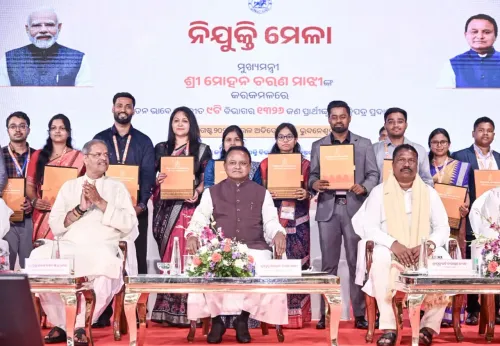
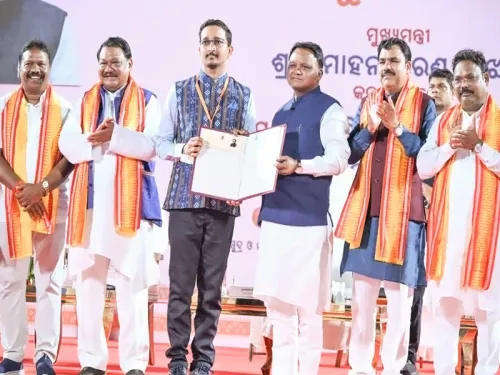
CM Majhi hands appointment letters to 2,067 ST/SC youth at Odisha fair
Synopsis
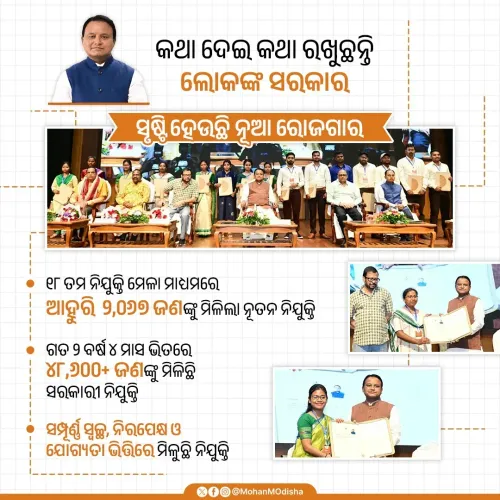
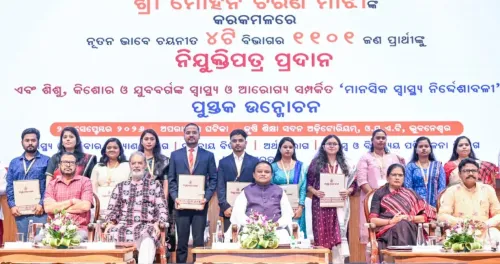
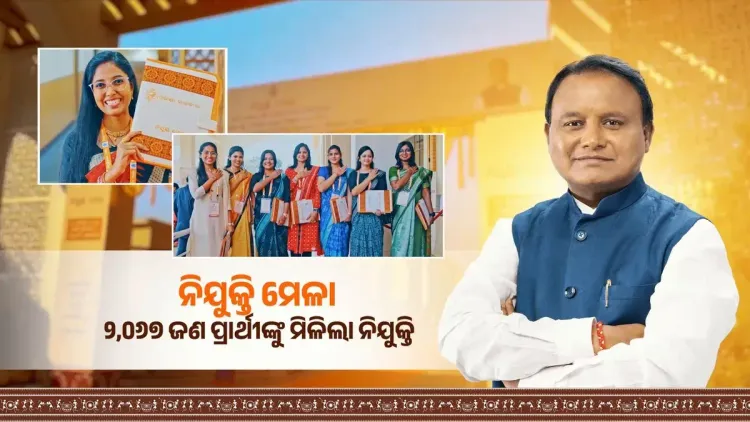
Chief Minister Mohan Charan Majhi personally distributed appointment letters to 2,067 Scheduled Tribe and Scheduled Caste candidates at Odisha's 18th State-Level Recruitment Fair organised by the ST and SC Development Department on November 4, 2026, reaffirming the government's focus on youth employment in reserved categories.
Key Takeaways
2,067 candidates from Scheduled Tribe and Scheduled Caste communities received appointment letters at a single event.
The fair was the 18th edition of Odisha's State-Level Recruitment Fair series organised by the ST & SC Development Department .
Chief Minister Mohan Charan Majhi personally presented the letters, underscoring the administration's visible commitment to reserved-category hiring.
The BJP-led Odisha government, in power since June 2024 , has positioned tribal and SC welfare as a core governance priority.
Odisha's Scheduled Tribe population is among the largest in India, making government employment a critical channel for economic mobility.
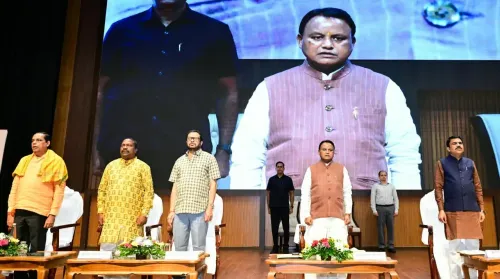
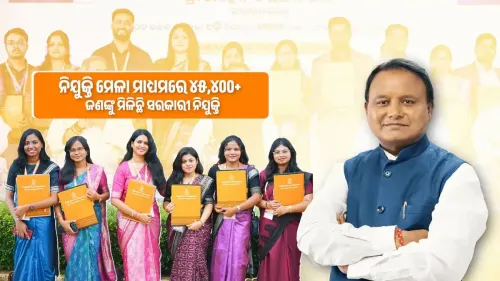
Bhubaneswar, November 4, 2026 — For 2,067 young men and women from Odisha's Scheduled Tribe and Scheduled Caste communities, Wednesday afternoon meant one document changing everything: a formal appointment letter handed directly by the Chief Minister. The Chief Minister's Office of Odisha announced that Chief Minister Shri Mohan Charan Majhi personally presented the letters at the 18th State-Level Recruitment Fair organised by the ST & SC Development Department.
The post, shared in both Odia and English, framed the event as a statement of intent: 'ପ୍ରତ୍ୟେକ କ୍ଷେତ୍ରରେ ଯୁବଶକ୍ତିଙ୍କ ନିୟୋଜନ' — 'engagement of youth strength in every sector.' The government's language was deliberate. This was not a routine administrative handover; it was a public pledge that employment for reserved-category communities sits at the centre of the administration's agenda.
The 18th fair — and what the number tells us
Odisha has been running this series of state-level recruitment fairs through the ST & SC Development Department as part of a consistent effort to fill constitutionally mandated reserved posts in public employment. By the time this edition — the 18th in the series — was held, the format had evolved into a high-visibility platform: not just an administrative exercise, but a signal to communities that affirmative-action hiring commitments are being acted upon, not deferred.
The scale matters. 2,067 appointment letters in a single fair represents a meaningful intake, particularly for a state where Scheduled Tribes account for roughly 22 percent of the population and economic mobility through government employment carries outsized social weight. For families in Odisha's interior districts, a government post is not merely income — it is security, dignity, and a generational foothold.
Majhi's BJP government and the tribal development mandate
Chief Minister Mohan Charan Majhi, who took office in June 2024 leading the BJP-led government in Odisha, has consistently positioned tribal welfare as a flagship concern — a politically significant choice in a state where ST constituencies are numerous and electorally decisive. The ST & SC Development Department sits at the intersection of constitutional obligation and competitive politics: delivering here is both a governance imperative and a visible demonstration of commitment to communities that have historically been underserved in formal employment.
Wednesday's fair is the latest data point in that pattern. The Chief Minister's decision to personally distribute the letters — rather than delegate — amplifies the signal.
The question now is absorption: how quickly these 2,067 recruits move from appointment letter to active posting, and whether the cadence of subsequent fairs keeps pace with demand. That gap between paper and practice is where such programmes are ultimately judged.
Point of View
Staging the event at the Chief Minister level transforms a departmental function into a political assertion: that the party, once seen as less attuned to tribal interests, is delivering on affirmative-action commitments in one of India's most ST-dense states. The real test, however, lies downstream — in posting timelines, departmental absorption, and whether the pace of these fairs scales with the backlog of unfilled reserved vacancies. A 18-edition series is a credible track record; closing the gap between letters issued and candidates actually on the job is the chapter still being written.
NationPress
4 Nov 2026
Frequently Asked Questions
What happened at the 18th State-Level Recruitment Fair in Odisha?
Chief Minister Mohan Charan Majhi handed appointment letters to 2,067 newly recruited candidates from Scheduled Tribe and Scheduled Caste communities at the 18th State-Level Recruitment Fair organised by the ST and SC Development Department of Odisha on November 4, 2026.
Who organised the Odisha ST SC Recruitment Fair?
The ST and SC Development Department of the Odisha government organised the fair. The department is responsible for welfare and development schemes targeting Scheduled Tribe and Scheduled Caste communities in the state.
How many candidates got appointment letters at the Odisha recruitment fair 2026?
A total of 2,067 candidates received appointment letters at the 18th State-Level Recruitment Fair in Odisha in November 2026.
Who is Mohan Charan Majhi?
Mohan Charan Majhi is the Chief Minister of Odisha, heading the BJP-led government that came to power in June 2024.
Why does Odisha hold state-level recruitment fairs for ST and SC communities?
India's Constitution mandates reservations in public employment for Scheduled Tribe and Scheduled Caste communities. Odisha organises these recruitment fairs to fill reserved posts in a structured, transparent, and high-visibility manner, ensuring affirmative-action hiring commitments are acted upon.