Kishan Reddy: Cabinet Clears ₹2,814-Cr Critical Minerals Scheme

Synopsis
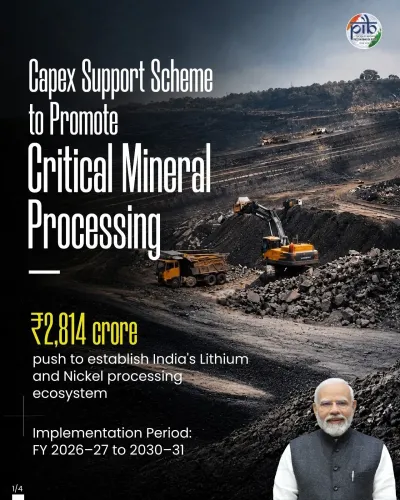
The Union Cabinet has approved a ₹2,814-crore Capex Support Scheme to build domestic critical mineral processing capacity from FY 2026-27 to 2030-31, targeting sectors from semiconductors to defence, as India moves to reduce import dependence and advance its Viksit Bharat goals.
Key Takeaways
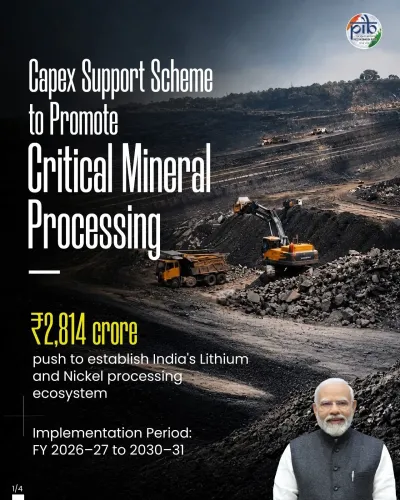
The Union Cabinet approved the Capex Support Scheme to Promote Critical Mineral Processing with an outlay of ₹2,814 crore .
The scheme runs for five years , from FY 2026-27 to FY 2030-31 .
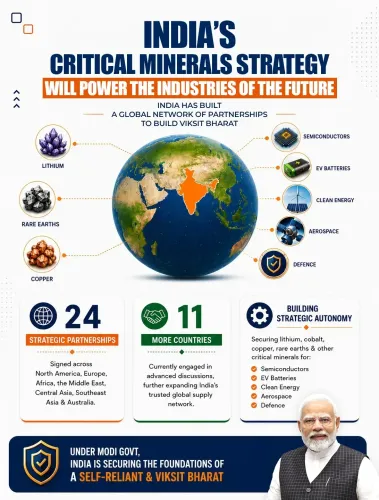
Targeted beneficiary sectors include electronics, semiconductors, batteries, defence, and heavy machinery .
The approval extends the policy chain begun with the MMDR Amendment Act 2023 and the National Critical Minerals Mission of 2024.
The scheme focuses on mid-stream processing — the stage where India's domestic capacity gap is most acute and global concentration is highest.
Implementation details, including project-selection criteria, are expected ahead of the FY 2026-27 rollout .
India just placed a ₹2,814-crore bet on building its own critical minerals processing backbone — and the clock starts FY 2026-27. Union Coal and Mines Minister G. Kishan Reddy announced on Wednesday, November 4, 2026 that the Union Cabinet, chaired by Prime Minister Narendra Modi, has approved the Capex Support Scheme to Promote Critical Mineral Processing, a five-year programme running through FY 2030-31 aimed squarely at the processing bottleneck that has long left India exposed on the global minerals map.
What the ₹2,814-Crore Scheme Actually Does
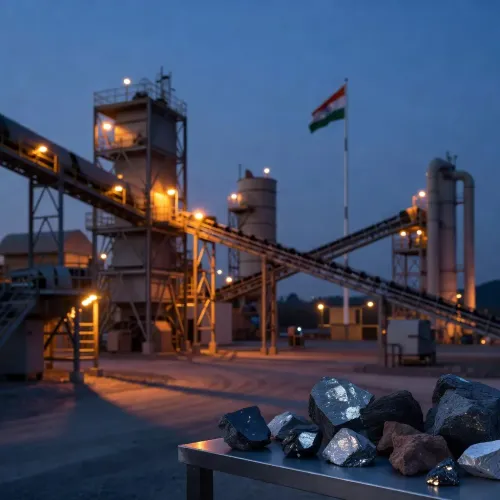
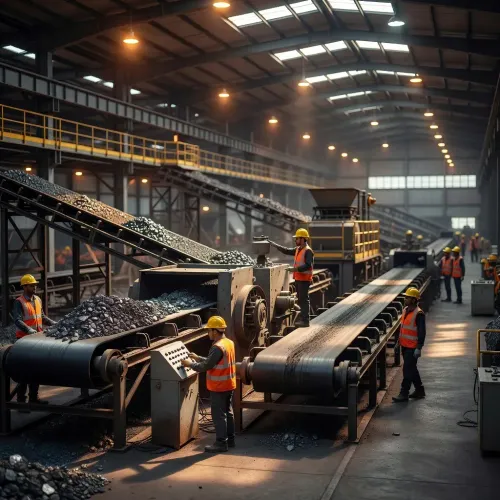
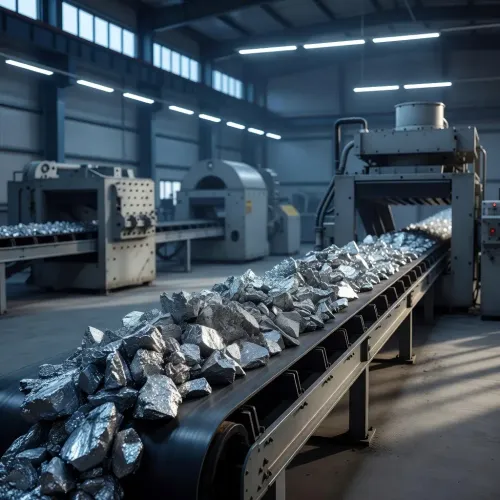
The scheme directs capital expenditure support toward domestic processing of critical minerals — the mid-stream stage where raw ore is refined into the high-purity inputs that advanced industries actually need. That is precisely the stage where global capacity remains most concentrated, with a handful of nations holding near-monopoly positions. By subsidising capex for Indian processors, the government is trying to close a gap that neither exploration nor mining policy alone can fix.
The targeted sectors tell the story: electronics, semiconductors, batteries, defence equipment, and heavy machinery — every industry at the spine of India's industrial ambitions. These are also the sectors most vulnerable to supply-chain disruptions when processing capacity sits entirely abroad.
From MMDR 2023 to a Processing Push: The Policy Chain
This approval does not arrive in isolation. The MMDR Amendment Act of 2023 opened auctions for 30 critical minerals previously ring-fenced for the public sector — a structural unlock that invited private capital into exploration and mining. The National Critical Minerals Mission, announced in the 2024 Union Budget, then widened the frame to cover exploration, mining, and processing together. The new capex scheme is the financial instrument that operationalises the processing pillar of that mission.
It also complements existing production-linked incentive programmes for semiconductors, batteries, and electric vehicles — which create demand for processed critical minerals but could not, on their own, guarantee domestic supply. The logic is now joined up: mine it, process it, manufacture with it.
Reducing Import Dependence — The Viksit Bharat Stakes
India's import exposure on critical minerals has been a structural vulnerability acknowledged across government reports. Processing domestically is the most direct lever to reduce that exposure, because processed forms — not just raw ore — are what manufacturers need. Kishan Reddy framed the approval explicitly within the Viksit Bharat vision, the government's target of developed-nation status by 2047.
What to watch now: the release of scheme guidelines and project-selection criteria ahead of the FY 2026-27 rollout, alongside the progress of critical mineral block auctions already underway. The scheme's design — which projects qualify, which minerals are prioritised, what the capex support ratios look like — will determine whether the ₹2,814 crore translates into real processing capacity or stalls in administrative lag.
India has mapped the route. Now it has to build the road.
Point of View
Addressing the most geopolitically sensitive chokepoint in global supply chains. Coming after the MMDR 2023 reforms and the National Critical Minerals Mission, it completes a legislative-to-financial policy arc that now spans the full value chain. The five-year capex window is calibrated to align with the broader semiconductor and battery PLI timelines, suggesting coordinated industrial planning rather than a standalone announcement. Execution risk — particularly around project selection and disbursement speed — will be the true test of whether this outlay converts to strategic depth.
NationPress
4 Nov 2026
Frequently Asked Questions
What is the Capex Support Scheme for Critical Mineral Processing?
It is a Union Cabinet-approved scheme with a financial outlay of ₹2,814 crore over five years (FY 2026-27 to 2030-31) that provides capital expenditure support to build domestic critical mineral processing capacity in India, targeting sectors including electronics, semiconductors, batteries, and defence.
Which sectors will benefit from the ₹2,814-crore critical minerals scheme?
The scheme targets electronics, semiconductors, batteries, defence equipment, and heavy machinery — industries that depend on processed critical minerals as key inputs in their manufacturing chains.
How does this scheme relate to India's National Critical Minerals Mission?
The National Critical Minerals Mission, announced in the 2024 Union Budget, set out a framework covering exploration, mining, and processing. The new capex scheme operationalises the processing pillar of that mission by providing direct financial support to domestic processors.
Why is processing critical minerals domestically important for India?
India currently depends significantly on imports for processed critical minerals. Mid-stream processing capacity is globally concentrated in a few countries, leaving India exposed to supply disruptions. Domestic processing reduces that dependence and strengthens supply chains for key manufacturing sectors.
Who announced the Cabinet approval of the critical minerals processing scheme?
Union Coal and Mines Minister G. Kishan Reddy announced the Cabinet approval on November 4, 2026, attributing the decision to the cabinet chaired by Prime Minister Narendra Modi.