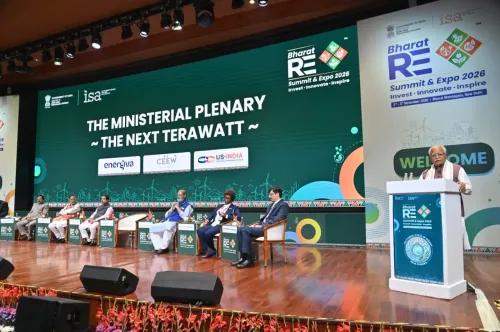
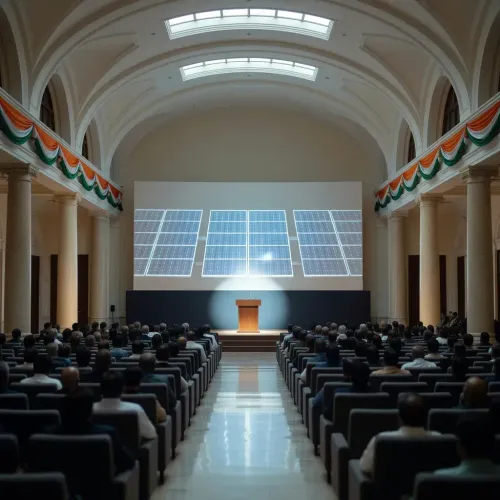
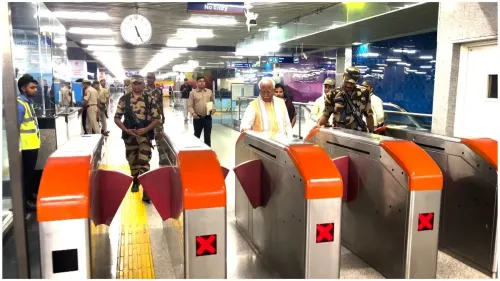
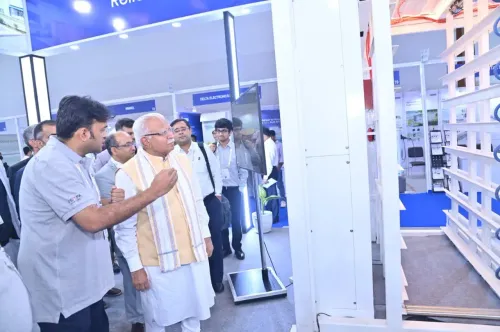
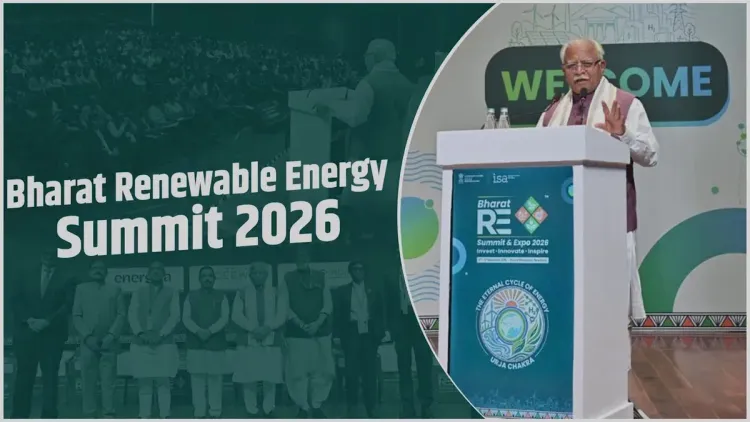
Khattar at Bharat Renewable Energy Summit 2026 Ministerial Plenary
Synopsis
Union Power Minister Manohar Lal Khattar participated in the Ministerial Plenary Session at the Bharat Renewable Energy Summit 2026, spotlighting India's drive toward its 500 GW non-fossil fuel target by 2030 and its net-zero 2070 commitment.
Key Takeaways
Union Power Minister Manohar Lal Khattar attended and shared highlights from the Ministerial Plenary at the Bharat Renewable Energy Summit 2026 on 4 November 2026.
India is committed to achieving 500 GW of non-fossil fuel capacity by 2030 , a pledge made at COP26 in Glasgow in 2021 .
The summit brings together renewable energy developers and state power utilities to advance capacity addition and grid integration.
India has linked successive ministerial-level summits to policy updates on solar, wind, and green hydrogen .
India's broader energy strategy targets net-zero emissions by 2070 , making the 2020s a critical build-out decade.
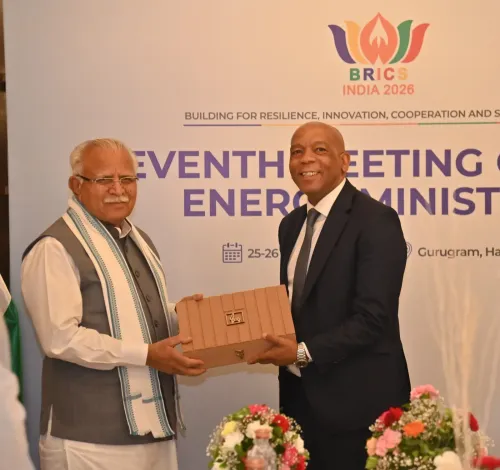
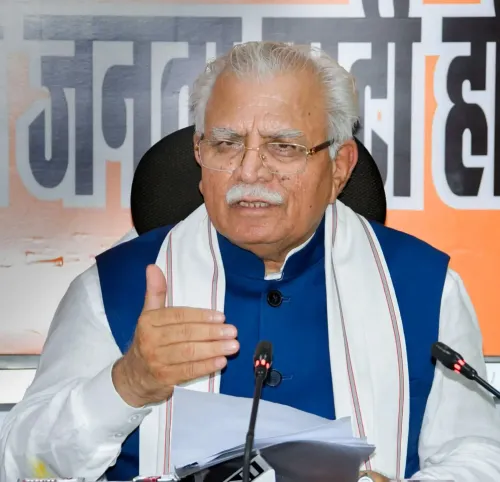
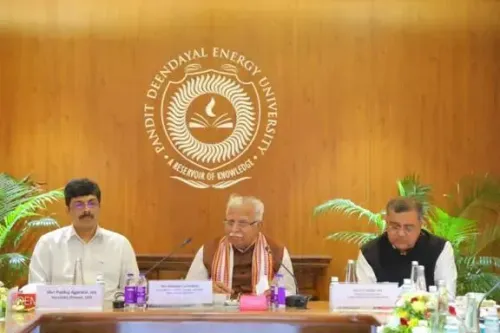
India's clean-energy push moved to centre stage on Wednesday, 4 November 2026, as Union Power Minister Manohar Lal Khattar participated in the Ministerial Plenary Session of the Bharat Renewable Energy Summit 2026, sharing highlights from the high-level deliberations on the country's renewable future.
A ministerial forum for India's 500 GW ambition
The Bharat Renewable Energy Summit is a ministerial-level convergence designed to translate India's headline clean-energy commitments into actionable sectoral policy. At COP26 in Glasgow in 2021, India pledged to achieve 500 GW of non-fossil fuel power capacity by 2030 — a target that now anchors every significant policy conversation in the power sector. Events like this plenary serve as pressure-testing grounds: where state utilities, independent power producers, and central ministries confront the gap between installed capacity and what the grid still needs.
Why these summits carry real policy weight
India has consistently used sector-specific summits to accelerate renewable capacity addition and tackle the harder problem of grid integration. Solar and wind targets have been revised upward repeatedly through such forums, and green hydrogen has emerged as the newest frontier on the agenda. The presence of a Union Minister at the plenary signals that any announcements or directional signals carry the weight of the central government — not just industry aspiration.
The Ministry of Power oversees the architecture through which state power distribution companies procure renewable energy, making Khattar's participation directly relevant to both developers bidding on upcoming tenders and state utilities planning their procurement pipelines. Renewable energy developers and state power utilities — the two stakeholder communities with the most at stake — watched the session closely for signals on revised capacity timelines or policy support mechanisms likely to surface in forthcoming budget and power-sector reviews.
India's net-zero arc and what comes next
India's net-zero by 2070 commitment gives every summit of this kind a long horizon but an immediate urgency: the decade to 2030 is when the foundational capacity must be built. Observers will now watch for whether the ministerial discussions translate into state-level project announcements or revised capacity targets in the upcoming Union Budget cycle. The momentum from a ministerial plenary rarely stays in the room.
Point of View
Ministerial-level participation signals that the Centre intends to hold state utilities and developers accountable to the timeline. Such summits also serve as an early-warning system before budget season — where signals dropped in plenary remarks often harden into fiscal allocations. The question the sector is now asking: will the momentum from the room translate into the revised grid-integration policy the renewable pipeline urgently needs?
NationPress
4 Nov 2026
Frequently Asked Questions
What is the Bharat Renewable Energy Summit 2026?
The Bharat Renewable Energy Summit 2026 is a ministerial-level conference that brings together central government officials, state power utilities, and renewable energy developers to advance India's clean energy capacity targets and policy framework.
What is India's renewable energy target for 2030?
India has pledged to achieve 500 GW of non-fossil fuel power capacity by 2030 , a commitment made at COP26 in Glasgow in 2021 .
Who is Manohar Lal Khattar?
Manohar Lal Khattar is India's Union Minister of Power and Housing and Urban Affairs , a senior BJP leader and former Chief Minister of Haryana.
What is India's net-zero target?
India has committed to achieving net-zero carbon emissions by 2070 , with the 2030 renewable capacity target serving as a critical milestone on that path.
Why are renewable energy summits important for India's power sector?
India uses ministerial-level summits to coordinate policy updates on solar, wind and green hydrogen, align state utilities with central targets, and signal upcoming regulatory or fiscal support — signals that often precede Union Budget allocations.