CM Samrat Choudhary Hails Cabinet Move to Extend 850 Fast Track Courts

Synopsis
The Union Cabinet has approved a five-year extension of the Fast Track Special Courts scheme, keeping 850 courts — including POCSO benches — operational and expanding coverage to high-pendency rape and POCSO districts. Bihar CM Samrat Choudhary praised the decision as a landmark step for justice.
Key Takeaways
850 Fast Track Special Courts , including dedicated POCSO benches, will continue operating for the next five years under a renewed Cabinet mandate.
The scheme was originally launched in 2019 with Nirbhaya Fund backing to expedite trials in rape and child sexual offence cases.
Additional districts with higher pendency in rape and POCSO cases will now be brought under the scheme's coverage — a significant geographic expansion.
The POCSO Act, 2012 mandates special courts for child sexual offence cases; the FTSC scheme provides the central funding framework to sustain them.
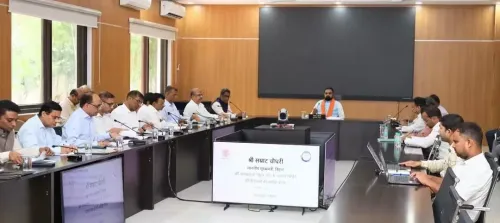
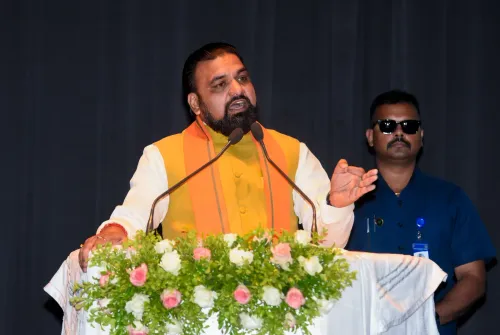
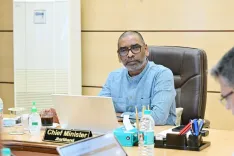
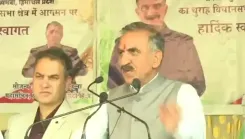
Bihar CM Samrat Choudhary publicly welcomed the decision, attributing it to the leadership of Prime Minister Narendra Modi .
Justice for rape and POCSO survivors just got a five-year lifeline. The Union Cabinet, under Prime Minister Narendra Modi, has approved the continuation of the Fast Track Special Courts (FTSCs) scheme — keeping 850 dedicated courts, including exclusive POCSO benches, operational for the next five years. Bihar Chief Minister Samrat Choudhary welcomed the decision on Wednesday, 4 November 2026, calling it a defining step toward swift justice for women and children.
850 Courts, Five More Years — What the Cabinet Decided
The Cabinet's approval extends a scheme that has been a cornerstone of India's post-2012 criminal justice reforms. Under the renewed mandate, 850 special courts — covering both rape cases and offences under the Protection of Children from Sexual Offences (POCSO) Act, 2012 — will continue to function with central funding. Critically, the expanded plan will also bring in additional districts carrying a adhik lambit bojh (higher pendency burden) in rape and POCSO cases, widening the scheme's reach to where the backlog is sharpest.
CM Choudhary's post framed the decision as direct evidence of the Modi government's commitment to victims: 'दुष्कर्म और POCSO मामलों के अधिक लंबित बोझ वाले अतिरिक्त जिलों को भी योजना में शामिल किया जाएगा' — 'additional districts with a heavier pendency burden in rape and POCSO cases will also be included in the scheme.'
From Nirbhaya's Legacy to 1,000-Plus Courts: The FTSC Journey
The Fast Track Special Courts scheme was launched in 2019, drawing its mandate — and much of its funding — from the Nirbhaya Fund, created in the wake of the December 2012 Delhi gang-rape case that convulsed the country and triggered sweeping criminal law amendments. The original target was more than 1,000 courts to slash trial timelines in gender-based violence and child sexual offence cases. Since then, the scheme has been renewed in phases, each extension driven by the stubborn reality of pending cases stacking up in ordinary courts.
POCSO, enacted in 2012, had itself mandated special courts for child sexual offence trials — but without consistent central resourcing, implementation remained uneven across states. The FTSC scheme provided the structural spine: dedicated judges, ring-fenced caseloads, and a clear accountability chain back to the Ministry of Law and Justice.
High-Pendency Districts: The Expansion That Matters Most
The most consequential detail in this decision is the district-level expansion. Including high-pendency districts acknowledges a ground reality: the existing court network, however robust, does not cover every pocket where cases pile up fastest. By using pendency data to drive coverage decisions, the scheme becomes more surgical — resources follow the need rather than administrative convenience.
What to watch now is state-level execution: how quickly Bihar and other states identify the qualifying districts, mobilise the infrastructure, and ensure Nirbhaya Fund disbursements flow without delay. The scheme's credibility will ultimately rest on how fast a survivor in a newly-covered district can expect a verdict — not on how many courts exist on paper.
Point of View
Not a one-time fix. Expanding coverage to high-pendency districts rather than simply continuing the existing footprint marks a data-driven maturation of the policy. For the BJP, showcasing this decision aligns with its long-running political messaging around post-Nirbhaya criminal justice reform and women's safety — a messaging frame Bihar CM Choudhary is clearly amplifying ahead of any political cycle. The real test, as with every FTSC renewal, remains state-level absorption: whether funds flow, benches are filled, and survivors see verdicts in months rather than years.
NationPress
4 Nov 2026
Frequently Asked Questions
What are Fast Track Special Courts (FTSCs) in India?
Fast Track Special Courts are dedicated judicial bodies set up to ensure speedy disposal of rape and POCSO cases. Launched in 2019 with central funding from the Nirbhaya Fund, they operate separately from regular courts to reduce trial pendency in sensitive criminal matters involving women and children.
How many fast track courts will operate under the extended scheme?
A total of 850 Fast Track Special Courts, including exclusive POCSO benches, will be operational under the five-year extension approved by the Union Cabinet.
What is the POCSO Act and why does it need special courts?
The Protection of Children from Sexual Offences (POCSO) Act, 2012 is a law that criminalises sexual offences against minors and mandates child-friendly special courts for such cases. Dedicated courts are needed because ordinary courts face heavy backlogs, delaying justice for child abuse survivors.
What is the Nirbhaya Fund and how is it linked to fast track courts?
The Nirbhaya Fund was created by the government following the December 2012 Delhi gang-rape case to finance initiatives for women's safety and faster justice delivery. It has been a primary funding source for the Fast Track Special Courts scheme since its 2019 launch.
Which new districts will be added to the FTSC scheme?
Districts with a higher pendency burden in rape and POCSO cases will be identified and added to the scheme. The specific list of additional districts is to be determined through state-level implementation processes following the Cabinet approval.