CM Yogi to hand appointment letters to new scientific officers in Lucknow

Synopsis
Uttar Pradesh CM Yogi Adityanath announced he will personally hand UPPSC appointment letters to newly selected scientific officers in Lucknow on 5 November 2026, reinforcing the state government's push for evidence-based criminal investigation and higher conviction rates.
Key Takeaways
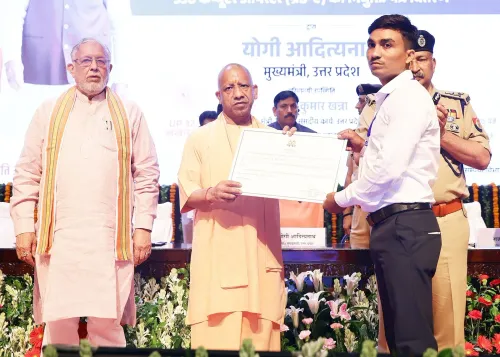
CM Yogi Adityanath will personally distribute UPPSC appointment letters to newly selected scientific officers in Lucknow on 5 November 2026 .
The Chief Minister framed the drive around three pillars: impartial investigation, solid scientific evidence, and timely punishment for the guilty.
The Uttar Pradesh Public Service Commission (UPPSC) conducted the recruitment and is organising the ceremony.
The Adityanath government has pushed forensic capacity-building as a core part of its law-and-order agenda since taking office in 2017 .
Newly appointed officers are expected to be deployed into district-level forensic units across the state.
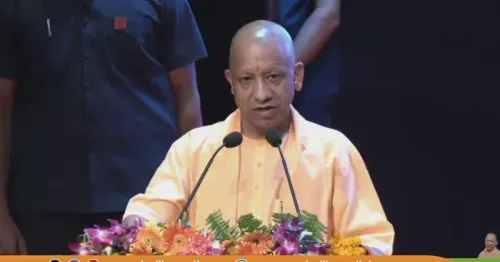
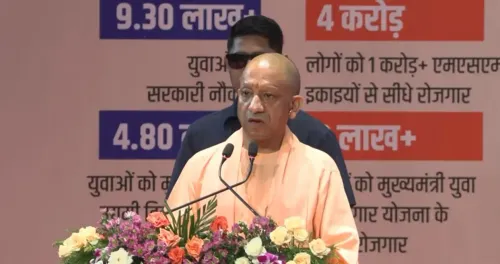
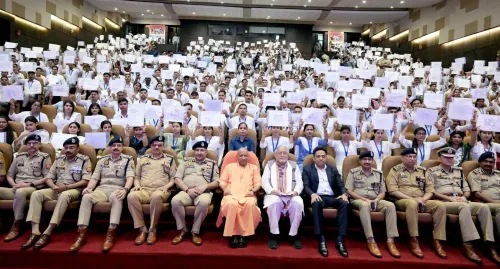
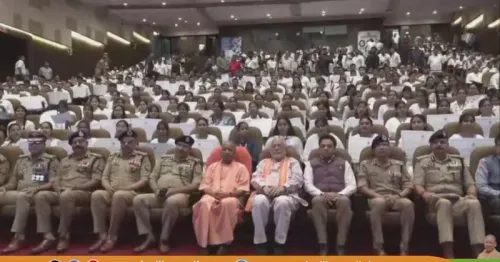
A stronger conviction rate begins in the lab, not just the courtroom. On Thursday, 5 November 2026, Uttar Pradesh Chief Minister Yogi Adityanath announced he will personally distribute appointment letters to newly selected scientific officers in Lucknow — a step he framed as central to building a justice system grounded in hard evidence.
Posting on X in Hindi, CM Yogi wrote: 'Apraadh ki nishpaksh jaanch, thos vaigyanik saakshya aur doshiyon ko samay par saza dilaana hi sudridh nyaay vyavastha ka aadhar hai.' ('Impartial investigation of crime, solid scientific evidence, and timely punishment for the guilty — these are the foundation of a strong justice system.') He added that the Uttar Pradesh Public Service Commission (UPPSC) is conducting the appointment-letter distribution for the newly selected officers, and extended advance congratulations to each of them.
UPPSC's role in expanding forensic capacity across UP
The Uttar Pradesh Public Service Commission is the state's constitutional recruitment body, responsible for filling technical and administrative posts through competitive examination. Successive drives for scientific and forensic posts have been used since 2017 to push trained personnel into district-level units, gradually widening the state's investigative infrastructure beyond the major urban centres.
The underlying logic is straightforward: more forensic officers in the field means shorter evidence-processing timelines, fewer adjournments in trial courts, and — in theory — a measurable lift in conviction rates. It is incremental institution-building rather than a single headline reform, but the cumulative effect on case quality can be significant.
Law-and-order as a governance signature since 2017
Police modernisation and science-backed investigation have been recurring themes of the Adityanath administration from its first term. The state government has repeatedly cited forensic capacity as a gap that weakens prosecutions — particularly in serious crimes where eyewitness testimony alone is contestable. Embedding scientific officers at the district level is the operational answer to that argument.
What to watch next: how quickly the newly appointed officers are deployed into district forensic units, and whether subsequent state crime reports register any shift in investigation timelines or conviction statistics. The proof, as the CM's own framing insists, is in the evidence.
Point of View
Incremental effort to institutionalise forensic science within UP's law-enforcement architecture — a strategy that doubles as both genuine governance and potent political messaging on the 'law and order' front. By having the Chief Minister personally preside over letter distribution, the administration signals that scientific policing is a priority at the very top. The long-term test is operational: whether district forensic units gain meaningful capacity or whether appointments remain concentrated in urban headquarters. If conviction data improves in future state crime reports, this steady recruitment pipeline will be a credible part of the explanation.
NationPress
5 Nov 2026
Frequently Asked Questions
What did CM Yogi Adityanath announce on 5 November 2026?
Chief Minister Yogi Adityanath announced he would personally distribute appointment letters to newly selected scientific officers recruited by the Uttar Pradesh Public Service Commission at an event in Lucknow on 5 November 2026.
What is the role of UPPSC in this appointment?
The Uttar Pradesh Public Service Commission (UPPSC) is the state's constitutional body that conducts competitive recruitment for government posts, including scientific and forensic officer positions, and is organising the appointment-letter distribution ceremony.
Why is UP recruiting scientific officers for criminal investigation?
The Uttar Pradesh government has emphasised since 2017 that impartial investigation backed by solid forensic evidence is essential to secure timely convictions, and successive UPPSC recruitment drives for scientific posts are aimed at expanding that capacity across districts.
How does scientific officer recruitment strengthen UP's justice system?
More trained forensic officers in the field can shorten evidence-processing timelines, reduce trial delays caused by missing technical analysis, and strengthen prosecution cases — all factors that influence conviction rates in criminal trials.
Where will the appointment letter distribution event take place?
The event is being held in Lucknow, the capital of Uttar Pradesh, as announced by Chief Minister Yogi Adityanath on 5 November 2026.