Rajnath Singh pays tribute to Bharat Ratna Bhupen Hazarika
Synopsis
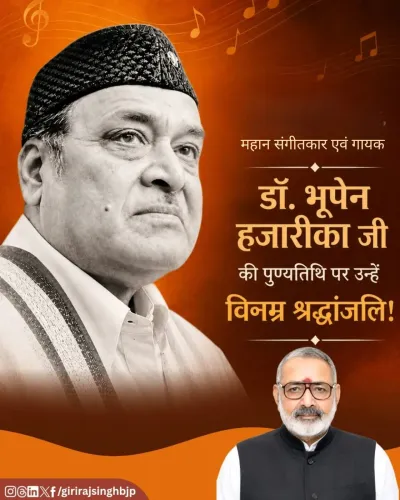
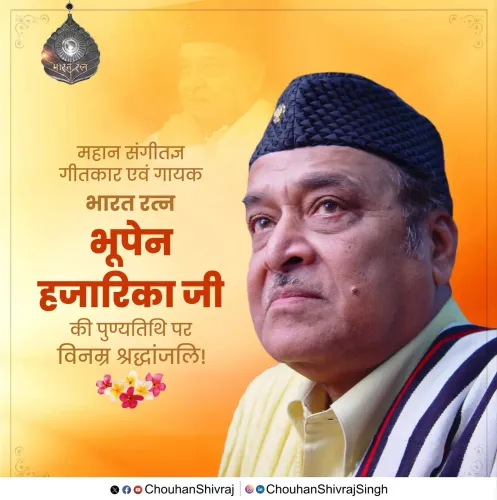
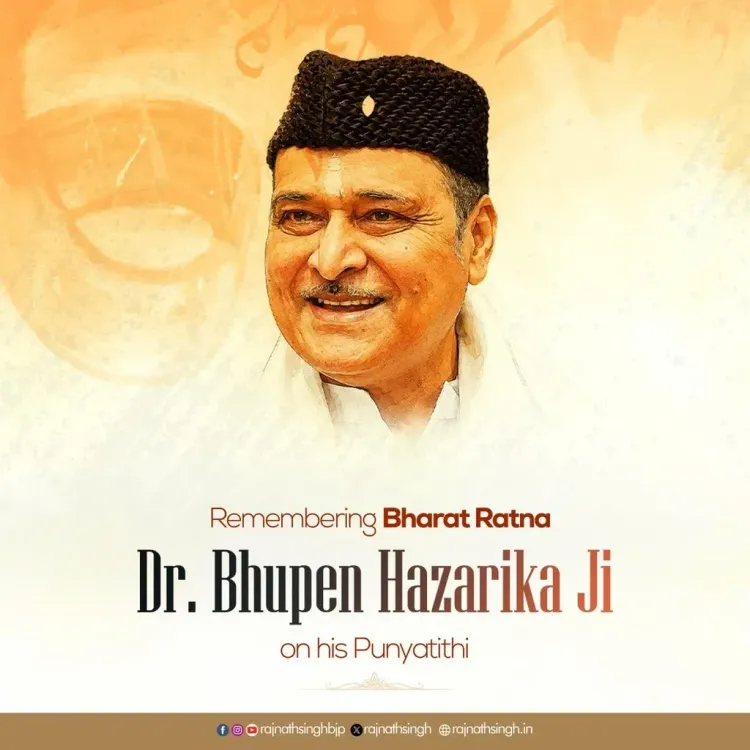
Union Defence Minister Rajnath Singh on 5 November 2026 paid tribute to Bharat Ratna Dr. Bhupen Hazarika on his death anniversary, hailing the Assamese legend's music as a bridge across linguistic and cultural divides that brought Northeast India's heritage to global prominence.
Key Takeaways
Rajnath Singh posted a tribute to Dr.
Bhupen Hazarika on his Punyatithi , 5 November 2026 .
Hazarika passed away on 5 November 2011 , making this his 15th death anniversary .
He was posthumously awarded the Bharat Ratna in 2019 , India's highest civilian honour.
Singh praised Hazarika for expressing 'humanity, compassion and universal brotherhood' through music.
Hazarika's compositions brought Assam 's cultural heritage to national and global audiences.
Senior central government leaders regularly mark death anniversaries of Northeast cultural icons as part of broader national unity messaging.
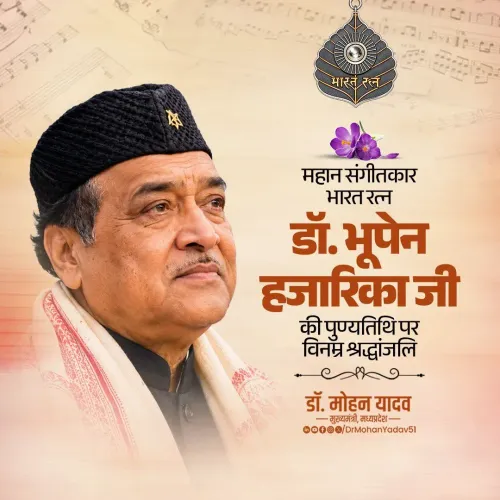
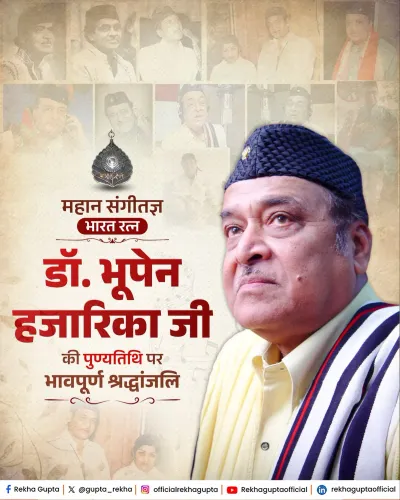
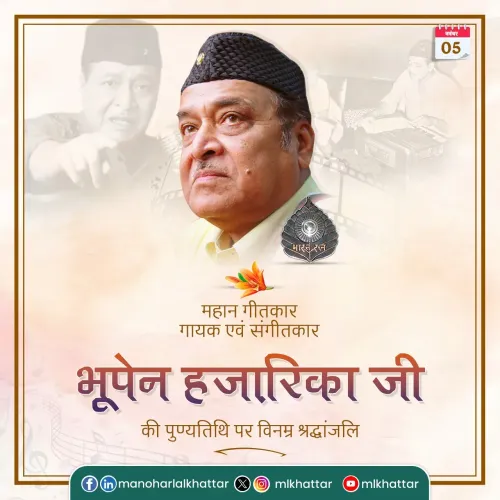
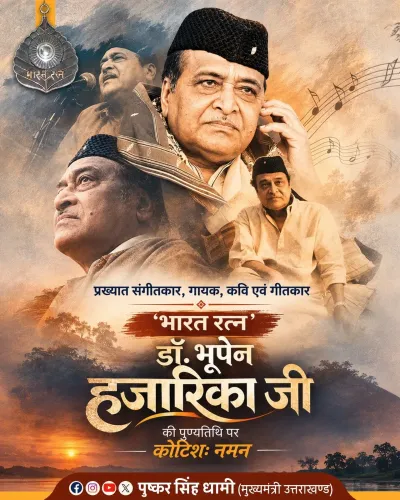
Fifteen years after his passing, the voice of Dr. Bhupen Hazarika still carries across rivers and borders — and on Thursday, 5 November 2026, Union Defence Minister Rajnath Singh marked the legendary musician's Punyatithi (death anniversary) with a heartfelt tribute on X.
Singh remembered Hazarika as 'a legendary voice whose music transcended linguistic and cultural boundaries,' crediting him with giving 'expression to the timeless values of humanity, compassion and universal brotherhood.' The minister noted that Hazarika's extraordinary compositions brought 'the rich cultural heritage of Assam to the national and global stage.'
From the Brahmaputra to the world: Hazarika's enduring reach
Dr. Bhupen Hazarika was born in Assam and went on to become one of India's most beloved singer-composers, weaving the folk traditions of the Northeast into songs that spoke to universal human experience. His music addressed social justice, the dignity of ordinary people, and the shared thread of Indian civilisation — in Assamese, Hindi, Bengali, and beyond.
He passed away on 5 November 2011. Eight years later, in 2019, the Government of India posthumously conferred upon him the Bharat Ratna — the country's highest civilian honour — in recognition of a career that had long outlasted any single language or region.
Northeast cultural icons and the annual remembrance pattern
Singh's tribute is part of a consistent practice among senior central government leaders of marking death anniversaries of cultural figures from the Northeast — artists whose work advanced themes of national unity and regional pride simultaneously. For Assam and its diaspora, 5 November serves as an annual moment of collective remembrance for a man who gave their culture a voice the whole country could hear.
Hazarika's legacy endures not just in archives but in the lived cultural memory of millions — his songs still sung at festivals, still taught in schools, still capable of moving listeners who may not understand a single word of Assamese but feel everything the music carries.
India's cultural richness has many custodians. Hazarika was among its greatest.
Point of View
Awarded under the current dispensation in 2019, links government recognition to cultural nationalism. The annual remembrance on 5 November keeps that connection visible. For Assam, still a contested political terrain, such tributes carry both ceremonial weight and strategic undertone.
NationPress
5 Nov 2026
Frequently Asked Questions
Who was Dr. Bhupen Hazarika?
Dr. Bhupen Hazarika was a legendary Assamese singer, composer, and lyricist whose music bridged regional, linguistic, and national boundaries. He is widely regarded as one of India's greatest cultural figures, known for compositions that championed social justice and universal humanity.
When did Bhupen Hazarika die?
Dr. Bhupen Hazarika passed away on 5 November 2011 . His death anniversary, observed as his Punyatithi , is marked annually by cultural communities and political leaders across India.
Did Bhupen Hazarika receive the Bharat Ratna?
Yes. Dr. Bhupen Hazarika was posthumously conferred the Bharat Ratna — India's highest civilian honour — in 2019 , years after his death in 2011.
Why did Rajnath Singh pay tribute to Bhupen Hazarika?
Union Defence Minister Rajnath Singh posted the tribute on 5 November 2026 to mark the 15th death anniversary of Dr. Hazarika, acknowledging his contribution to India's cultural heritage and his role in bringing Assam's traditions to a national and global audience.
What is Bhupen Hazarika's legacy in Assam?
Hazarika is considered the cultural soul of Assam. His songs, rooted in the state's folk traditions and social realities, gave voice to the Northeast on the national stage and continue to be performed and celebrated across generations and linguistic communities.