Rijiju pays tribute to Bharat Ratna Dr. Bhupen Hazarika
Synopsis
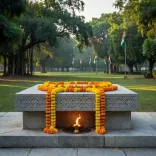
Union Minister Kiren Rijiju paid tribute to Bharat Ratna Dr. Bhupen Hazarika on his death anniversary, honouring the legendary Assamese singer, composer, poet, and filmmaker for spreading unity, humanity, and social harmony through timeless music.
Key Takeaways
Kiren Rijiju , Union Parliamentary Affairs and Minority Affairs Minister, paid tribute to Dr.
Bhupen Hazarika on his death anniversary on November 5, 2026 .
Hazarika was a celebrated Assamese singer, musician, poet, and filmmaker whose works spanned multiple Indian languages and regions.
He was posthumously awarded the Bharat Ratna in 2019 — India's highest civilian honour.
Rijiju highlighted Hazarika's message of love, humanity, social harmony, and national unity carried through his compositions.
Annual commemorative events are held across Assam and northeastern states on his death anniversary each November.
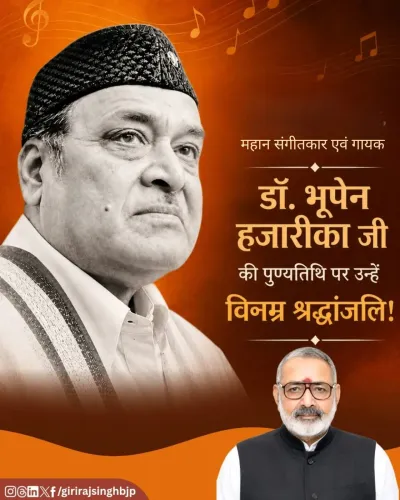
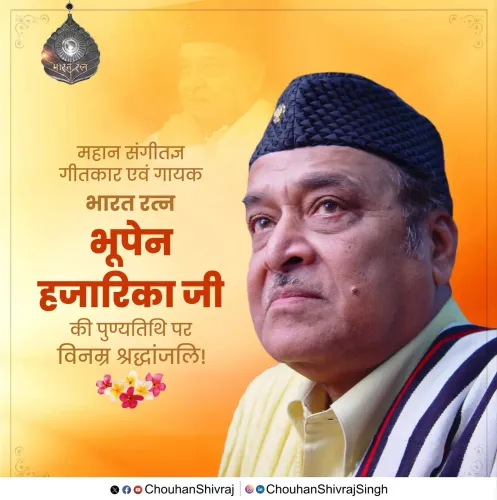
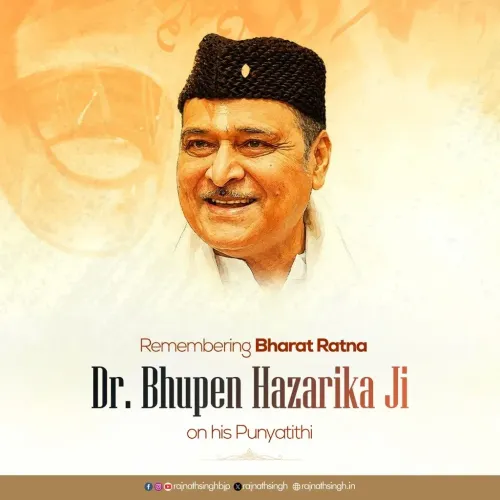
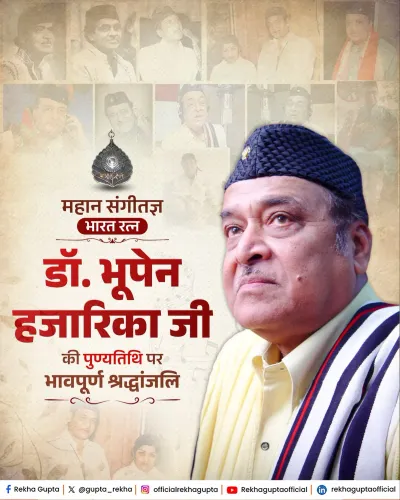
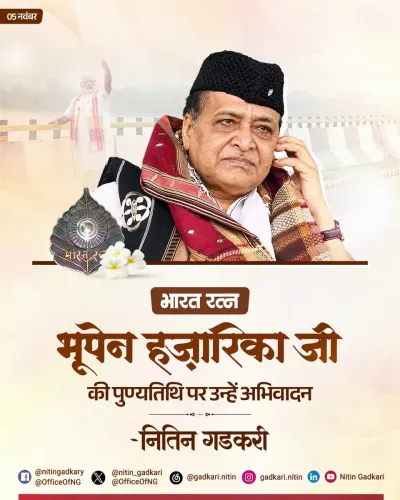
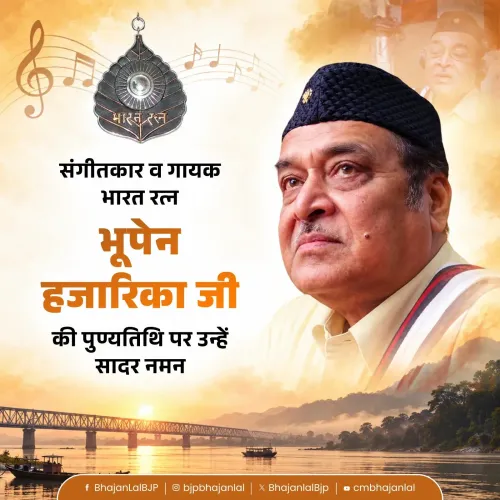
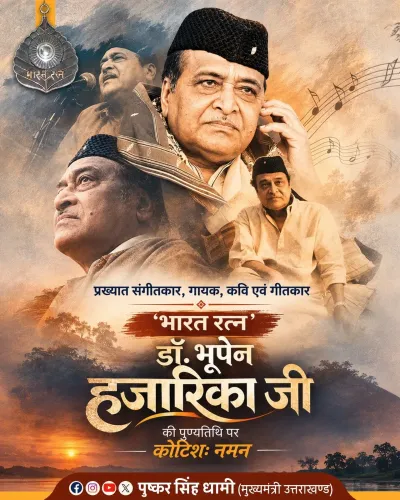
A voice that turned rivers into poetry and borders into bridges — Union Parliamentary Affairs and Minority Affairs Minister Kiren Rijiju on Thursday, November 5, paid solemn homage to Bharat Ratna awardee Dr. Bhupen Hazarika on his death anniversary, remembering the legendary Assamese composer, singer, poet, and filmmaker as a timeless messenger of love, humanity, and national unity.
Posting on X in Hindi, Rijiju wrote: 'महान संगीतकार, गायक, कवि और फिल्मकार 'भारत रत्न' डॉ. भूपेन हजारिका जी की पुण्यतिथि पर सादर नमन।' — 'Respectful tribute on the death anniversary of the great musician, singer, poet and filmmaker, Bharat Ratna Dr. Bhupen Hazarika.' He added that through his timeless compositions, Hazarika carried the message of love, humanity, social harmony, and unity to every corner of the country, and that his invaluable contribution to enriching Indian musical tradition and culture would forever be remembered.
The man who gave Northeast India a national voice
Dr. Bhupen Hazarika was born in Sadiya, Assam, and built a creative universe that stretched far beyond regional boundaries — composing and performing in Assamese, Hindi, Bengali, and several other languages over a career spanning decades. His songs wove together folk idioms with social consciousness, addressing caste, displacement, and communal brotherhood in ways that resonated across India's linguistic and geographic divides. He was equally celebrated as a filmmaker, having directed several path-breaking Assamese films.
The Government of India posthumously conferred upon him the country's highest civilian honour, the Bharat Ratna, in 2019 — recognition that placed him alongside the nation's most transformative figures in arts and public life. The award was widely seen as a long-overdue salute to the Northeast's contribution to India's cultural mainstream.
Why Rijiju's tribute carries a symbolic weight
Rijiju is himself from Arunachal Pradesh — a northeastern state whose cultural identity and political aspirations share deep historical ties with Assam and the broader region Hazarika so powerfully represented. When a senior Union minister from the Northeast marks this anniversary, it is not merely ceremonial. It is a reaffirmation that the cultural inheritance of India's eastern frontier is a living part of national identity — not a footnote.
Commemorative events are held annually across Assam and other northeastern states around November 5, Hazarika's death anniversary, drawing artists, students, and civic organisations who continue to perform and study his work.
Decades after his passing, Bhupen Hazarika's songs still open with the Brahmaputra's rumble and close with a question about why we let humanity drown — and that question refuses to age.
Point of View
Invoking Hazarika is also a signal of regional solidarity that carries political resonance. The Northeast's cultural icons have historically been underrepresented in India's national cultural discourse, and official remembrances from senior Union ministers help rebalance that visibility. Whether these tributes translate into sustained institutional investment in Northeastern arts and heritage remains the more consequential question.
NationPress
5 Nov 2026
Frequently Asked Questions
Who was Dr. Bhupen Hazarika?
Dr. Bhupen Hazarika was a legendary Assamese singer, composer, poet, and filmmaker known for songs that blended folk traditions with themes of social harmony and humanity. He was born in Sadiya, Assam, and composed in multiple Indian languages over a decades-long career.
When was Bhupen Hazarika awarded the Bharat Ratna?
Dr. Bhupen Hazarika was posthumously awarded the Bharat Ratna — India's highest civilian honour — in 2019.
When did Bhupen Hazarika pass away?
Dr. Bhupen Hazarika passed away on November 5, and his death anniversary is observed each year on that date, with commemorative events held across Assam and the northeastern states.
Why did Kiren Rijiju pay tribute to Bhupen Hazarika?
Union Minister Kiren Rijiju posted a tribute on X marking Bhupen Hazarika's death anniversary, honouring his timeless contributions to Indian music, culture, and his message of unity and social harmony.
What is Bhupen Hazarika's legacy in Indian music?
Hazarika's legacy lies in bringing the cultural and folk traditions of Assam and the Northeast to a national and international audience, composing in several languages and addressing themes of love, displacement, and brotherhood that remain deeply relevant.