4th Mining Ministers' Conference in Goa: Progress, challenges on agenda
Synopsis
India's mining and coal sectors are under the spotlight at a two-day ministerial conference in Goa, where Coal Secretary Vikram Dev Dutt warned that allocated-but-idle coal blocks are dead capacity the country can't afford — especially after West Asia conflict disrupted gas supplies and pushed coal to cover over 70% of India's electricity needs.
Key Takeaways
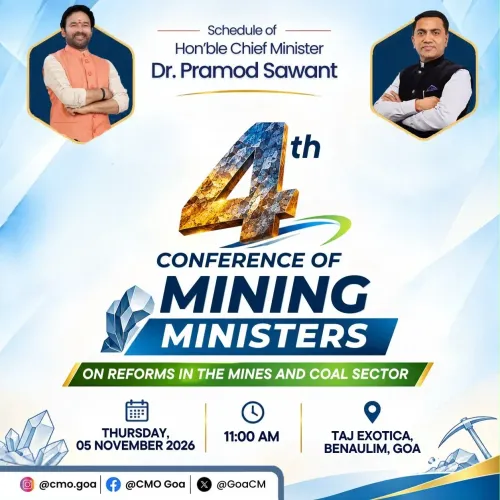
The 4th Conference of Mining Ministers is being held in Goa on 4–5 November 2026 , hosted by the Ministry of Mines .
Coal Secretary Vikram Dev Dutt urged allottees of new coal mines to begin production ahead of revised timelines and reach peak capacity swiftly.
Disruptions to LNG and LPG supplies from West Asia (from late February) have heightened dependence on domestic coal for power stability.
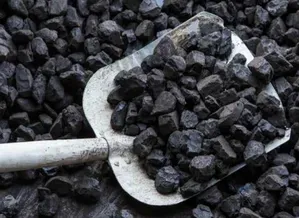
India produced 1,041 million tonnes of coal in FY 2025-26 ; coal supplies more than 70% of the country's electricity.
The Centre's key message: future production gains must come from activating already-allocated blocks , not just new allocations.
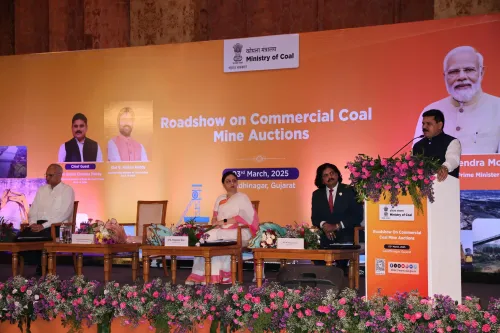
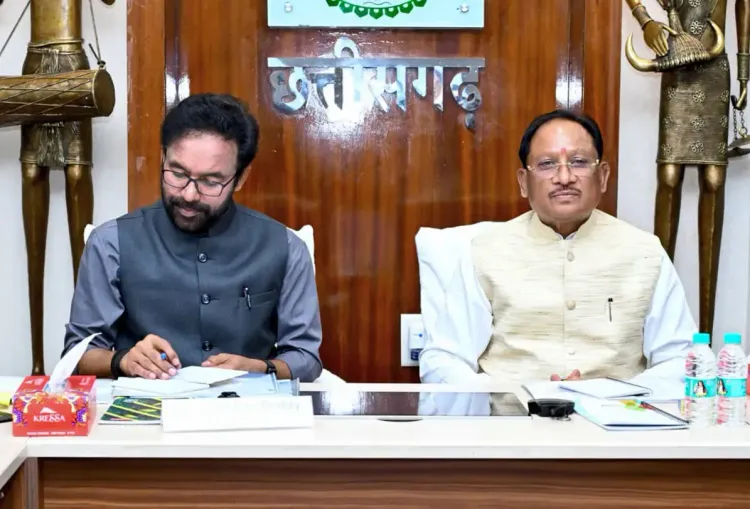
The Ministry of Mines is hosting the 4th Conference of Mining Ministers in Goa on 4–5 November 2026, bringing together mining ministers from across India's states along with senior officials from the Centre and state governments. The two-day conclave is designed to accelerate collective action in a sector that underpins the country's energy and industrial ambitions.
What the Conference Covers
The forum will facilitate structured discussions on the progress, opportunities, and challenges facing India's mining sector. States are expected to share experiences, initiatives, and best practices — an exercise aimed at reducing the uneven pace of mining development across different regions. The Ministry of Mines has framed the conference as a continuation of its sustained engagement with state governments in pursuit of Viksit Bharat goals.
Coal Secretary's Call to Action
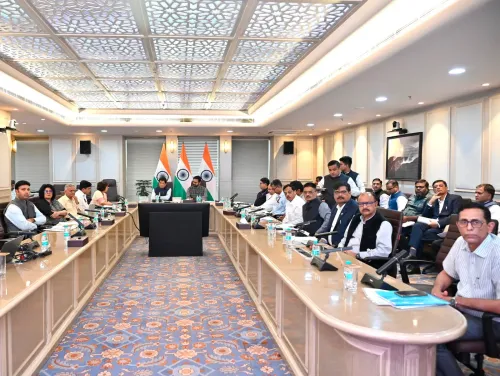
Running alongside the conference is a stakeholder consultation on 'Mining for Future' in Goa, where Coal Secretary Vikram Dev Dutt addressed allottees of new coal mines. Dutt urged them to begin production ahead of revised timelines and ramp up to peak rated capacity quickly. His remarks came against the backdrop of disruptions to gas supplies triggered by the continuing conflict in West Asia.
Speaking at the consultation, Dutt said: "A block that is allocated but not producing is capacity the country has set aside and cannot use." He noted that disruptions to LNG and LPG supplies from late February had placed coal at the centre of India's energy security strategy, with stocks at mines and power plants allowing the government to maintain steady power supply.
India's Coal Output and Energy Dependence
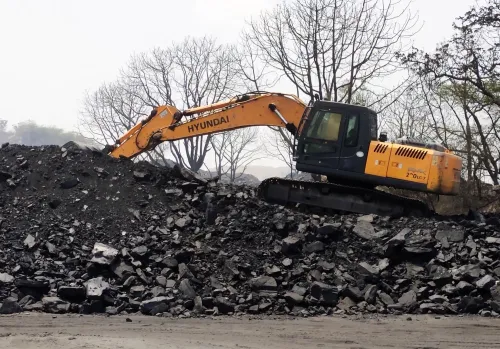
India produced 1,041 million tonnes of coal in FY 2025-26, and coal continues to account for more than 70% of the country's electricity generation. The Coal Ministry's message at the consultation was clear: India's next production gains will come not just from allocating new blocks, but critically from bringing already-allocated blocks into active production — a distinction that highlights a persistent execution gap in the sector.
Significance for Mining Policy
The conference reflects a growing urgency in New Delhi to synchronise Central and state-level mining governance. Notably, mining is a concurrent subject under India's Constitution, meaning policy outcomes depend heavily on state-level implementation. This is the fourth such ministerial-level conclave, underscoring the Centre's intent to use peer-to-peer state engagement as a lever for sectoral momentum. The participation of representatives from multiple states is expected to surface divergent regulatory environments and push toward harmonisation.
The outcomes from both the ministerial conference and the 'Mining for Future' consultation are expected to inform the Ministry of Mines' policy roadmap for the next fiscal year.
Point of View
The execution gap in already-allocated blocks is now an energy security vulnerability, not just an administrative inconvenience. The ministerial conference format is a useful forum, but four editions in, the question is whether it produces binding timelines or remains an exchange of best practices that states file and forget.
NationPress
5 Nov 2026
Frequently Asked Questions
What is the 4th Conference of Mining Ministers in Goa about?
It is a two-day conclave held on 4–5 November 2026 in Goa, organised by the Ministry of Mines, bringing together state mining ministers and senior Central and state government officials to discuss progress, opportunities, and challenges in India's mining sector. The conference also aims to encourage states to share best practices and align on the Viksit Bharat vision.
Why is Coal Secretary Vikram Dev Dutt urging faster coal production?
Dutt has called on allottees of new coal mines to begin production ahead of revised timelines because disruptions to LNG and LPG supplies caused by the ongoing West Asia conflict have increased pressure on domestic coal to maintain power supply. He stressed that idle allocated blocks represent capacity the country cannot afford to leave unused.
How much coal did India produce in FY 2025-26?
India produced 1,041 million tonnes of coal in FY 2025-26. Coal currently supplies more than 70% of the country's electricity, making it the backbone of India's energy security.
What is the 'Mining for Future' consultation?
It is a stakeholder consultation held alongside the ministerial conference in Goa, where coal and mining sector officials and industry representatives deliberated on strategies to boost domestic coal production. The key takeaway was that India's future gains must come from activating already-allocated but non-producing blocks, not solely from new allocations.
Why does the Centre hold a Mining Ministers' Conference with states?
Mining is a concurrent subject under India's Constitution, meaning effective policy outcomes require close coordination between the Centre and states. The conference provides a structured platform for this interaction, helping to harmonise regulatory environments and accelerate sector-wide development across states with varying implementation records.