Coal Ministry urges new mine allottees to fast-track production amid West Asia energy crisis

Synopsis
With Asian LNG prices up 45 per cent year-on-year and global coal demand heading for a record 8.94 billion tonnes, India's Coal Ministry is drawing a direct line between the West Asia conflict and the urgency to convert allocated-but-idle mine blocks into active production — warning that unproductive allocations are a national energy liability.
Key Takeaways
Coal Ministry on 30 October 2026 urged new mine allottees to begin production ahead of revised timelines and ramp up to peak capacity quickly.
Coal Secretary Vikram Dev Dutt linked the push to LNG/LPG supply disruptions caused by the ongoing West Asia conflict since February 2026 .
Asian spot LNG averaged $17.5 per MBtu in Q2 2026 — 45 per cent higher year-on-year; global coal demand forecast at a record 8.94 billion tonnes in 2026.
India produced 1,041 million tonnes of coal in FY 2025-26 ; coal supplies more than 70 per cent of domestic electricity.
Reforms have cut mine operationalisation time from 51 to 40 months (fully explored) and from 66 to 52 months (partially explored).
Ministry invited stakeholder suggestions on policy changes, contract clause revisions, and legislative amendments to speed up mine activation.
The Coal Ministry on Friday, 30 October 2026, directed allottees of newly allocated coal mines to begin production ahead of revised timelines and scale rapidly to peak rated capacity, citing a widening energy supply gap triggered by the ongoing conflict in West Asia and its knock-on disruption to global LNG and LPG supplies.
The Urgency Behind the Push
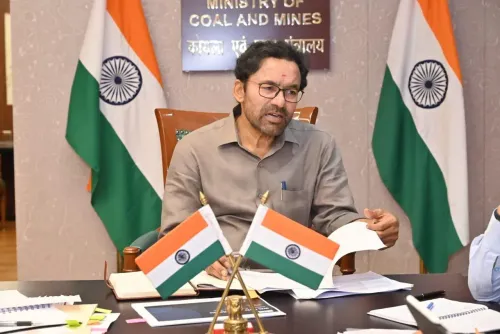
Coal Secretary Vikram Dev Dutt, addressing a stakeholder consultation on 'Mining for Future' in Panjim, Goa, said the past eight months had stress-tested India's energy sector. When the West Asia conflict disrupted LNG and LPG supplies from late February 2026, existing coal stockpiles at mines and power plants allowed the government to maintain stable electricity supply nationwide. However, Dutt cautioned that the pressure has not eased. 'A block that is allocated but not producing is capacity the country has set aside and cannot use,' he said.
Global Energy Signals Driving Domestic Coal Strategy
The Coal Secretary cited data from the International Energy Agency (IEA), which projects gas markets to remain tight through 2027. Asian spot LNG averaged $17.5 per MBtu in the second quarter of 2026 — 45 per cent higher than a year earlier — while global coal demand is forecast to hit a record 8.94 billion tonnes in 2026. 'Each tonne we produce at home protects the economy from these swings,' Dutt said. India produced 1,041 million tonnes of coal in FY 2025-26, and the fuel still accounts for more than 70 per cent of the country's electricity generation.
Reforms That Have Already Cut Timelines
Additional Secretary Rupinder Brar outlined the progress made under recent administrative reforms. The time required to operationalise a mine has been reduced from 51 to 40 months for fully explored blocks, and from 66 to 52 months for partially explored ones. Mining plan approvals now average 4.5 months, down from 9 months earlier. Mine opening permission is now granted at the company board level, and 44 accredited exploration agencies no longer require a prospecting licence. Brar called for continued acceleration while maintaining environmental stewardship and community welfare.
Responsible Mining and Community Commitments
Dutt emphasised that expansion must come with accountability. A mine, he noted, takes land, draws on water, and disrupts livelihoods. Families displaced by mining should know from the outset what compensation they will receive, where they will be relocated, and how their incomes will be restored. He stressed that companies must honour every commitment made to affected communities. The ministry also highlighted the importance of scientific mine closure and transforming exhausted mine sites into ecologically restored, productive habitats. Stakeholders were invited to suggest policy amendments — including changes to coal mine agreement clauses and relevant Acts and Rules — to further accelerate operationalisation.
What Comes Next
The consultation's central message was that India's next production gains must come from two parallel tracks: allocating new blocks and, critically, bringing already-allocated blocks into active production. With global energy markets under sustained stress and India's domestic coal output now crossing the 1,000-million-tonne threshold, the ministry's push to close the gap between allocation and production will be closely watched by energy planners and investors alike.
Point of View
But many sit idle for years. The Coal Secretary's unusually direct language — 'capacity the country has set aside and cannot use' — signals that the ministry is tired of headline allocation numbers masking underperformance. The West Asia crisis has handed policymakers a live, high-stakes argument for urgency, but the real test is enforcement: past consultations have produced similar calls without meaningfully narrowing the gap between allocated and producing blocks. The reforms cited — cutting timelines from 51 to 40 months — are real but incremental; closing the production gap will require more than process tweaks if India is to insulate its power sector from the next external shock.
NationPress
30 Oct 2026
Frequently Asked Questions
Why is India's Coal Ministry pushing for faster production from new mines?
The Coal Ministry is urging new mine allottees to accelerate production because the ongoing West Asia conflict has disrupted global LNG and LPG supplies since February 2026, creating an energy supply gap that coal must help fill. Coal Secretary Vikram Dev Dutt warned that allocated blocks not yet producing represent wasted national capacity.
How much coal did India produce in FY 2025-26?
India produced 1,041 million tonnes of coal in FY 2025-26, crossing the one-billion-tonne mark. Coal continues to supply more than 70 per cent of the country's electricity.
What is the current global LNG price situation?
Asian spot LNG averaged $17.5 per MBtu in the second quarter of 2026, which is 45 per cent higher than the same period a year earlier. The International Energy Agency projects gas markets to remain tight through 2027.
What reforms have already been made to speed up coal mine operationalisation?
The Coal Ministry has reduced operationalisation timelines from 51 to 40 months for fully explored blocks and from 66 to 52 months for partially explored ones. Mining plan approvals now average 4.5 months against 9 months earlier, and 44 accredited exploration agencies no longer require a prospecting licence.
What did the Coal Ministry say about communities affected by mining?
Coal Secretary Vikram Dev Dutt said families who give up land for mining must know from day one what compensation they will receive, where they will relocate, and how their incomes will be restored. He stressed that companies must honour every commitment made to displaced communities.