Karnataka hikes Nandini milk price by ₹8, farmers to get ₹47/litre
Synopsis
Karnataka's Chief Minister's Office announced an ₹8 per litre Nandini milk price revision effective November 1, 2026. Farmers will now earn ₹47 per litre in total. The hike benefits 28.84 lakh KMF members, with 67% being small and marginal producers, while Nandini toned milk at ₹54 remains competitively priced.
Key Takeaways
₹8 per litre revision in Nandini milk prices takes effect on November 1, 2026 . ₹7 of the hike goes directly to farmers, raising the base procurement price from ₹35 to ₹42 per litre .
With the existing ₹5 government incentive , total farmer realisation rises from ₹40 to ₹47 per litre .
28.84 lakh dairy farmers are enrolled in KMF; 67% are small and marginal producers.
Despite the hike, Nandini toned milk at ₹54/litre remains below several major national dairy brands.
The revision was triggered by rising feed, fuel and packaging costs and a drought-related decline in daily milk collection.
Dairy farmers across Karnataka are set to see their single biggest procurement-price bump in years — and the state government wants consumers to know they are still getting a bargain. Effective November 1, 2026, the Chief Minister's Office of Karnataka announced an ₹8 per litre revision in Nandini milk prices, driven by a convergence of rising input costs, a drought-hit milk supply, and long-overdue relief for the cooperative sector's backbone: the small and marginal farmer.
₹7 of every ₹8 goes straight to the farmer
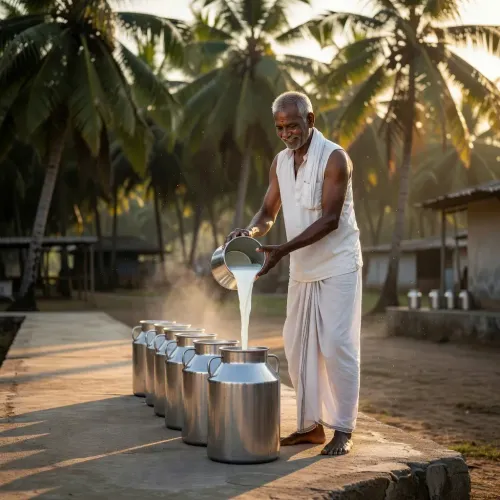
The arithmetic here is deliberate. Of the ₹8 per litre revision, a full ₹7 is directed toward raising the farmer base price — from ₹35 to ₹42 per litre. Factor in the existing ₹5 government incentive that the state already layers on top of the base price, and a dairy farmer's total per-litre realisation moves from ₹40 to ₹47. That ₹7 increase is not symbolic; for a farmer pouring anywhere from 5 to 20 litres into the cooperative chilling centre each morning, it compounds daily into a meaningful income shift.
The government's statement cited a 'prolonged period of price restraint' as context — acknowledging that input costs had been outrunning procurement prices for some time. Rising feed and fodder costs, higher fuel and packaging expenses, and a drought-related decline in daily milk collection created the policy pressure that finally broke the restraint. India's cooperative dairy model typically absorbs these shocks internally before passing them through; this revision signals that the buffer had run out.
Karnataka's 28.84 lakh dairy farmers — and who among them matters most
Karnataka's dairy cooperative ecosystem runs through the Karnataka Milk Federation (KMF), the apex body that procures, processes, and markets milk under the Nandini brand. 28.84 lakh dairy farmers are enrolled in KMF, and the government was specific about the demographic that makes this revision most consequential: small and marginal farmers account for 67% of all KMF member producers. This is not an industry of large commercial dairies — it is, overwhelmingly, households whose livelihoods hinge on a handful of animals and the price the cooperative posts each season.
Across India's major milk-producing states, cooperative dairy pricing decisions have increasingly become a balancing act between farmer remuneration and consumer affordability. Weather shocks — droughts cutting herd productivity, erratic monsoons driving up fodder prices — have accelerated the cycle of revisions that state governments can no longer defer indefinitely.
Nandini still undercuts rivals even after the hike
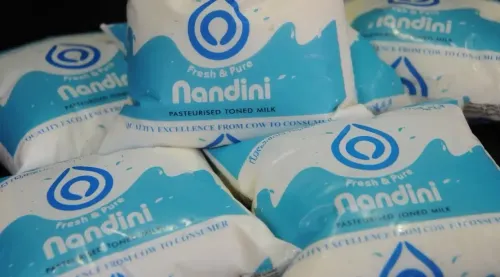
The government was equally careful to frame the consumer side of the equation. Even after the revision, Nandini toned milk is priced at ₹54 per litre — below several major national dairy brands. Nandini Shubham, the higher-fat 4.5% variant at ₹60 per litre, sits below the ₹62.80 average across the ten states cited in the government's own comparison. The implicit message: Karnataka's revision does not close the affordability gap; it simply narrows it, while still keeping the Nandini brand positioned as a value alternative for urban and rural consumers alike.
What to watch after November 1: whether daily procurement volumes recover as farmers find the revised price more remunerative — a critical signal for whether the revision stabilises or stimulates supply. Private dairy brands may also recalibrate their own pricing in Karnataka's market in response.
For nearly three crore dairy farming households anchored to the cooperative system, ₹7 more per litre is not a policy footnote — it is the difference between a viable season and one that isn't.
Point of View
Where procurement pricing is the most direct lever for rural income support. Timing the revision after a 'prolonged period of restraint' alongside a drought-supply shock suggests the government was waiting for a defensible narrative before acting, which is textbook cooperative pricing politics. The explicit comparison with ten other states on retail price benchmarks indicates a concerted effort to pre-empt consumer backlash — a growing concern for state governments as urban food inflation remains politically sensitive. If procurement volumes recover post-November 1, it will validate the revision as a supply-stimulating measure; if they do not, the structural questions around KMF's competitiveness with private dairies will resurface.
NationPress
30 Oct 2026
Frequently Asked Questions
Why is Nandini milk price increasing from November 2026?
The Karnataka government cited rising feed and fodder costs, higher fuel and packaging expenses, and a drought-related drop in daily milk collection as the main reasons for the ₹8 per litre hike effective November 1, 2026 .
How much will Karnataka dairy farmers earn per litre after the revision?
Farmers will receive a total of ₹47 per litre after the revision — comprising a revised base price of ₹42 plus the existing ₹5 government incentive , up from ₹40 previously.
What is the new price of Nandini toned milk after the hike?
Nandini toned milk will be priced at ₹54 per litre after the revision, which the government says is still below several major national dairy brands.
How many dairy farmers are registered with KMF in Karnataka?
Karnataka has 28.84 lakh dairy farmers enrolled with the Karnataka Milk Federation (KMF) , of whom 67% are small and marginal producers.
Is Nandini Shubham milk also getting expensive?
Nandini Shubham (4.5% fat) will be priced at ₹60 per litre after the revision, which remains below the ₹62.80 average across the ten states cited in the government's comparison.