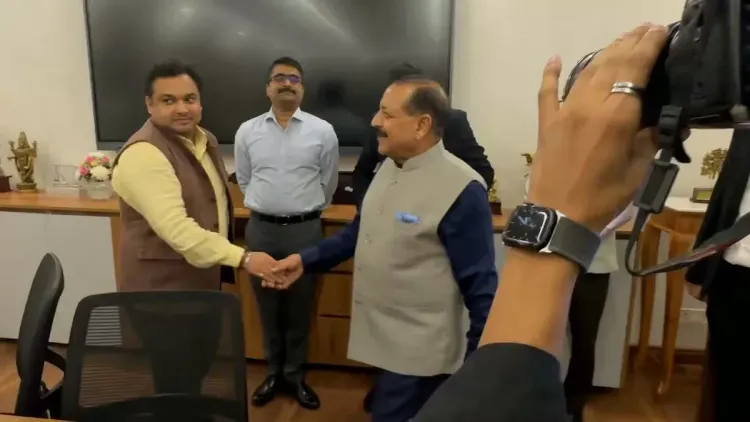
Dr. Jitendra Singh hosts Diwali Milan for J&K cadre officers
Synopsis
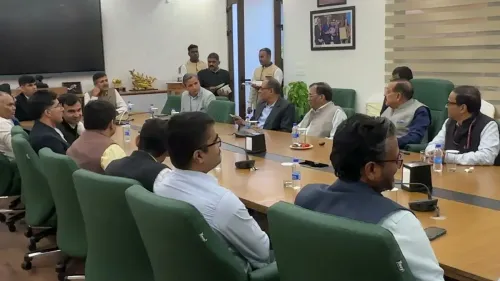
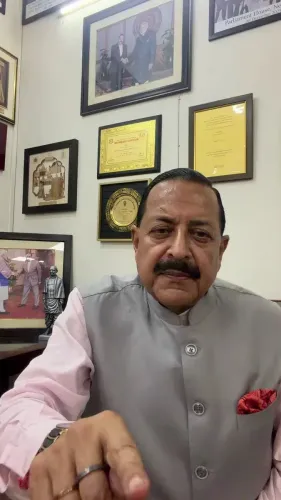
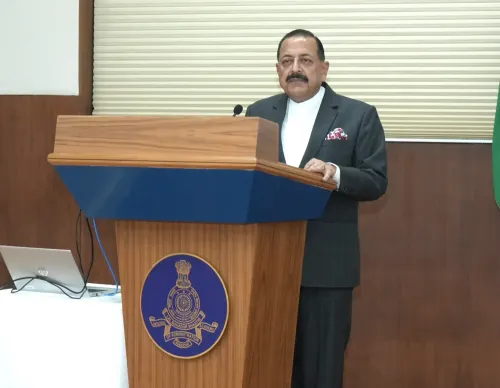
Union Minister Dr. Jitendra Singh hosted a Diwali Milan luncheon at his New Delhi residence for Delhi NCR-based All India Services and Indian Foreign Service officers from the erstwhile Jammu and Kashmir cadre, bringing together nearly two dozen officials for festive reconnection.
Key Takeaways
Jitendra Singh hosted a Diwali Milan luncheon on October 30, 2026 at his New Delhi residence.
Guests included All India Services officers of the erstwhile J&K cadre and Indian Foreign Service officers of J&K origin based in Delhi NCR.
Senior diplomat Shri Vikram Misri and former IAS officer Shri Shah Faesal were among the approximately 19 named attendees .
Three officers — Smt.
Sushma Chauhan, Shri Bhupendra Kumar and Dr.
Mandeep Bhandari — sent regrets due to unavoidable circumstances.
The gathering reflects continued informal ties among a cadre reshaped by the Jammu and Kashmir Reorganisation Act, 2019 .
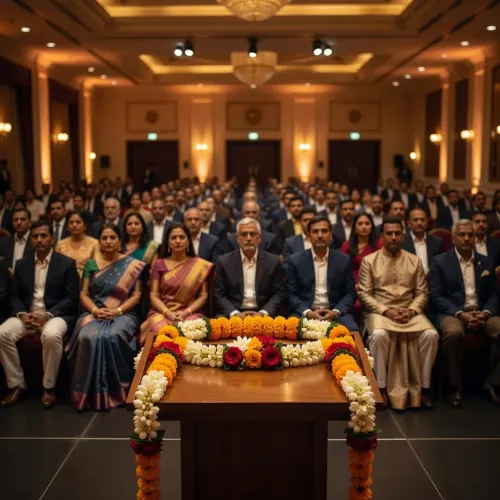
Diwali arrived early at the New Delhi residence of Union Minister Dr. Jitendra Singh on Friday, October 30, 2026, when he gathered a room full of All India Services and Indian Foreign Service officers — all connected to the erstwhile Jammu and Kashmir cadre — for a festive luncheon that doubled as a rare reunion of a community redefined by history.
A cadre dispersed, briefly reunited
The gathering brought together officers from across services who trace their administrative roots to Jammu and Kashmir — a cadre that was fundamentally restructured after the Jammu and Kashmir Reorganisation Act of 2019 bifurcated the state into two Union Territories and reshuffled cadre allocations for serving officers. For many in the room, the luncheon was as much about institutional memory as it was about festival cheer.
Among those present were Shri Vikram Misri, a senior IFS diplomat of J&K origin; Shri Shah Faesal, the former IAS officer whose career trajectory has been one of the most closely watched in recent years; and a broad roll-call of officers including Shri Raj Kumar Goyal, Shri Navin Kumar Choudhary, Shri Manoj Dwivedi, Shri Rohit Kansal, Smt. Sarita Chauhan, Shri Pankaj Saxena, Shri Pandurang Pole, Shri Rahul Malik, Shri Vimarsh Aryan, Shri Ravindra Kumar, Shri Ashish Kumar Mishra, Dr. Piyush Singla, Shri Rahul Bhat, Shri Ajeet Kumar Sahu, Shri Preetpal Singh, Smt. Tanushree and Shri Sheikh Arshad Ayub.
Regrets noted, bonds acknowledged
Dr. Singh also acknowledged those who could not attend: Smt. Sushma Chauhan, Shri Bhupendra Kumar and Dr. Mandeep Bhandari conveyed their regrets citing unavoidable circumstances. The explicit mention underscores the collegial spirit the minister sought to project — this was not a formal official function but a deliberate act of keeping a professional community connected.
Festive Milan gatherings hosted by senior ministers for serving officers are a well-established tradition in Delhi's administrative calendar. What lends this one a distinct texture is the specific cohort — officers shaped by a region whose administrative identity shifted sharply seven years ago, now scattered across cadres and postings, briefly in the same room again.
Point of View
Signalling continued personal investment in the J&K administrative community even after the 2019 reorganisation displaced its institutional home. Hosting both AIS and IFS officers under one roof underlines an effort to keep a dispersed cohort networked — a quietly strategic move in a city where relationships between bureaucrats and political principals matter enormously. The presence of a figure like Vikram Misri, one of India's most prominent diplomats, adds an unspoken dimension to what is officially a festive lunch. Whether such gatherings evolve into a more structured forum for J&K-origin officers remains worth watching.
NationPress
31 Oct 2026
Frequently Asked Questions
What is a Diwali Milan gathering?
A Diwali Milan is a traditional festive get-together, common in Indian political and administrative circles, where hosts invite colleagues, officials or community members to celebrate the Diwali season, exchange greetings and strengthen professional or personal bonds.
Who is Vikram Misri?
Vikram Misri is a senior Indian Foreign Service officer of J&K origin. He has held several significant diplomatic postings and is among India's most prominent career diplomats.
Why is there a separate J&K cadre for All India Services officers?
Historically, All India Services officers allotted to the AGMUT (Arunachal Pradesh, Goa, Mizoram and Union Territories) cadre and the erstwhile J&K cadre served in Jammu and Kashmir. After the Jammu and Kashmir Reorganisation Act of 2019 bifurcated the state into two Union Territories, the cadre structure for officers from the region was revised.
What is Dr. Jitendra Singh's connection to Jammu and Kashmir?
Dr. Jitendra Singh represents the Udhampur constituency in Jammu and Kashmir in Parliament and has long maintained close ties with the region's administrative and professional community, even as he serves in the Union Cabinet.