Dr. Jitendra Singh hails GSLV-F18/NVS-03 launch, cites Modi space reforms
Synopsis
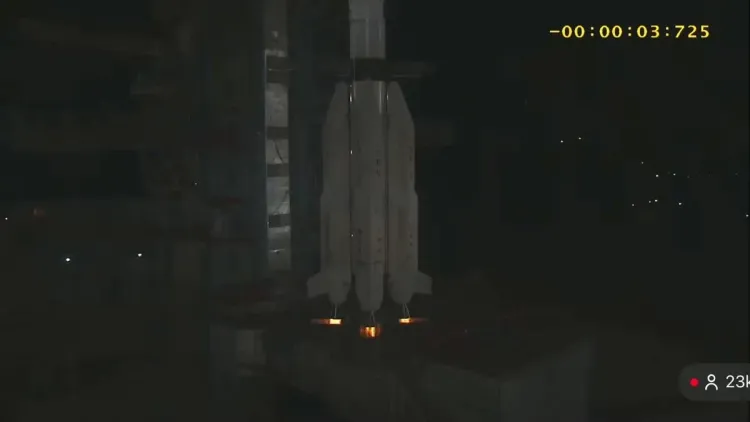
Union Science and Technology Minister Dr. Jitendra Singh hailed ISRO's successful GSLV-F18/NVS-03 launch, tying the NavIC navigation satellite mission to PM Modi's 2020 space reforms and the foundational vision of Vikram Sarabhai and Satish Dhawan.
Key Takeaways
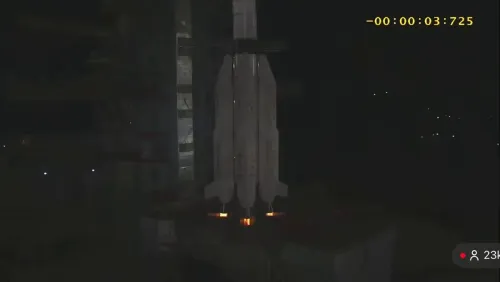
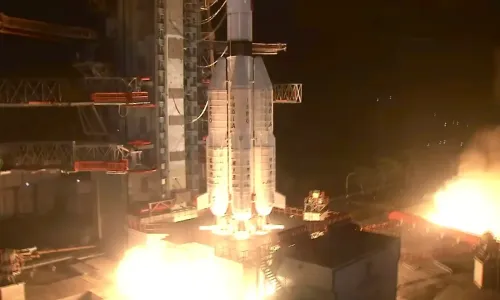
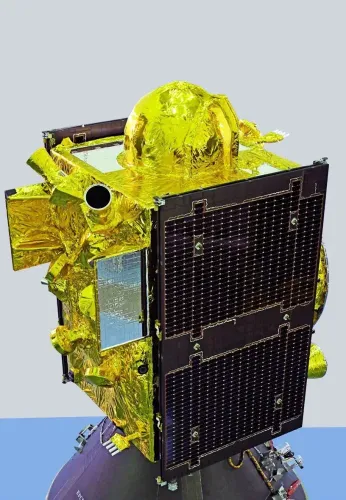
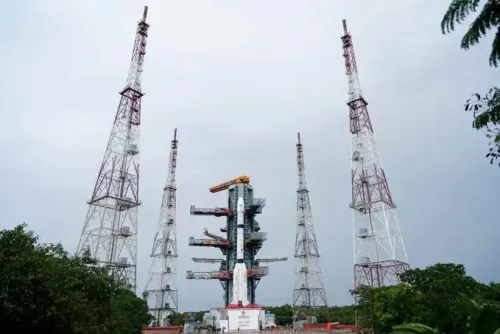
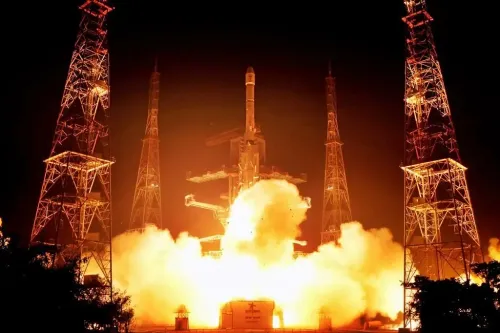
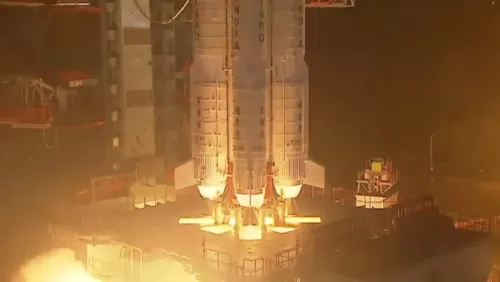
ISRO successfully launched the GSLV-F18/NVS-03 mission , adding another satellite to India's indigenous NavIC navigation constellation.
Jitendra Singh called the achievement a reflection of India's 'unwavering commitment to strengthening sovereign indigenous navigation capabilities.' NavIC provides regional navigation coverage independent of foreign systems such as GPS, covering the Indian subcontinent and approximately 1,500 km beyond its borders.
PM Modi's 2020 space-sector reforms opened the industry to private players and established IN-SPACe as a single-window regulator, accelerating India's launch cadence.
The minister linked modern launch successes to the foundational philosophy of space programme pioneers Vikram Sarabhai and Satish Dhawan .
Further NVS-series launches are expected to complete the NavIC constellation and expand private-sector roles in satellite services.
India's sovereign navigation ambition just got a significant boost. Union Science and Technology Minister Dr. Jitendra Singh congratulated ISRO on the successful launch of the GSLV-F18/NVS-03 mission, calling it a 'remarkable achievement' that reflects India's 'unwavering commitment to strengthening sovereign indigenous navigation capabilities.'
What GSLV-F18/NVS-03 means for NavIC
The NVS-03 satellite is a next-generation addition to India's NavIC (Navigation with Indian Constellation) system — the country's homegrown answer to the United States' GPS. Built and operated by ISRO, NavIC has been in development since the 2000s, with the first operational satellites lifting off from 2013 onward. Each new NVS-series spacecraft brings the constellation closer to full regional coverage, covering the Indian subcontinent and extending roughly 1,500 km beyond its borders.
The strategic logic is blunt: a nation that depends on a foreign power's navigation signals for its defence operations, civil aviation, and precision agriculture is a nation that can be switched off. NavIC is India's insurance policy against that vulnerability.
Modi's space reforms as the policy engine
Dr. Jitendra Singh explicitly linked the launch to space-sector liberalisation measures announced by Prime Minister Narendra Modi in 2020, which opened the sector to private participation and created IN-SPACe — a single-window regulator designed to bring commercial players into satellite manufacturing, launch services, and downstream applications. Those reforms, framed under the broader Atmanirbhar Bharat initiative, were intended to transform ISRO from a sole operator into a technology-transfer and regulatory anchor for a growing private ecosystem.
The results are increasingly visible. A pipeline of NVS-series launches, growing private launch-vehicle ventures, and deepening indigenous satellite manufacturing capability have all followed from the policy shift. GSLV-F18/NVS-03 sits squarely within that arc.
Sarabhai, Dhawan, and the long thread of continuity
The minister's invocation of Vikram Sarabhai and Satish Dhawan was deliberate. Sarabhai, the physicist who founded India's space programme in the 1960s, insisted from the outset that space technology must serve national development — not prestige alone. Dhawan, his successor as ISRO chairman, guided the organisation through its first satellite launch successes and institutionalised a culture of building indigenously even when importing would have been faster. Every successful GSLV mission is, in one sense, a downstream consequence of the discipline those two men established.
Dr. Jitendra Singh's post frames the October 31, 2026 launch not as an isolated technical event but as a vindication of that founding philosophy — the idea that technological sovereignty, patiently built, eventually compounds.
India's navigation constellation is not complete yet — but with each NVS satellite that reaches orbit, the gap between ambition and reality narrows a little more.
Point of View
Civil aviation, and precision agriculture. Dr. Jitendra Singh's framing, connecting the mission to PM Modi's 2020 liberalisation reforms, is a deliberate political signal that Atmanirbhar Bharat has delivered concrete results in high-technology domains. The invocation of Sarabhai and Dhawan is also policy-communicative: it positions the current government as a custodian of a sixty-year-old indigenous-technology tradition, not a disruptor of it. Watching the pace of subsequent NVS launches and IN-SPACe's private licensing pipeline will reveal whether this momentum is structural or episodic.
NationPress
31 Oct 2026
Frequently Asked Questions
What is the GSLV-F18/NVS-03 mission?
GSLV-F18/NVS-03 is an ISRO launch mission that placed an NVS-series navigation satellite into orbit to bolster India's indigenous NavIC regional navigation constellation, reducing dependence on foreign systems like GPS.
What is NavIC and how does it work?
NavIC (Navigation with Indian Constellation) is India's homegrown satellite navigation system operated by ISRO. It covers the Indian subcontinent and roughly 1,500 km beyond its borders, providing positioning and timing services for defence, civil aviation, and civilian use.
What space reforms did PM Modi announce?
In 2020, PM Narendra Modi's government opened India's space sector to private entities and established IN-SPACe (Indian National Space Promotion and Authorisation Centre) as a single-window regulator to facilitate private participation in launch services, satellite manufacturing, and downstream applications.
Who were Vikram Sarabhai and Satish Dhawan?
Vikram Sarabhai was the physicist who founded India's space programme in the 1960s, emphasising that space technology must serve national development. Satish Dhawan succeeded him as ISRO chairman and guided the organisation through its early satellite launch successes, cementing a culture of indigenous development.
What comes next for India's NavIC constellation?
Further NVS-series satellites are planned to complete the NavIC constellation's full operational capability. Alongside this, IN-SPACe is expected to expand private-sector roles in satellite manufacturing and space services under the Atmanirbhar Bharat framework.