CM Rekha Gupta Hails ISRO on GSLV-F18 Launch Success
Synopsis
Delhi Chief Minister Rekha Gupta congratulated ISRO on the GSLV-F18 launch success, linking the milestone to PM Modi's leadership. The post reflects the BJP government's consistent strategy of framing ISRO achievements within its national self-reliance narrative as India's space programme grows in global stature.
Key Takeaways
Delhi CM Rekha Gupta publicly congratulated ISRO on the successful GSLV-F18 mission on 31 October 2026 .
The post credits PM Narendra Modi 's leadership for India's expanding space ambitions.
The GSLV series is central to India's goal of self-reliant heavy satellite deployment.
Since 2014 , the Modi government has publicly tied ISRO milestones — including the Mars Orbiter Mission — to its 'Atmanirbhar Bharat' policy narrative.
India's space sector has progressively opened to private participation alongside ISRO, broadening the programme's commercial and strategic footprint.
Cabinet and parliamentary updates to the Indian Space Policy roadmap are expected, making each successful launch a policy moment as much as a scientific one.
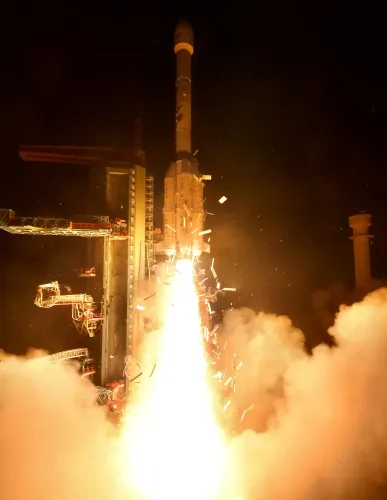
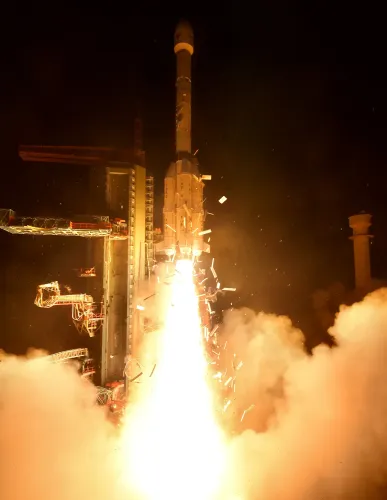
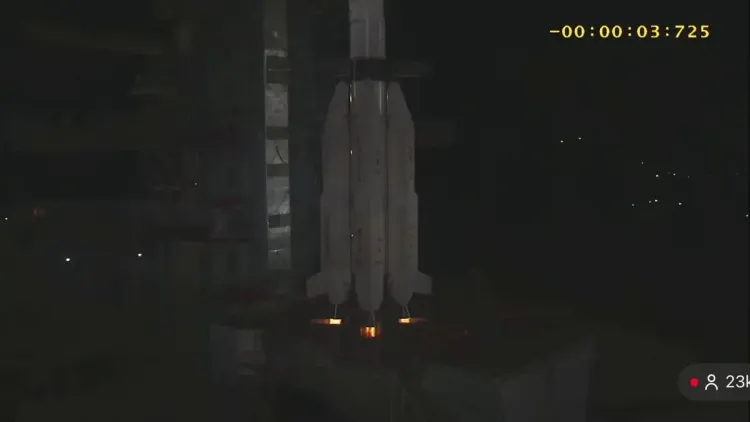
India's space programme notched another milestone as Delhi Chief Minister Rekha Gupta joined the wave of national pride following the successful launch of GSLV-F18, congratulating ISRO and crediting the achievement to Prime Minister Narendra Modi's leadership.
Posting on X on 31 October 2026, CM Gupta wrote: 'Congratulations, Team ISRO! With every successful launch, Bharat is taking its space ambitions to new heights under Hon'ble PM Shri Narendra Modi Ji's visionary leadership!'
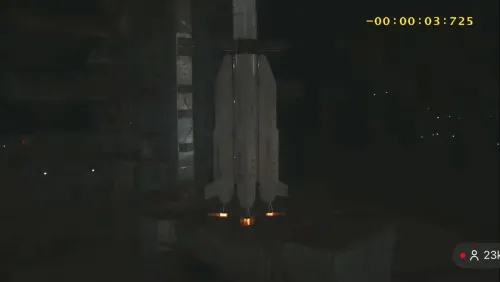
GSLV-F18 and India's expanding launch cadence
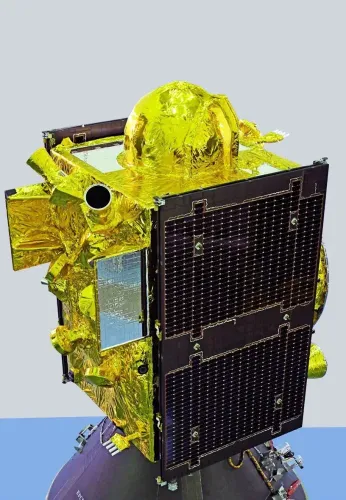
The Geosynchronous Satellite Launch Vehicle (GSLV) series has been central to India's ambition of achieving self-reliance in heavy satellite deployment. ISRO, India's national space agency, has steadily expanded the vehicle's capability over successive missions, building toward launches that reduce dependence on foreign lift providers. The GSLV-F18 mission marks a continuation of that cadence, adding to a string of launches that have made India a credible player in the global space economy.A political pattern as established as the rocket itself
India's political leadership has long made a habit of anchoring ISRO's triumphs to government policy — and for understandable reasons. Since 2014, the Modi government has publicly linked missions like the Mars Orbiter Mission — India's first interplanetary success, which entered Mars orbit in 2014 — to a broader narrative of national self-reliance and scientific ambition. Successive administrations have backed that narrative with real policy muscle, increasing ISRO's funding and, more recently, opening the sector to private-sector participation, creating a new generation of Indian space start-ups operating alongside the state agency. CM Gupta's post fits squarely in that tradition — senior BJP leaders routinely use ISRO launches as moments to amplify the government's 'Atmanirbhar Bharat' framing on space technology.What the congratulations signal beyond the moment
The real story behind the ceremonial post is the steady drumbeat of launches that has made such congratulations almost a fixture of Indian political life. Each successful GSLV mission edges India closer to a fully autonomous heavy-lift capability, reducing the cost and logistics of deploying communication and earth-observation satellites. With parliament and the cabinet expected to revisit the Indian Space Policy roadmap, every launch now arrives with legislative and budgetary implications attached. For ISRO's scientists, the applause from political quarters is welcome validation. For the programme itself, the real metric is reliability — and a successful GSLV-F18 adds another data point to a record that global satellite customers and strategic partners are watching closely.Point of View
Years-long strategy of making ISRO's credibility inseparable from the government's self-reliance narrative, a framing that has proven electorally durable since the Mars Orbiter Mission in 2014. The consistent pattern across senior leaders signals a coordinated communication playbook, not spontaneous pride. As India's space sector matures and private players grow larger, the political calculus around ISRO will only intensify — every launch is now a governance claim as much as a technological one.
NationPress
31 Oct 2026
Frequently Asked Questions
What is the GSLV-F18 mission?
GSLV-F18 is a mission by India's space agency ISRO using the Geosynchronous Satellite Launch Vehicle, designed to place satellites into geostationary or geosynchronous orbits. It is part of ISRO's ongoing effort to build reliable, indigenous heavy-lift launch capability.
Why did Delhi CM Rekha Gupta congratulate ISRO?
Delhi Chief Minister Rekha Gupta posted congratulations to ISRO on X following the successful GSLV-F18 launch, in line with the BJP government's practice of publicly celebrating ISRO milestones and linking them to PM Modi's leadership.
What is India's GSLV rocket used for?
India's Geosynchronous Satellite Launch Vehicle (GSLV) is primarily used to launch communication and earth-observation satellites into high orbits, reducing India's dependence on foreign launch providers for heavier payloads.
How has PM Modi supported ISRO?
Since 2014, the Modi government has increased ISRO's funding, championed its missions publicly — starting with the Mars Orbiter Mission — and introduced policies to allow private Indian companies to participate in the space sector alongside ISRO.
What is India's space policy direction?
India's space policy has shifted toward greater private-sector participation and commercial launch services, with ISRO focusing on strategic and scientific missions while a new ecosystem of Indian space start-ups develops under government-backed frameworks.