Has India Truly Achieved Self-Reliance in Space Transportation Systems?
Synopsis
Discover how India has achieved remarkable self-reliance in space transportation systems, enabling the launch of heavier satellites to Low Earth Orbit and Geo-Synchronous Transfer Orbit. Union Minister Jitendra Singh elaborates on ongoing innovations and future endeavors in the country's ambitious space program.
Key Takeaways
India has achieved self-reliance in space transportation.
Capability to launch satellites up to 10 tonnes to LEO.
Development of the Next Generation Launch Vehicle .
Ongoing advancements in reusable launch technologies .
Gaganyaan human spaceflight program timelines set.
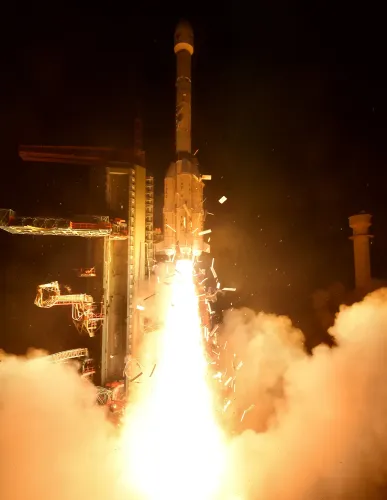
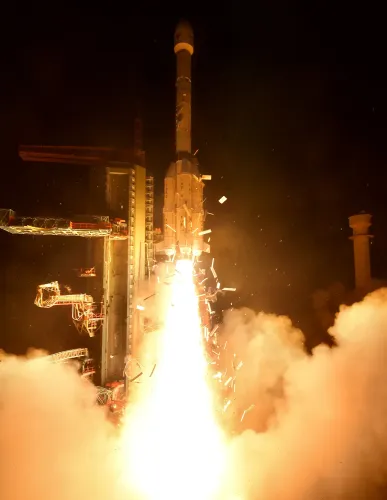
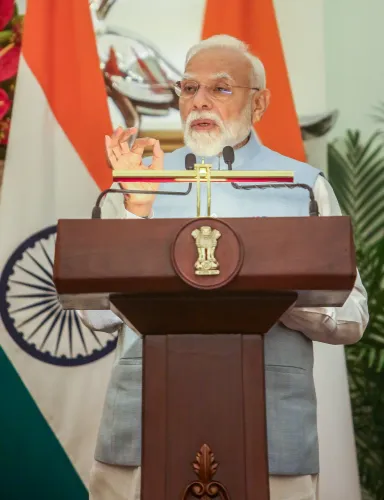
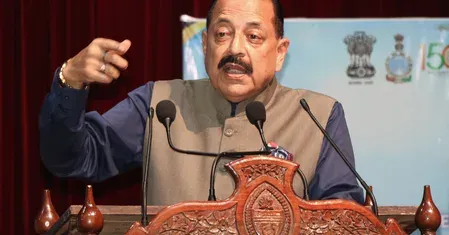
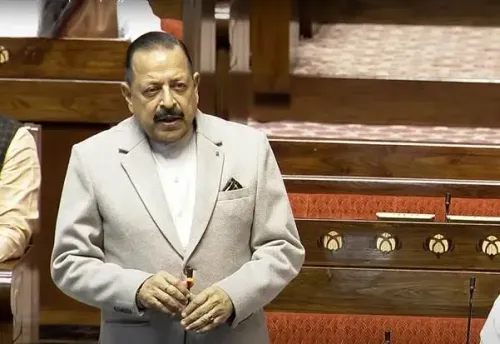
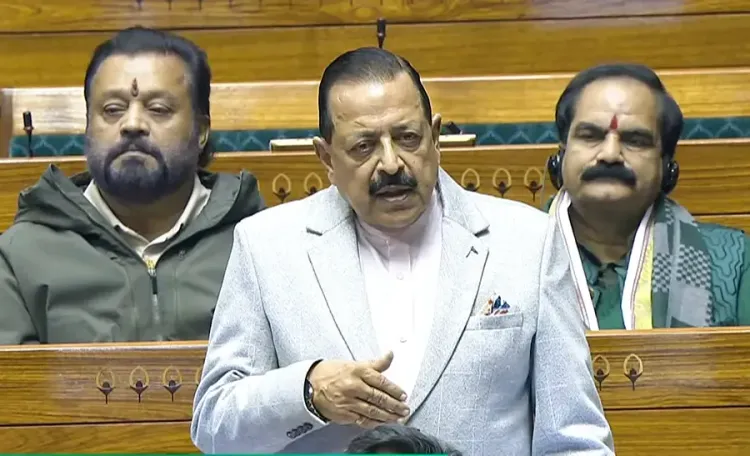
New Delhi, Dec 17 (NationPress) India has successfully reached a milestone of self-reliance in space transportation systems, capable of launching satellites weighing up to 10 tonnes to Low Earth Orbit (LEO) and 4.2 tonnes to Geo-Synchronous Transfer Orbit (GTO), as stated by Jitendra Singh, the Union Minister of State (Independent Charge) for Science and Technology, during a session in Parliament on Wednesday.
In his written response in the Lok Sabha, Singh noted that this achievement has been made possible through the operational PSLV, GSLV, and LVM3 launch vehicles.
Singh explained, “These launch vehicles have provided independent access to space for satellites dedicated to earth observation, communication, navigation, and space exploration. To boost the capabilities of our launch vehicles in alignment with an expanded space vision, the government has authorized the development of a Next Generation Launch Vehicle (NGLV), which will achieve a maximum payload of 30 tons to Low Earth Orbit.”
“To ensure cost-effective access to space, we are also advancing reusable launch vehicle technologies, including a partially reusable variant of the NGLV with a payload capacity of 14 tonnes to LEO. Moreover, we are developing a winged body upper stage designed to return from orbit to Earth and land autonomously on a runway,” he added.
The Minister further remarked that ISRO is working on the development of a high-thrust (2000kN) semi-cryogenic engine for integration into the LVM3 vehicle.
Additionally, a methane-based propulsion system that is environmentally friendly is being conceptualized for the NGLV.
He mentioned that the development of an air-breathing propulsion system is in progress towards a Dual-Fuel Scramjet engine.
Singh also provided updates on Gaganyaan, India’s human spaceflight program, detailing the timelines for upcoming crewed missions.
The Gaganyaan mission, aimed at showcasing India’s indigenous human spaceflight capability to Low Earth Orbit, is projected to launch its first crewed mission in 2027-28.
“For the Gaganyaan program, ISRO is constructing and refining various systems for executing the planned missions. Given the stringent human rating standards, extensive testing of propulsion elements, structures of the Human-Rated Launch Vehicle (HLVM3), Service Module Propulsion System, and Crew Module Propulsion System has been completed, alongside the parachute-based deceleration system,” said the Minister.
For the initial uncrewed mission (G1), all HLVM3 stages and CES motors are ready. As for crew and service module systems, realization is nearing completion, Singh noted.
In total, Singh highlighted that 22 ISRO satellites have been launched between December 2020 and December 2025.
Among these, seven satellites are for Earth Observation, four for communication, two for navigation, three for space science, and six for technology demonstration missions,” Singh stated.
During the years 2020 and 2021, one satellite was launched each year, with six in 2022, four in 2023, and six in 2024. The year 2025 will see the launches of satellites NVS-02, CMS-03 (GSAT-7R), RISAT-1B, and NISAR.
Point of View
It is essential to recognize India's impressive strides in space technology. This achievement not only highlights the country's growing capabilities but also positions India as a key player on the global space stage. The commitment to innovation and self-reliance in space transportation systems is commendable and aligns with national interests.
NationPress
30 Sept 2026
Frequently Asked Questions
What is India's current capability in space transportation?
India can launch satellites up to 10 tonnes to Low Earth Orbit (LEO) and 4.2 tonnes to Geo-Synchronous Transfer Orbit (GTO).
What launch vehicles are currently operational in India?
The operational launch vehicles include PSLV, GSLV, and LVM3.
What is the Next Generation Launch Vehicle (NGLV)?
The NGLV is being developed to enhance payload capabilities, targeting up to 30 tonnes to Low Earth Orbit.
When is the first crewed Gaganyaan mission expected to launch?
The first crewed Gaganyaan mission is expected to launch in 2027-28.
How many ISRO satellites have been launched recently?
A total of 22 ISRO satellites have been launched between December 2020 and December 2025.