ISRO launches EOS-05: India's first geosynchronous imaging satellite via GSLV-F17
Synopsis
ISRO has placed India's first imaging satellite into geosynchronous orbit — a technically demanding feat that validates the country's indigenous cryogenic rocket technology and sharply upgrades its Earth observation capability. With multi-spectral and hyperspectral imaging now available from 36,000 km up, India takes a significant step toward reducing reliance on foreign satellite data.
Key Takeaways
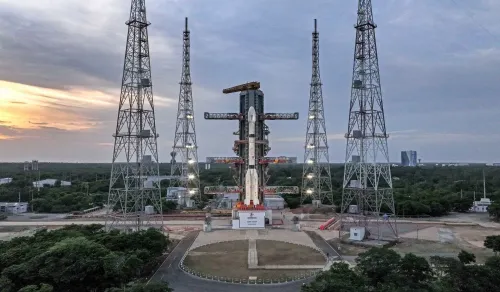
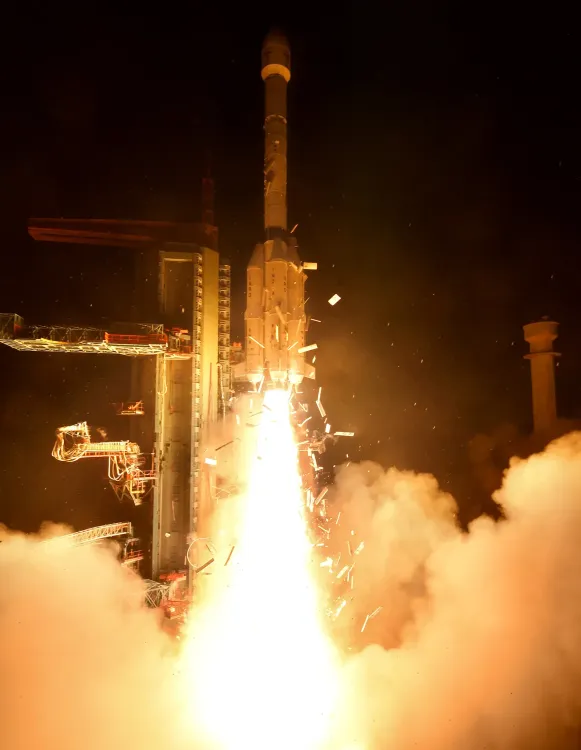
ISRO successfully launched EOS-05 aboard GSLV-F17 from Sriharikota on 4 September .
EOS-05 is India's first imaging satellite placed in Geosynchronous Orbit , approximately 36,000 km above Earth.
The satellite offers imaging across visible , infrared , multi-spectral , and hyperspectral bands, significantly expanding India's Earth observation capability.
Ministers Piyush Goyal , Hardeep Singh Puri , and Dr Jitendra Singh hailed the launch as a landmark for India's space programme.
The mission validates ISRO's indigenous cryogenic upper-stage technology and deepens collaboration with Indian industry.
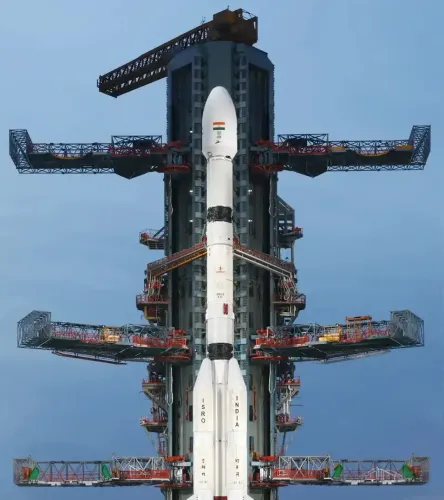
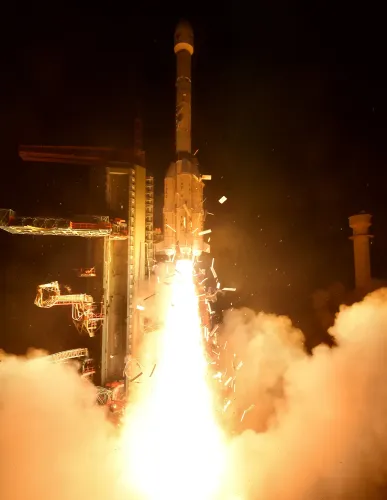
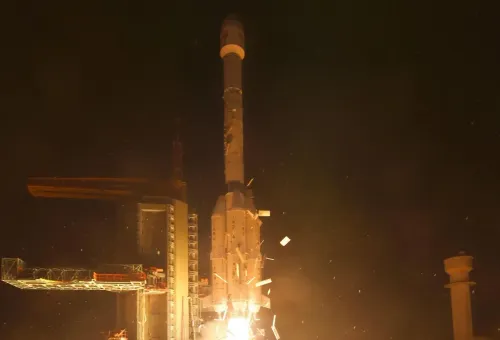
India's first imaging satellite from Geosynchronous Orbit, designated EOS-05, was successfully launched by the Indian Space Research Organisation (ISRO) aboard the GSLV-F17 rocket from the Satish Dhawan Space Centre in Sriharikota on 4 September. The three-stage launch vehicle performed as planned, injecting EOS-05 into the designated Sub-Geosynchronous Transfer Orbit — a milestone that Union Ministers said reinforces India's standing across the entire space sector.
What EOS-05 Can Do
EOS-05 is an advanced Earth observation satellite equipped with imaging capabilities across visible, infrared, multi-spectral, and hyperspectral bands. Its geosynchronous positioning gives it a significant advantage over lower-orbit predecessors, enabling more persistent coverage of specific geographic areas — a capability with clear applications in agriculture monitoring, disaster management, and strategic surveillance.
What the Government Said
Commerce and Industry Minister Piyush Goyal said the launch 'stands as a testament to the talent, ingenuity and ever-expanding capabilities of our space scientists and engineers.' He added that the deepening collaboration between ISRO and Indian industry continues to bring 'new strength and scale' to the country's space programme, posting his remarks on X.
Minister for Petroleum and Natural Gas Hardeep Singh Puri congratulated Team ISRO on the achievement, saying it 'will significantly enhance our Earth observation capabilities.' He described the launch as reflecting 'the steady progress India has made in building world-class capabilities in space science and technology' under the leadership of Prime Minister Narendra Modi.
Union Minister of State (Independent Charge) for Science and Technology Dr Jitendra Singh called it 'another giant leap for India in space,' describing EOS-05 as 'a state-of-the-art Earth Observation satellite.'
Why This Launch Matters
Placing an imaging satellite in geosynchronous orbit — roughly 36,000 km above Earth — is considerably more demanding than low-Earth orbit missions. The GSLV-F17's clean performance validates India's indigenous cryogenic upper-stage technology, which has had a chequered history. Notably, this launch comes as India accelerates the commercialisation of its space sector, with private players increasingly involved in ground support and component supply chains.
This is also part of a broader push to reduce India's dependence on foreign Earth observation data — a strategic imperative that has gained urgency in recent years. The multi-spectral and hyperspectral imaging bands on EOS-05 will give Indian agencies access to data that was previously sourced from international satellites.
What Comes Next
ISRO is expected to confirm orbital insertion and the health status of EOS-05 in the days following the launch. The satellite will undergo a series of in-orbit tests before becoming fully operational. India's space calendar for the coming months also includes further missions under the Gaganyaan human spaceflight programme, signalling that Friday's launch is one milestone in a much larger national ambition.
Point of View
Which has historically been the programme's most technically fraught component. More strategically, EOS-05's geosynchronous position and hyperspectral capability close a real gap: India has long depended on foreign satellites for high-resolution, persistent Earth observation data with national security implications. What is underreported is the private-sector thread — ISRO's growing industrial partnerships mean this is not just a government achievement but a signal of where Indian space commerce is heading. The ministerial chorus on X was expected; the harder question is how quickly EOS-05's data gets operationalised across civilian and strategic agencies.
NationPress
20 Oct 2026
Frequently Asked Questions
What is EOS-05 and why is it significant?
EOS-05 is India's first imaging satellite placed in Geosynchronous Orbit, launched by ISRO on 4 September aboard the GSLV-F17 rocket. Its significance lies in its advanced imaging capability across visible, infrared, multi-spectral, and hyperspectral bands from approximately 36,000 km above Earth, enabling persistent coverage that lower-orbit satellites cannot provide.
What rocket was used to launch EOS-05?
ISRO used the GSLV-F17, a three-stage rocket, to carry EOS-05 from the Satish Dhawan Space Centre in Sriharikota. The vehicle performed as planned and successfully injected the satellite into the designated Sub-Geosynchronous Transfer Orbit.
How does geosynchronous orbit differ from low-Earth orbit for imaging satellites?
A geosynchronous orbit at roughly 36,000 km allows a satellite to remain over a fixed region of Earth for extended periods, enabling more persistent and repeated observation compared to low-Earth orbit satellites that pass overhead briefly. This makes EOS-05 particularly valuable for continuous monitoring of specific geographic areas.
Which Union Ministers reacted to the EOS-05 launch?
Commerce and Industry Minister Piyush Goyal, Petroleum and Natural Gas Minister Hardeep Singh Puri, and Minister of State for Science and Technology Dr Jitendra Singh all congratulated ISRO, posting their remarks on X and describing the launch as a landmark in India's space journey.
What happens next after the EOS-05 launch?
Following the launch, ISRO is expected to confirm orbital insertion and conduct in-orbit health checks before EOS-05 becomes fully operational. India's broader space calendar also includes further missions under the Gaganyaan human spaceflight programme.