ISRO's GSLV-F17 launches EOS-05, India's first geosynchronous imaging satellite
Synopsis
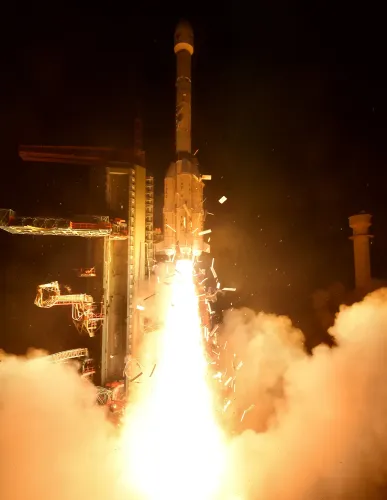
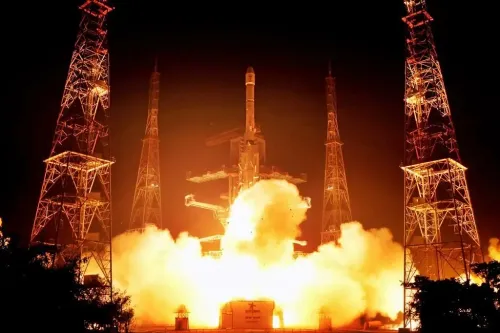
India's GSLV-F17 lifted off at 2:55 am from Sriharikota carrying EOS-05 — the country's first imaging satellite from geosynchronous orbit and the heaviest payload the GSLV has ever placed in a GTO. From 36,000 km up, it will deliver near-real-time multispectral and hyperspectral imagery of India, a capability with sweeping civilian and strategic applications.
Key Takeaways
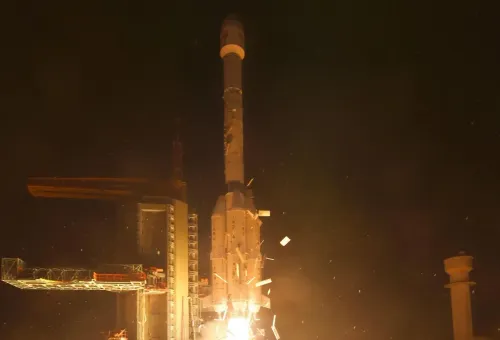
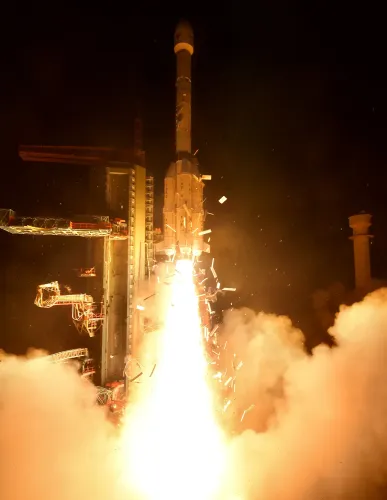
ISRO launched GSLV-F17 carrying EOS-05 from Sriharikota at 2:55 am IST on 4 September .
EOS-05 is India's first imaging satellite deployed from geosynchronous orbit , operating at approximately 36,000 km altitude.
It is the heaviest satellite ever placed by the GSLV into a geosynchronous transfer orbit or sub-GTO orbit.
This was the 19th flight of the GSLV rocket series, described as a significant programme milestone by Mission Director Thomas Kurian .
The satellite supports imaging across visible, infrared, multispectral, and hyperspectral bands , enabling near-real-time Earth observation.
PM Modi and Science Minister Jitendra Singh both hailed the mission as a landmark for India's space capabilities.
The Indian Space Research Organisation (ISRO) successfully launched the GSLV-F17 rocket carrying the EOS-05 Earth observation satellite from the Satish Dhawan Space Centre in Sriharikota, Andhra Pradesh, at 2:55 am IST on 4 September, marking a significant advance in India's space-based surveillance and imaging capabilities. The satellite — India's first imaging payload deployed from geosynchronous orbit — was successfully placed into its designated sub-geosynchronous transfer orbit.
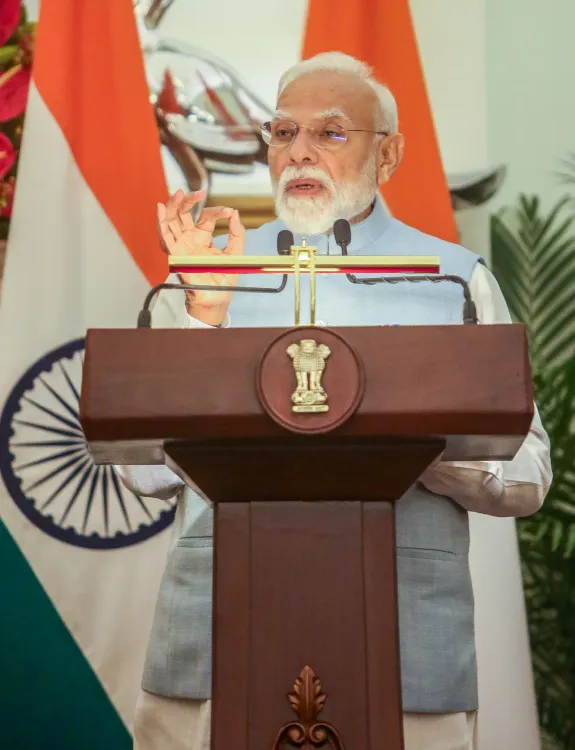
Prime Minister Narendra Modi hailed the mission as a matter of national pride, posting on X: 'Yet another outstanding achievement by ISRO and a proud moment for our nation. The successful launch of GSLV-F17 carrying EOS-05, India's first-ever imaging satellite from Geosynchronous orbit is a reflection of the excellence, innovation and growing capabilities that define India's space sector.'
Mission Milestones
ISRO Chairman Dr V Narayanan expressed satisfaction over the outcome, confirming that the GSLV-F17 had precisely injected the advanced Earth observation satellite into its intended orbit. Mission Director Thomas Kurian described the launch as a significant milestone for the GSLV programme, noting it was the 19th flight of the rocket series.
Kurian also highlighted that EOS-05 is the heaviest satellite the GSLV has ever placed into a geosynchronous transfer orbit or sub-GTO orbit. He credited the success to years of extensive preparation and the dedicated efforts of scientists, engineers, and support teams across the mission.
What EOS-05 Does
The EOS-05 satellite is designed to provide a continuous view of India from an altitude of nearly 36,000 km above Earth, enabling advanced imaging across visible, infrared, multispectral, and hyperspectral bands. This near-real-time imaging capability is expected to significantly strengthen India's Earth observation infrastructure for applications ranging from disaster management to agricultural monitoring and border surveillance.
Science and Technology Minister Jitendra Singh described EOS-05 as a 'state-of-the-art Earth Observation satellite,' adding in a post on X that it enables 'advanced imaging across visible, infrared, multispectral and hyperspectral bands.'
About the GSLV-F17 Launch Vehicle
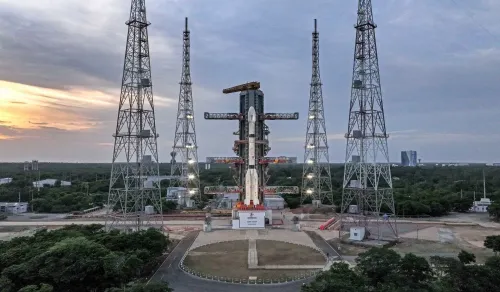
The GSLV-F17 launch vehicle stands 51.7 metres tall with a liftoff mass of approximately 420.5 tonnes, placing it among India's major operational launch systems. The pre-dawn launch window was chosen to optimise orbital insertion parameters for the satellite's sub-GTO placement.
Broader Significance
Prime Minister Modi also noted the deepening collaboration between ISRO and Indian industry, saying it is 'adding new strength and scale to our space programme and expanding India's capabilities across the entire space ecosystem.' This comes amid India's broader push to open its space sector to private players, with several Indian startups now participating in satellite and launch vehicle development.
With EOS-05 now in orbit, India joins a select group of nations capable of continuous geosynchronous Earth observation — a capability with both civilian and strategic implications. The next phase will involve the satellite's orbit-raising manoeuvres and commissioning of its imaging payloads.
Point of View
A capability that most spacefaring nations have kept tightly held. The geosynchronous vantage point means continuous coverage rather than periodic passes, which changes the calculus for both disaster response and strategic monitoring. What deserves scrutiny is the pace of commissioning: past ISRO Earth observation missions have sometimes taken months to become fully operational after orbit insertion. The real test of EOS-05's value will be how quickly its hyperspectral data is made available to civilian agencies — and whether the data-sharing architecture keeps pace with the hardware ambition.
NationPress
19 Oct 2026
Frequently Asked Questions
What is the EOS-05 satellite launched by ISRO?
EOS-05 is India's first imaging satellite deployed from geosynchronous orbit, launched aboard GSLV-F17 on 4 September. Operating from approximately 36,000 km above Earth, it provides near-real-time imaging across visible, infrared, multispectral, and hyperspectral bands, significantly enhancing India's Earth observation capabilities.
What is significant about the GSLV-F17 mission?
The GSLV-F17 mission marked the 19th flight of the GSLV rocket series and carried the heaviest payload the GSLV has ever placed into a geosynchronous transfer orbit. The pre-dawn launch from Sriharikota successfully injected EOS-05 into its designated sub-GTO orbit.
What did PM Modi say about the ISRO launch?
Prime Minister Narendra Modi posted on X calling it 'yet another outstanding achievement by ISRO and a proud moment for our nation,' describing the mission as a reflection of India's growing space sector excellence and innovation. He also highlighted the strengthening partnership between ISRO and Indian industry.
How will EOS-05 benefit India?
EOS-05 will provide continuous coverage of India from geosynchronous orbit, supporting applications including disaster management, agricultural monitoring, and strategic observation. Its hyperspectral and multispectral imaging bands offer data quality suited for both civilian planning and national security use cases.
Where was the GSLV-F17 launched from?
The GSLV-F17 rocket lifted off from the Satish Dhawan Space Centre in Sriharikota, Andhra Pradesh, at 2:55 am IST on 4 September. The launch vehicle stands 51.7 metres tall and has a liftoff mass of approximately 420.5 tonnes.