ISRO's GSLV-F17 successfully places EOS-05 satellite in orbit
Synopsis
Four years after the EOS-03 failure grounded India's geosynchronous imaging ambitions, ISRO's GSLV-F17 has successfully placed EOS-05 in orbit — restoring and upgrading a capability that covers the entire subcontinent from a single vantage point, with real implications for disaster response, agriculture, and national security.
Key Takeaways
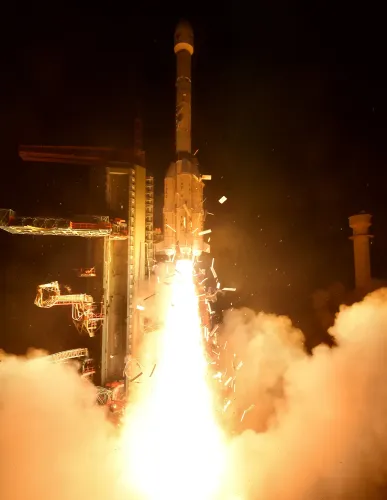
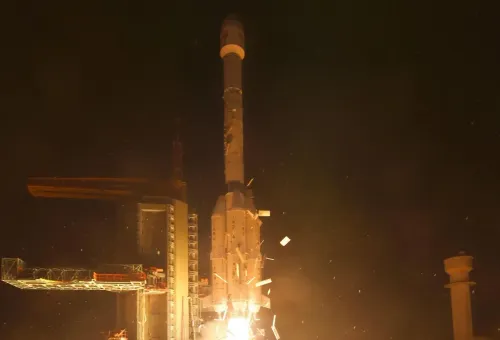
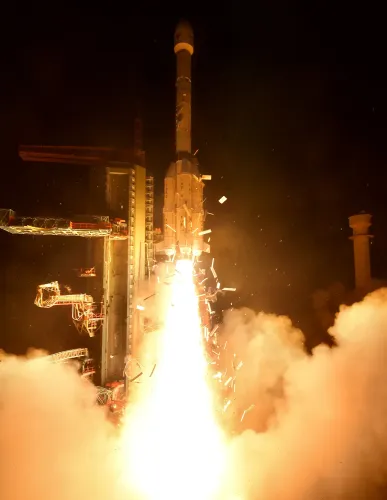
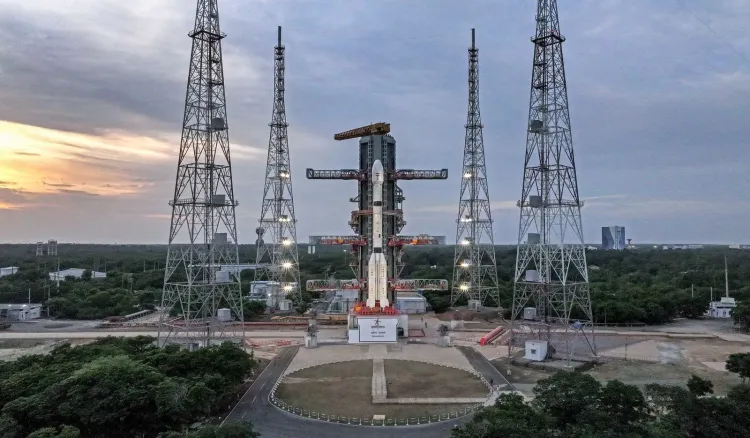
ISRO launched the EOS-05 Earth observation satellite aboard GSLV-F17 from Sriharikota on 4 September at 2:55 am IST .
The 2,367-kg satellite was injected into a Sub-Geosynchronous Transfer Orbit and will undergo orbit-raising manoeuvres to reach its operational position.
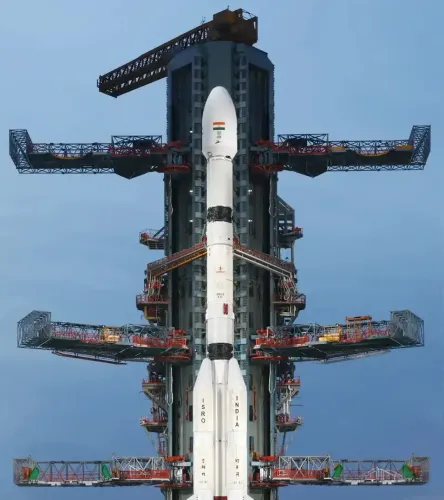
GSLV-F17 is the 19th flight of the GSLV and uses India's indigenously developed cryogenic upper stage .
The mission redeems the programme after GSLV-F10 failed in August 2021 when the cryogenic stage could not complete its operation during the EOS-03 mission.
EOS-05 will support disaster management , agriculture , environmental monitoring , and strategic applications across the Indian subcontinent .
The Indian Space Research Organisation (ISRO) on Friday, 4 September successfully launched its advanced Earth observation satellite EOS-05 aboard the GSLV-F17 rocket from the Satish Dhawan Space Centre in Sriharikota, marking a significant expansion of India's space-based monitoring capability. The mission places India a step closer to establishing a dedicated geosynchronous Earth-imaging capability — a gap that became painfully apparent after a failed attempt in 2021.
Launch Details
The 51.7-metre GSLV-F17 lifted off from the second launch pad at 2:55 am IST, following a 27.5-hour countdown. The three-stage launch vehicle performed as planned, injecting the approximately 2,367-kg satellite into its designated Sub-Geosynchronous Transfer Orbit. EOS-05 will now undergo a series of orbit-raising manoeuvres before reaching its final operational position.
What EOS-05 Will Do
Unlike conventional low-Earth-orbit observation satellites, EOS-05 operates from geosynchronous orbit, allowing it to repeatedly image large geographical areas — particularly the Indian subcontinent and adjoining regions. Its advanced imaging capabilities are designed to support disaster management, agriculture, environmental assessment, natural resource management, and monitoring of weather-related events. Critically, frequent imaging from geosynchronous altitude is expected to improve the speed and availability of information during rapidly developing emergencies such as floods and cyclones.
Redemption After 2021 Failure
The GSLV-F17 mission is the 19th flight of the Geosynchronous Satellite Launch Vehicle and uses India's indigenously developed cryogenic upper stage. The successful launch carries added significance given that its predecessor, GSLV-F10 — which carried the EOS-03 Earth observation satellite — failed in August 2021 after the cryogenic upper stage could not complete its planned operation. Friday's success effectively resumes a programme that had been stalled for four years.
Strategic and Civilian Significance
EOS-05 is expected to complement India's existing satellite network and serve both civilian and strategic applications. Its ability to monitor large areas at high revisit rates makes it a valuable asset for development planning, border surveillance support, and national security requirements. This comes amid a broader push by ISRO to build a more resilient, multi-orbit Earth observation architecture. With GSLV-F17's success, India has strengthened its sustained space-based surveillance capacity in a region where timely geospatial intelligence is increasingly critical.
Point of View
Yet its geosynchronous tier remained incomplete. With EOS-05 now in orbit, India gains a persistent eye over the subcontinent — one whose value will be measured not at launch, but the next time a major flood or border incident demands rapid, wide-area imagery.
NationPress
19 Oct 2026
Frequently Asked Questions
What is the EOS-05 satellite launched by ISRO?
EOS-05 is an advanced Earth observation satellite launched by ISRO on 4 September aboard the GSLV-F17 rocket from Sriharikota. It operates from geosynchronous orbit, enabling repeated wide-area imaging of the Indian subcontinent for disaster management, agriculture, and strategic applications.
What is GSLV-F17 and why is this launch significant?
GSLV-F17 is the 19th flight of India's Geosynchronous Satellite Launch Vehicle, which uses an indigenously developed cryogenic upper stage. The mission is significant because it successfully resumes India's geosynchronous Earth-imaging programme after the GSLV-F10 failure in August 2021.
What happened with the previous EOS-03 mission in 2021?
The GSLV-F10 rocket carrying EOS-03 failed in August 2021 when the cryogenic upper stage could not complete its planned operation, preventing the satellite from reaching orbit. Friday's GSLV-F17 success effectively restores the capability that mission was meant to deliver.
How will EOS-05 benefit India?
EOS-05 will provide high-revisit imaging of large geographical areas from geosynchronous orbit, supporting disaster response, agriculture monitoring, environmental assessment, natural resource management, and national security needs across the Indian subcontinent and adjoining regions.
What orbit was EOS-05 placed in after launch?
EOS-05 was injected into a Sub-Geosynchronous Transfer Orbit following the successful GSLV-F17 flight. The approximately 2,367-kg satellite will now undergo a series of orbit-raising manoeuvres to reach its final operational geosynchronous position.