HP CM Sukhu extends apple model to ginger, maize farmers
Synopsis
Himachal Pradesh CM Sukhvinder Singh Sukhu announced multiple ginger collection centres modelled on the state's apple procurement network, with farm-gate pickup for growers. Naturally grown maize is already being procured at ₹50 per kilogram, extending the state's natural-farming premium-pricing push.
Key Takeaways
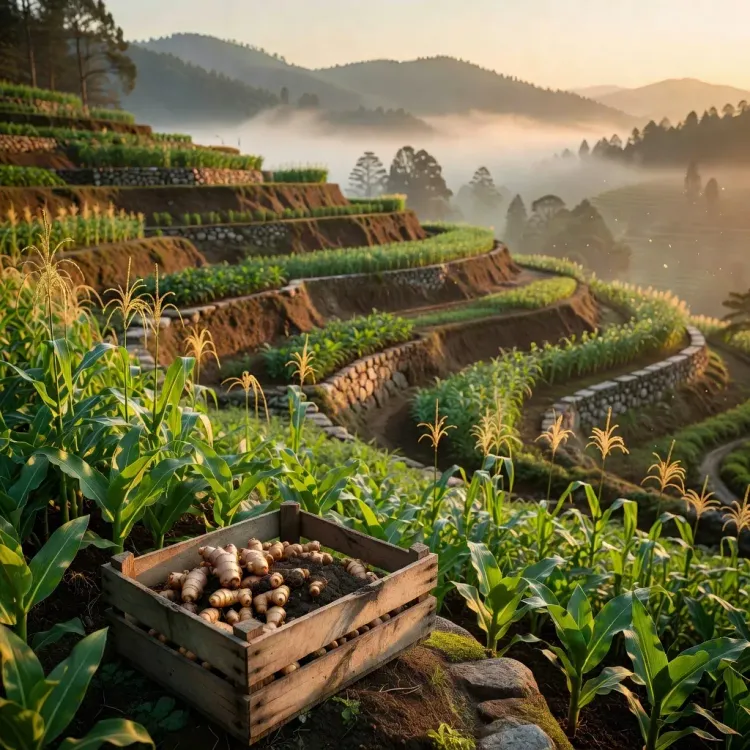
Multiple ginger collection centres will be established on the lines of Himachal Pradesh's existing apple procurement infrastructure.
Farm-gate ginger procurement will also be offered, allowing the government to buy directly from farmers' homes.
Naturally grown maize is currently being purchased at ₹50 per kilogram under the state's natural-farming initiative.
The announcement was made by Chief Minister Sukhvinder Singh Sukhu via the official CMO Himachal Pradesh X account on 30 October 2026 .
The policy extends Himachal Pradesh's proven horticultural price-support model from apples to additional hill crops.
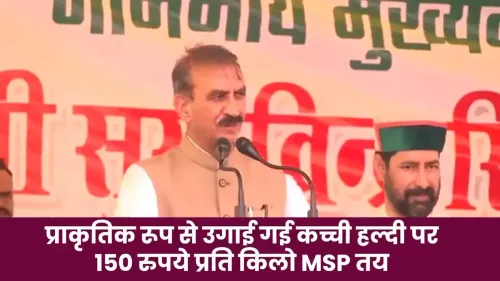
Himachal Pradesh is about to do for ginger and maize what it has long done for apples — put a government buyer at the farmgate, so growers never have to beg middlemen for a fair price. Chief Minister Sukhvinder Singh Sukhu announced on Friday, 30 October 2026 that multiple collection centres will be set up for ginger procurement, mirroring the state's established apple-purchase network, and that naturally grown maize is already being purchased at ₹50 per kilogram.
The Chief Minister's Office posted the announcement on X, quoting CM Sukhu directly: 'सेब की तर्ज पर अदरक की खरीद के लिए अनेक कलेक्शन सेंटर बनाए जाएँगे और किसानों के घरों से भी अदरक खरीदा जाएगा' — ('On the lines of apple procurement, many collection centres will be set up for ginger, and ginger will also be purchased directly from farmers' homes.')From apple orchards to ginger fields: how the model works
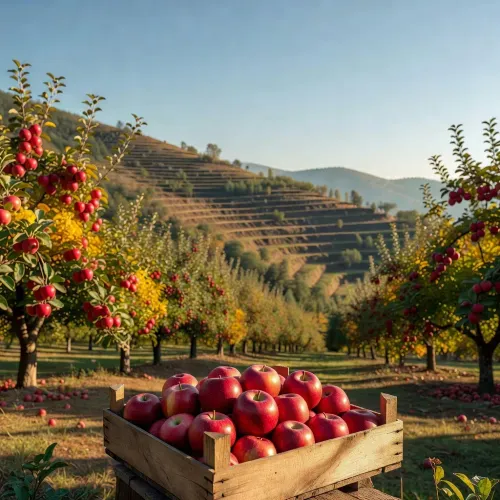
For years, Himachal Pradesh has run apple procurement centres as a price-support backstop — the state steps in as buyer when open-market rates dip below viable levels. That system gave orchard owners a guaranteed floor, shielding them from glut-season crashes. CM Sukhu's announcement formally extends the same architecture to ginger, a cash crop grown widely in the state's mid-hill zones.
Crucially, the new ginger centres will not just be fixed depots. Procurement will reach farmers' homes, eliminating the transport burden that often erodes thin margins for smallholders in remote villages. The logistics design signals that the government has absorbed a key lesson from the apple model: a collection centre forty kilometres away on a hairpin road is not truly accessible.
₹50 per kilo for natural maize — the premium pricing signal
The maize announcement carries its own policy weight. Naturally grown maize — produced without synthetic inputs — is already being procured at ₹50 per kilogram, a rate that functions both as a support price and as an incentive to shift away from chemical farming. The premium-for-natural-produce approach aligns with Himachal Pradesh's broader push toward natural farming, a programme the state has championed as both an environmental and an economic strategy for hill agriculture.
Together, the two measures — ginger collection centres and the maize rate — expand the state's direct-procurement footprint well beyond horticulture's flagship crop. The specific timeline for the ginger centres has not yet been confirmed officially.
What hill farmers stand to gain
Ginger and maize growers in Himachal Pradesh have historically faced volatile prices, thin bargaining power against traders, and high post-harvest losses driven by poor storage and transport. A government-backed buy-out option — especially one that comes to the farm gate — changes that calculus directly. If the rollout matches the promise, smallholders in districts like Sirmaur, Mandi, and Kangra could see meaningful income stability within the coming season.
The real test will be operational: how quickly the centres become functional, whether the ₹50 maize rate holds across the harvest window, and whether the farm-gate ginger pickup actually reaches the most remote growers. Himachal Pradesh has set the blueprint. Execution will write the verdict.
Point of View
Not just horticulture's flagship. Attaching a premium to naturally grown maize is a dual-purpose move: it shores up farmer incomes while nudging cultivation practices away from chemical inputs, linking welfare policy to environmental goals. The farm-gate pickup provision is the politically sharpest detail: it directly addresses the last-mile access problem that has historically blunted the impact of procurement schemes in mountain states. Whether the administrative machinery can match the ambition at scale will determine if this becomes a replicable model or another well-intentioned announcement.
NationPress
30 Oct 2026
Frequently Asked Questions
What is the new ginger procurement scheme in Himachal Pradesh?
The Himachal Pradesh government will set up multiple collection centres to purchase ginger from farmers, modelled on its existing apple procurement network. Ginger will also be bought directly from farmers' homes, removing the need for growers to transport produce to distant centres.
At what price is Himachal Pradesh buying natural maize?
Naturally grown maize — produced without synthetic inputs — is being procured at ₹50 per kilogram by the Himachal Pradesh government as part of its natural-farming support programme.
Who announced the ginger and maize procurement in Himachal Pradesh?
Chief Minister Sukhvinder Singh Sukhu made the announcement, which was posted on the official Chief Minister's Office of Himachal Pradesh X account on 30 October 2026 .
How does Himachal Pradesh's apple procurement model work?
Himachal Pradesh has operated apple procurement centres for several years, where the state government acts as a guaranteed buyer when open-market prices fall below viable levels, providing a price floor for orchard farmers.
Which farmers benefit from Himachal Pradesh's new procurement announcement?
Ginger growers and naturally farming maize cultivators across Himachal Pradesh are the primary beneficiaries, particularly smallholders in mid-hill and remote areas who previously lacked assured market access.