Kishan Reddy: PM Modi Performs Gau Seva in Banaskantha
Synopsis
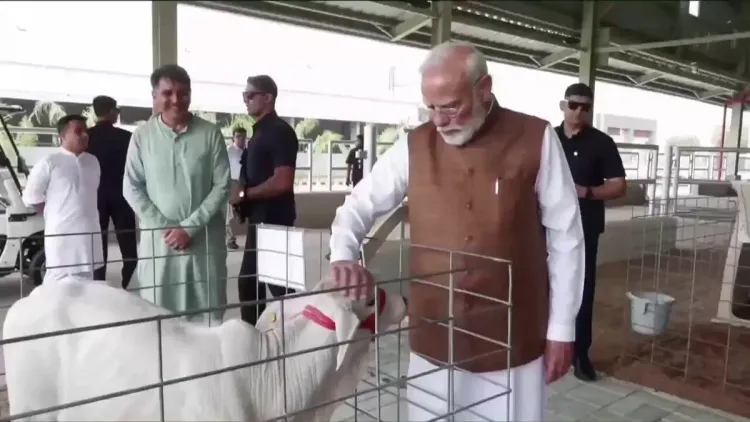
Union Minister G. Kishan Reddy highlighted PM Narendra Modi performing Gau Seva in Banaskantha, Gujarat on October 30, 2026, framing the act as a centuries-old civilisational tradition and linking it to the BJP's broader narrative of indigenous cattle conservation and rural heritage.
Key Takeaways
PM Narendra Modi performed Gau Seva in Banaskantha, Gujarat on October 30, 2026 .
Kishan Reddy shared the moment on X, describing it as part of India's 'civilisational ethos.' Banaskantha is a major livestock and dairy district in northern Gujarat, lending agrarian significance to the symbolic act.
Article 48 of the Indian Constitution (1950) directs the state to protect cows and improve milch cattle breeds.
The BJP has consistently linked cow protection to rural welfare, sustainable agriculture, and Hindu cultural identity.
Analysts will watch for follow-through in livestock policy — gau-shala funding, indigenous breed conservation, or animal husbandry allocations — in upcoming budgets.
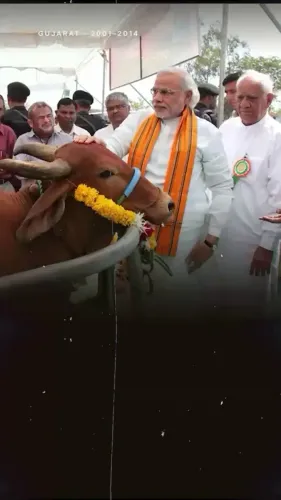
A sunrise ritual in Banaskantha, Gujarat drew national attention on Friday, October 30, 2026, as Prime Minister Narendra Modi performed Gau Seva — the ceremonial service of cows — in a gesture that Union Coal and Mines Minister and BJP Telangana president G. Kishan Reddy described as honouring 'a tradition that has been part of India's civilisational ethos for centuries.'
The Setting: Banaskantha's Dairy Heartland
Banaskantha is no incidental backdrop. The northern Gujarat district is one of India's most active livestock and dairy belts, home to generations of farmers whose livelihoods are woven into cattle rearing. Choosing this district for Gau Seva carries both symbolic and agrarian resonance — a reminder that the ritual is not merely religious but also rooted in the rural economy that Gujarat's farming communities depend on.
Civilisational Ethos Meets Constitutional Directive
The act taps a thread running through Indian public life since independence. Article 48 of the Indian Constitution, adopted in 1950, explicitly directs the state to prohibit the slaughter of cows and calves and to work towards improving breeds of milch cattle — one of the few cultural directives embedded in the founding document. For BJP-led governments, cow protection has consistently been framed as the convergence of civilisational heritage, constitutional obligation, and rural welfare.
Modi, whose political career is rooted in Gujarat, has participated in similar traditional observances before, reinforcing the BJP's positioning of such practices as integral to governance — not separate from it. Kishan Reddy's post amplifies that message nationally, reaching audiences well beyond Gujarat's borders.
Gau Seva as Political Symbolism
The BJP's framing of indigenous cattle conservation ties together several strands: sustainable agriculture, rural income through dairy, and a broader assertion of Hindu cultural identity. Gujarat has maintained state-level gau-shala schemes and animal husbandry programmes that align with this philosophy. A Prime Ministerial Gau Seva in Banaskantha reinforces those policy signals ahead of any Union Budget or state-level livestock policy announcements.
Whether the moment translates into fresh policy — expanded support for gau-shalas, indigenous breed conservation funding, or animal husbandry budget allocations — is the question that dairy farmers and livestock keepers across the country will be watching.
For now, the image is deliberate and clear: a Prime Minister, at dawn, in a field, in service of Gau Mata. In Indian political communication, few gestures carry more layered meaning.
Point of View
Rural economic solidarity with dairy farmers, and the BJP's long-running assertion of Hindu civilisational continuity in governance. By amplifying the moment nationally, Kishan Reddy — as Telangana BJP chief — extends its reach into a state where the party is working to deepen its base, embedding the Prime Minister's gesture into a broader cultural-identity narrative. The choice of Banaskantha, a dairy powerhouse, is deliberate; it allows the BJP to bridge the gap between symbolic religiosity and tangible agrarian politics. Whether this translates into measurable policy — livestock subsidies, gau-shala expansion, or breed-conservation funding — will determine if the symbolism carries economic weight or remains primarily electoral.
NationPress
31 Oct 2026
Frequently Asked Questions
What is Gau Seva and why is it significant in India?
Gau Seva refers to the ritual service and care of cows, considered sacred in Hindu tradition. It holds civilisational and constitutional significance in India — Article 48 of the Constitution (1950) directs the state to work toward prohibiting cow slaughter and improving milch cattle breeds.
Why did PM Modi perform Gau Seva in Banaskantha, Gujarat?
Banaskantha is one of India's most active dairy and livestock districts in northern Gujarat. Performing Gau Seva there connects the symbolic religious act to the region's deep agrarian identity and the livelihoods of dairy farming communities.
What did G. Kishan Reddy say about PM Modi's Gau Seva?
Union Coal and Mines Minister G. Kishan Reddy posted on X that PM Modi's Gau Seva in Banaskantha honours 'a tradition that has been part of India's civilisational ethos for centuries.'
What does Article 48 of the Indian Constitution say about cows?
Article 48, adopted in 1950 as a Directive Principle of State Policy, directs the state to take steps for prohibiting the slaughter of cows, calves, and other milch and draught cattle, and to organise agriculture and animal husbandry on modern and scientific lines.
How does the BJP link cow protection to policy?
BJP-led governments have framed indigenous cattle conservation as part of India's civilisational heritage while connecting it to rural economy, sustainable agriculture, and gau-shala (cow shelter) support schemes at both state and central levels.