Indian-American lawmakers join 150+ Democrats opposing Trump census rule on non-citizens
Synopsis
Five Indian-American members of Congress — Jayapal, Khanna, Krishnamoorthi, Subramanyam, and Thanedar — are among 150+ House Democrats pushing back on a Trump administration census proposal that would strip non-citizens below green-card status from apportionment counts and bar race and ethnicity questions. Critics say it violates the 14th Amendment; a Republican faction wants the exclusion to go even further.
Key Takeaways
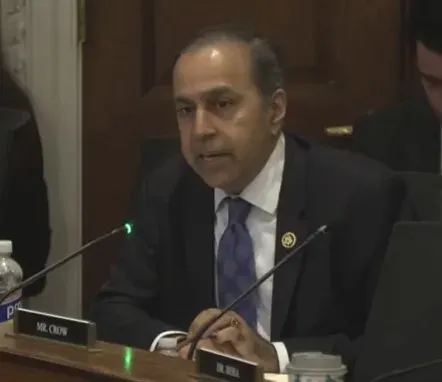
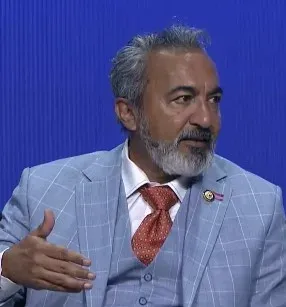
Five Indian-American lawmakers — Pramila Jayapal , Ro Khanna , Raja Krishnamoorthi , Suhas Subramanyam , and Shri Thanedar — co-signed a letter demanding the Trump administration withdraw a proposed census rule.
More than 150 House Democrats joined the letter, led by Robert Garcia , top Democrat on the House Oversight and Government Reform Committee .
The Census Bureau's proposal, published 10 September , would exclude undocumented immigrants and temporary visa holders from the apportionment population, while retaining green-card holders .
It would also bar questions on race , ethnicity , and sexual orientation from enumeration census questionnaires.
Republican Representative Mary Miller of Illinois countered with a letter urging exclusion of all non-citizens , including green-card holders.
The public comment deadline is 2 November ; the National Conference of State Legislatures has requested a further 60-day extension .
Five Indian-American lawmakers joined more than 150 House Democrats on 31 October 2026 in formally demanding that the Trump administration withdraw a proposed census rule that would exclude certain non-citizens from the population count used to allocate congressional seats. The demand came through a public comment letter coordinated by the Congressional Asian Pacific American Caucus.
Who Signed and Who Led the Effort
The five Indian-American signatories were Pramila Jayapal, Ro Khanna, Raja Krishnamoorthi, Suhas Subramanyam, and Shri Thanedar, according to the Congressional Asian Pacific American Caucus. The letter was led by Robert Garcia, the top Democrat on the House Oversight and Government Reform Committee, alongside chairs of the Asian Pacific American, Hispanic, Black, and Equality caucuses. 'We will fight this rule in Congress and the courts,' Garcia said.
What the Proposed Rule Would Change
Under the Census Bureau's proposal — published on 10 September with a public comment deadline extended to 2 November — lawful permanent residents, commonly known as green-card holders, would remain counted in the apportionment population. However, undocumented immigrants and non-citizens holding legal status less permanent than a green card, including temporary visa holders, would be excluded. The bureau has argued that lasting residence and allegiance to the United States should determine who is counted for apportionment.
Separately, the proposal would bar questions about race, ethnicity, and sexual orientation from census questionnaires used to enumerate the population, though that restriction would not extend to the American Community Survey or other non-enumeration surveys.
Why Lawmakers Say It Violates the Constitution
The Democrats argued that the proposal would violate the 14th Amendment, which requires congressional representation to reflect the total number of persons in each state — not merely citizens. They contended that restricting demographic questions would weaken enforcement of voting rights and other civil rights protections. Grace Meng, who chairs the Asian Pacific American Caucus, warned that the changes could strip minority communities of both representation and access to federal resources, and erode the data needed to identify systemic disparities.
Republican Support and a Push to Go Further
Not all of Congress is opposed. Republican Representative Mary Miller of Illinois announced a separate letter on Friday backing the proposal — and calling on the administration to go even further by excluding all non-citizens, including green-card holders, from congressional apportionment. Miller's group also sought restrictions on demographic questions in the American Community Survey, extending beyond what the bureau had proposed, arguing that congressional representation should be determined solely by American citizens.
States Flag Redistricting Complications
The National Conference of State Legislatures filed its own comments on Friday, requesting an additional 60 days for public responses and state consultations. The body cautioned that census data are essential for drawing electoral boundaries and that American Community Survey estimates and administrative records cannot adequately substitute for detailed census block-level counts. It warned that altering the information collected without consulting states could complicate compliance with individual state redistricting laws and force costly new methodologies to allocate data to smaller geographical units. The United States conducts a full census every 10 years, with population figures used to divide the House of Representatives' 435 seats among the 50 states.
Point of View
Effectively redistributing political power toward lower-immigration states. The 14th Amendment challenge is legally serious and likely to reach the courts regardless of how the comment period resolves. What gets less attention is the parallel proposal to strip race and ethnicity questions from the census form: that change, if it survives, would hollow out decades of civil rights enforcement infrastructure that depends on granular demographic data.
NationPress
31 Oct 2026
Frequently Asked Questions
What is the Trump administration's proposed census rule?
The Census Bureau published a proposal on 10 September that would exclude undocumented immigrants and non-citizens holding status less permanent than a green card — including temporary visa holders — from the population count used to allocate congressional seats. Green-card holders would remain included. The proposal also seeks to remove questions on race, ethnicity, and sexual orientation from enumeration census questionnaires.
Why are Indian-American lawmakers opposing the census proposal?
Pramila Jayapal, Ro Khanna, Raja Krishnamoorthi, Suhas Subramanyam, and Shri Thanedar argue the rule violates the 14th Amendment, which requires congressional representation to reflect the total number of persons — not just citizens — in each state. They also contend it would weaken enforcement of voting rights and strip minority communities of representation and federal resources.
What does the 14th Amendment say about congressional apportionment?
The 14th Amendment requires that congressional seats be apportioned based on the total number of persons in each state. Opponents of the proposed rule argue that excluding non-citizens — even those present legally — from that count directly contradicts this constitutional requirement.
Are any Republicans supporting the census proposal?
Yes. Republican Representative Mary Miller of Illinois announced a separate letter supporting the proposal and urging the Trump administration to go further by excluding all non-citizens, including green-card holders, from apportionment. Her group also sought demographic question restrictions in the American Community Survey, beyond the bureau's current proposal.
When is the deadline to comment on the census proposal, and what happens next?
The public comment deadline was extended to 2 November after an initial deadline of 13 October. The National Conference of State Legislatures has requested a further 60-day extension for states to respond. Legal challenges are widely expected if the rule moves forward, given the constitutional questions raised by opponents.