H-1B $100,000 fee struck down: US lawmakers hail federal court ruling
Synopsis
A Massachusetts federal judge has vacated the Trump administration's $100,000 H-1B visa fee nationwide, ruling the executive branch lacked authority to impose it. The decision drew immediate praise from Democratic lawmakers, state AGs, and Indian diaspora groups — and has direct implications for Indian nationals, who receive the bulk of H-1B visas each year.
Key Takeaways
US District Judge Leo T.
Sorokin struck down the Trump administration's $100,000 H-1B fee , ruling the executive branch lacked statutory authority to impose it.
The policy was vacated nationwide , allowing employers to file H-1B petitions without the additional charge.
California Attorney General Rob Bonta led the multistate lawsuit that resulted in the ruling.
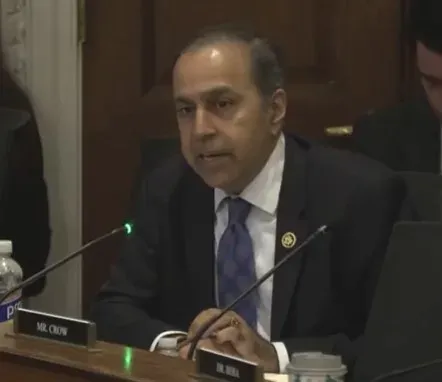
Congressman Raja Krishnamoorthi and Congressman Sanford Bishop both praised the decision, citing risks to healthcare, innovation, and economic competitiveness.
The Foundation for India and Indian Diaspora Studies (FIIDS) said the ruling restores 'predictability and fairness' to the employment-based immigration system.
Indian nationals receive the overwhelming majority of H-1B visas issued annually, making the ruling especially significant for India and the Indian-American community.
A Massachusetts federal court has struck down the Trump administration's $100,000 fee on new H-1B visa petitions, with Democratic lawmakers, state attorneys general, and policy advocates declaring the 9 June ruling a decisive win for employers, healthcare systems, universities, and the broader US economy. US District Judge Leo T. Sorokin concluded that the administration lacked statutory authority to impose the fee and that Congress had not delegated taxing powers to the executive branch for H-1B petitions, vacating the policy nationwide.
Key Reactions from Lawmakers
Indian American Congressman Raja Krishnamoorthi called the decision 'a welcome rejection of an unlawful policy that threatened America's economic competitiveness and made it harder for businesses, hospitals, universities, and research institutions to attract the high-skilled talent they need to succeed.' He argued that policymakers must find ways to address programme abuse without erecting barriers that drive talent and investment to other countries.
Congressman Sanford Bishop of Georgia noted that hospitals and healthcare providers in rural and underserved communities had specifically warned that the additional fee would make recruitment more difficult and expensive. 'The $100,000 fee for employers' H1-B applications would have discouraged the best and the brightest from coming to America and helping our economy grow and to innovate,' Bishop said, adding that the ruling was 'a victory for every American concerned about attracting the world's smartest talent.'
California Leads the Legal Challenge
California Attorney General Rob Bonta, who led the multistate lawsuit challenging the policy, described the outcome as a major victory against what he characterised as an unlawful burden on employers and public institutions. 'The Trump Administration's unlawful and costly $100,000 tax has been struck down,' Bonta said. He argued the fee had created barriers for employers seeking to hire teachers, physicians, nurses, researchers, and other skilled professionals needed to address acute workforce shortages. 'California remains open for business, open to talent, and committed to ensuring our communities have essential services — from healthcare to education — that depend on a strong, skilled workforce,' he added.
Indian Diaspora Groups Welcome the Ruling
The Foundation for India and Indian Diaspora Studies (FIIDS) also welcomed the decision, saying it would restore predictability and fairness to the employment-based immigration system. Khanderao Kand, Chief of Policy and Strategy at FIIDS, said the ruling was 'appropriate for preserving America's competitive advantage in innovation, research, and entrepreneurship.' He added that the judgment 'reinforces the principle that major policy changes must be grounded in statutory authority and economic realities.'
Why the H-1B Programme Matters for India
The H-1B programme allows US employers to hire foreign professionals in speciality occupations requiring highly specialised knowledge and at least a bachelor's degree or equivalent. It is widely used by technology companies, universities, healthcare systems, and research institutions facing shortages of specialised talent. Indian nationals receive the overwhelming majority of H-1B visas issued each year, making the programme particularly significant for India and the Indian-American community. The now-vacated fee had drawn sharp opposition since its introduction, with critics arguing it would disproportionately harm sectors already grappling with talent shortfalls.
What Happens Next
With the policy vacated nationwide, employers can file new H-1B petitions without the additional $100,000 charge. Advocates are calling on Congress to pursue targeted reforms that address documented programme abuse while preserving access to global talent. Whether the administration will appeal Judge Sorokin's ruling has not been confirmed as of the time of reporting.
Point of View
Not a political one. The $100,000 fee was always constitutionally fragile: the power to tax sits with Congress, not the executive. What the ruling does not resolve is the underlying tension between curbing H-1B abuse and sustaining talent pipelines in healthcare, research, and technology — sectors where workforce shortfalls are measurable and growing. For Indian professionals, the stakes are unusually high given their dominant share of H-1B approvals. Whether this ruling prompts a legislative counter-move or an appeal will define whether it is a durable win or merely a delay.
NationPress
13 Sept 2026
Frequently Asked Questions
What was the Trump administration's $100,000 H-1B fee?
The Trump administration introduced a $100,000 fee on new H-1B visa petitions filed by US employers. Critics argued it was an unlawful burden that would deter companies, hospitals, and universities from hiring high-skilled foreign professionals.
Why did the federal court strike down the H-1B fee?
US District Judge Leo T. Sorokin ruled that the Trump administration lacked the statutory authority to impose the fee, finding that Congress had not delegated taxing powers to the executive branch for H-1B petitions. The court subsequently vacated the policy nationwide.
Who led the legal challenge against the fee?
California Attorney General Rob Bonta led a multistate lawsuit challenging the policy. He described the ruling as a major victory against what he called an unlawful and costly burden on employers and public institutions.
How does this ruling affect Indian nationals?
Indian nationals receive the overwhelming majority of H-1B visas issued each year, making the programme critical for India and the Indian-American community. The vacating of the $100,000 fee removes a significant financial barrier for employers seeking to sponsor Indian professionals.
What happens next following the ruling?
Employers can now file new H-1B petitions without the additional $100,000 charge. Advocates are urging Congress to pursue targeted reforms to address programme abuse while preserving talent access. Whether the administration will appeal the ruling had not been confirmed at the time of reporting.