Democrats introduce bill to block Trump public charge green card rule

Synopsis
With a September 18 deadline looming, Senate and House Democrats have moved to defund enforcement of a Trump administration rule that gives immigration officers broad, undefined discretion to deny green cards based on public benefit usage — a policy critics say goes further than anything imposed during Trump's first term and could chill benefit uptake even among US citizen children in mixed-status families.
Key Takeaways
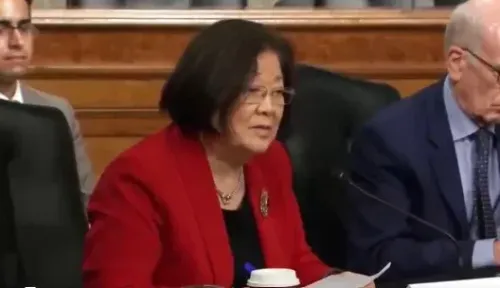
The Protect American Values Act was introduced on 13 August by Senators Michael Bennet, Mazie Hirono , and Congresswoman Judy Chu to block federal funds from enforcing the Trump public charge rule.
The Trump administration's 'public charge' rule is scheduled to take effect on 18 September and rescinds a 2022 Biden-era policy that excluded non-cash benefits like SNAP, Medicaid , and housing aid from immigration assessments.
Critics argue the new rule does not specify which benefits can be considered, giving immigration officers sweeping discretion to deny green card applications.
The bill is backed by 17 senators and dozens of House members, including Indian American co-sponsors Pramila Jayapal and Raja Krishnamoorthi .
Lawmakers warned the rule could deter eligible immigrants from using assistance programmes and affect US citizens in mixed-status families.
Democratic lawmakers in the United States Congress introduced legislation on Wednesday, 13 August to prevent federal funds from being used to enforce a Trump administration rule that critics say could make it significantly harder for immigrants who rely on certain public benefits to obtain green cards. The rule is scheduled to take effect on 18 September.
The Protect American Values Act
The bicameral Protect American Values Act was introduced by Senators Michael Bennet and Mazie Hirono alongside Congresswoman Judy Chu. The legislation would explicitly prohibit federal money from being used to implement, administer, or enforce the administration's revised 'public charge' rule.
The new rule rescinds a 2022 policy set under the Biden administration, which had excluded non-cash benefits — including food assistance under SNAP, Medicaid, and housing aid — from being factored into public charge assessments. The Trump administration's replacement rule does not specify which public benefits may be considered, according to the lawmakers who introduced the bill.
What the Public Charge Rule Does
The public charge test is an existing provision in US immigration law that allows authorities to assess whether an applicant is likely to become primarily dependent on government support. A positive finding can be used to deny admission to the United States or block an applicant's adjustment to lawful permanent resident status.
Lawmakers argue that the new rule, by failing to define which benefits may be considered, grants immigration officers 'sweeping discretion' to deny green card applications based on subjective judgment rather than clear legal standards. Senator Chu noted that the finalised policy is broader in scope than the public charge rule enforced during Trump's first term.
What Lawmakers Said
Senator Bennet said the rule was not about border security or fiscal efficiency. 'This rule isn't about securing our borders or more efficient spending; its purpose is to punish immigrants who only seek to make a better life for themselves and their families,' he said. He added that the Protect American Values Act sends a clear message that the nation would 'continue to stand up for our communities and fight this Administration's inhumane efforts.'
Senator Tim Kaine warned that the rule could allow officials to consider benefits used by an immigrant applicant's US citizen children or other relatives — even though most noncitizens are already ineligible for public benefits. He cited evidence from Trump's first term, saying the earlier policy 'led to widespread avoidance of medical care and other important programs, including among US citizen children.'
Senator Tammy Duckworth said no one should be forced to choose between their immigration status and meeting basic needs, stating: 'Nobody should have to choose between receiving citizenship or going hungry.'
Scope of Support and Impact on Mixed-Status Families
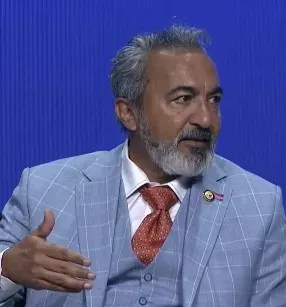
The legislation is backed by 17 other senators and dozens of House members. Indian American lawmakers Pramila Jayapal and Raja Krishnamoorthi are among its House co-sponsors.
Lawmakers warned that the uncertainty created by the rule could deter eligible immigrants from accessing government assistance programmes. They said the chilling effect could extend to US citizens and lawful permanent residents living in mixed-status families, where one member's immigration case may be influenced by the benefit usage of others in the household.
Historical Context
Public charge provisions have long been part of US immigration law, but their interpretation has shifted significantly across administrations. The Trump administration adopted a broader standard during his first term; the Biden administration restored a narrower framework in 2022. The latest rule places the issue once again at the centre of the US immigration debate, with the 18 September implementation deadline adding urgency to the legislative effort.
Point of View
The administration has effectively weaponised ambiguity: immigrants and their legal advisers cannot know the risk threshold, so the rational response is to avoid all public benefits. That chilling effect, documented during Trump's first term even among US citizen children, is arguably the rule's intended outcome rather than a side effect. Democrats' legislative counter is symbolically important but faces long odds in a divided Congress; the real battleground is likely to be federal courts, where the rule's lack of clear standards could be vulnerable to administrative law challenges.
NationPress
27 Sept 2026
Frequently Asked Questions
What is the Trump administration's public charge rule?
The public charge rule allows US immigration authorities to assess whether an applicant is likely to become primarily dependent on government support, and to use that finding to deny a green card or entry. The Trump administration's revised rule, set to take effect on 18 September, rescinds a 2022 Biden-era policy that had excluded non-cash benefits such as SNAP, Medicaid, and housing aid from this assessment.
What is the Protect American Values Act?
It is a bicameral bill introduced on 13 August by Senators Michael Bennet, Mazie Hirono, and Congresswoman Judy Chu that would prohibit federal funds from being used to implement, administer, or enforce the Trump administration's revised public charge rule. The legislation has the backing of 17 additional senators and dozens of House members.
Why are Democrats opposing the new public charge rule?
Democrats argue the rule does not define which public benefits may be considered in immigration decisions, giving officers broad and subjective discretion to deny green card applications. They also warn it could deter eligible immigrants — and even US citizen children in mixed-status families — from accessing healthcare, food assistance, and housing programmes.
Who are the Indian American lawmakers supporting this bill?
Congresswoman Pramila Jayapal and Congressman Raja Krishnamoorthi are among the House co-sponsors of the Protect American Values Act.
How does the new rule differ from Trump's first-term public charge policy?
According to Congresswoman Judy Chu, the finalised rule is broader than the one imposed during Trump's first term because it does not identify which benefits will be considered in a public charge test, leaving the determination to the subjective judgment of individual immigration officers rather than clear legal standards.