H-1B green card bill 2025: Padilla revives pathway for 8 million residents
Synopsis
A Democratic senator's revived bill could end decade-long green card waits for H-1B holders — including hundreds of thousands of Indian professionals — by replacing a 1972 immigration cutoff with a rolling seven-year residency rule. With over 8 million people potentially eligible and 30-plus civil society groups backing it, the legislation is ambitious. But deep partisan divisions mean its path through Congress is anything but clear.
Key Takeaways
Senator Alex Padilla reintroduced legislation on 28 July to create a green card pathway for more than 8 million long-term US residents.
The bill replaces the Registry's fixed 1 January 1972 cutoff with a rolling seven-year continuous residency requirement.
H-1B visa holders, including large numbers of Indian professionals , are among those who could benefit given chronic employment-based green card backlogs.
Only 305 people used the Registry provision between 2015 and 2019 , highlighting how underutilised the mechanism currently is.
Senate Democratic Whip Dick Durbin and 14 co-sponsors back the bill; Representative Zoe Lofgren leads companion legislation in the House.
More than 30 organisations, including the AFL-CIO and United Farm Workers , have endorsed the measure, which faces an uncertain path amid partisan gridlock.
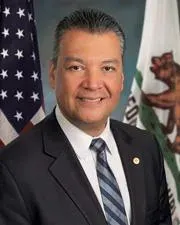
Senator Alex Padilla of California has reintroduced legislation that could open a pathway to permanent residency for more than eight million long-term US residents, including H-1B visa holders, as President Donald Trump escalates immigration enforcement measures. The bill, re-tabled on 28 July, proposes the most significant update to a dormant immigration provision since 1986.
What the Bill Proposes
The legislation — formally titled the Renewing Immigration Provisions of the Immigration Act of 1929 — would amend Section 249 of the Immigration and Nationality Act, commonly known as the Registry. Currently, the Registry allows the Homeland Security secretary to grant permanent residency to individuals who have lived in the country since a fixed cutoff date of 1 January 1972. Padilla's bill would replace that static date with a rolling seven-year continuous residency requirement, taking effect 60 days after enactment.
Applicants would need a clean criminal record and must satisfy all existing green card eligibility criteria. The bill covers Dreamers, Temporary Protected Status (TPS) holders, essential workers, and children of long-term visa holders, in addition to skilled workers on employment-based visas.
Why Indian Professionals Are Watching Closely
The proposal carries particular weight for Indian nationals, who account for a disproportionately large share of H-1B visa holders in the United States. Due to per-country caps on employment-based green cards, Indian professionals routinely face wait times stretching decades — in some cases, longer than a working lifetime. A rolling seven-year residency window could, in principle, allow many of these workers to apply for lawful permanent resident status without waiting out the existing backlog.
Notably, only 305 people adjusted their immigration status through the Registry provision between 2015 and 2019, according to data released by Padilla's office — underscoring how dormant the mechanism has become despite its potential reach.
What Senator Padilla Said
Padilla, who serves as the ranking Democrat on the Senate Judiciary Immigration Subcommittee, framed the reintroduction as a direct counter to the current administration's posture. 'A year ago, I introduced this bill to push back against the Trump Administration's cruel treatment of hardworking immigrants,' he said. 'Since then, President Trump's campaign of fear has only escalated, with families living under constant uncertainty despite having built their lives in this country.'
He added: 'Congress cannot continue to ignore millions of long-term residents who contribute to our economy and communities every day. It's past time to modernize our immigration laws and create a fair pathway to lawful permanent residency.'
Congressional and Civil Society Support
Senate Democratic Whip Dick Durbin is co-leading the measure, with 14 additional senators signed on as co-sponsors. In the House of Representatives, Representative Zoe Lofgren of California is steering companion legislation. More than 30 labour, immigration, and civil rights organisations have endorsed the bill, including the AFL-CIO, Service Employees International Union (SEIU), UNITE HERE, United Farm Workers, and the National Immigration Law Center.
Outlook and Challenges
Despite its broad support outside Congress, the bill faces a difficult road. Deep partisan divisions over immigration policy mean its prospects in the current legislative environment remain uncertain. The Registry has been updated only four times since its establishment in 1929, with the last revision coming under the Reagan administration in 1986. Padilla has also introduced separate measures addressing immigrant essential workers and children brought legally to the US as dependants of work-visa holders, suggesting a broader legislative strategy rather than a standalone push. Whether any of these proposals advances will depend heavily on shifts in the Senate's political calculus in the months ahead.
Point of View
The rolling seven-year window is the most meaningful proposal in years, but the per-country cap on employment-based green cards, which is the structural root of the backlog, remains untouched. Without addressing that cap, even a successful Registry expansion offers partial relief at best. The bill's real value may be political: forcing Republicans to vote against a measure that covers essential workers, Dreamers, and children of legal visa holders ahead of a charged electoral cycle.
NationPress
26 Oct 2026
Frequently Asked Questions
What is the H-1B green card bill introduced by Senator Padilla?
It is a proposal to modernise the US immigration Registry by replacing a fixed 1972 residency cutoff with a rolling seven-year continuous residency requirement, potentially making over 8 million long-term residents — including H-1B visa holders — eligible to apply for lawful permanent residency. The bill was reintroduced on 28 July 2025.
How does this bill affect Indian H-1B visa holders?
Indian professionals make up a large share of H-1B visa holders and face some of the longest green card waits due to per-country employment-based caps. A rolling seven-year residency rule could allow many to apply for permanent residency without waiting out the existing multi-decade backlog, though the per-country cap itself is not addressed by this bill.
Who is supporting the bill in Congress?
Senate Democratic Whip Dick Durbin is co-leading the bill alongside Senator Padilla, with 14 additional senators as co-sponsors. Representative Zoe Lofgren of California is steering companion legislation in the House of Representatives.
What is the current status of the US immigration Registry?
The Registry, established in 1929 under Section 249 of the Immigration and Nationality Act, has been updated only four times, most recently in 1986 under the Reagan administration. Its current eligibility cutoff — 1 January 1972 — means the provision is effectively unusable; only 305 people adjusted status through it between 2015 and 2019.
What are the bill's chances of passing?
The bill faces significant headwinds due to deep partisan divisions over immigration in the current Congress. While it has broad civil society backing from over 30 organisations, its legislative path remains uncertain, particularly given the Trump administration's intensified immigration enforcement stance.