Congress accuses BJP of silencing UCC critics after Justice Chavan quits Maharashtra panel
Synopsis
A retired Bombay High Court judge's quiet exit from Maharashtra's UCC drafting committee has opened a political flashpoint — with Congress charging that BJP is weaponising UCC to divide society, silencing even its own NDA allies, and bulldozing state-level versions that are anything but uniform.
Key Takeaways
Retired Bombay High Court judge R.C.
Chavan resigned from the Maharashtra government's seven-member UCC committee on 19 September 2026 , citing differences over functioning and alleged outsider involvement.
Congress General Secretary Jairam Ramesh accused the Modi government of using UCC to 'divide, disrupt and divert' rather than as genuine legal reform.
Ramesh questioned whether state-level UCCs — varying in provisions, penalties, and exemptions — can be called 'uniform' at all.
Congress alleged the government discarded its own law commission's UCC findings because they did not fit its political agenda.
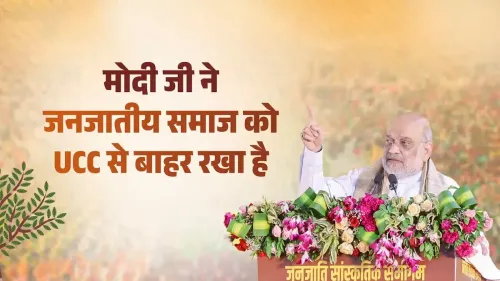
Home Minister Amit Shah has reportedly said UCC will be implemented across all NDA-ruled states before the 2029 Lok Sabha election.
Congress alleged NDA alliance partners are being 'silenced' by the BJP on UCC implementation.
Congress on Wednesday, 23 September 2026, accused the Modi government of deploying the Uniform Civil Code (UCC) as a tool to 'divide, disrupt and divert' society rather than pursuing it as a genuine legal reform built on broad consultation and consensus. The charge came in the wake of retired Bombay High Court judge R.C. Chavan resigning from the Maharashtra government's seven-member UCC drafting committee on 19 September, citing differences over the panel's functioning.
Justice Chavan's Exit and Its Fallout
Former Bombay High Court judge R.C. Chavan was among the seven members appointed by the Maharashtra government to prepare a draft framework for implementing the UCC in the state. His resignation, submitted on 19 September, cited internal disagreements over the panel's functioning and the alleged involvement of an 'outsider' in its proceedings. Congress argues his departure raises questions that go beyond procedural disputes, pointing to what the party calls a pattern of suppressing dissent around UCC implementation.
What Congress Said
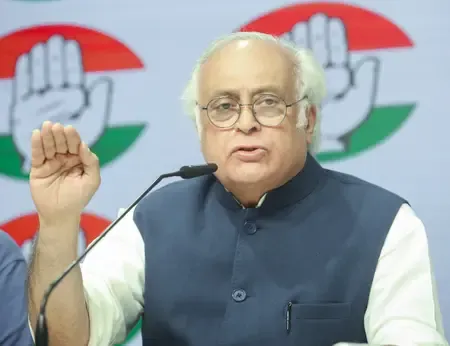
Congress General Secretary and Communications In-charge Jairam Ramesh said the resignation of a sitting former High Court judge from a state UCC committee 'raises larger questions' about the exercise itself. In a post on X, Ramesh questioned whether the Constituent Assembly had ever envisaged each state enacting its own separate version of a UCC. 'Did the architects of our Constitution, led by Dr B.R. Ambedkar, ever conceive of states competing with one another to have different UCCs according to the political machinations and calculations of one political party? Again, the answer is a resounding no,' he stated.
Ramesh further argued that the state-level UCCs being pushed by Bharatiya Janata Party (BJP)-ruled governments are not uniform in any meaningful sense — carrying different provisions, different penalties, different procedures, and significant exemptions from state to state. He also accused the Modi government of discarding the findings of the very law commission it tasked with examining UCC, reportedly because those findings did not align with its political agenda.
The NDA Alliance Angle
Ramesh took particular aim at Union Home Minister Amit Shah's recent remarks that UCC would be implemented across all NDA-ruled states before the 2029 Lok Sabha election, describing them as 'bombastic.' He alleged that other NDA constituent parties 'have lost their voices and are being silenced by the BJP' on the issue. This comes amid reports of unease within sections of the ruling alliance over the pace and form of UCC rollout in multiple states.
The Broader Pattern
Congress's criticism reflects a wider debate over how UCC — a Directive Principle of the Indian Constitution — should be implemented. Critics argue that a truly uniform code requires parliamentary consensus and cannot be achieved through piecemeal state legislation. 'Over the last three years, one BJP-ruled state after another bulldozed through its own version of a Uniform Civil Code,' Ramesh stated. Notably, Uttarakhand became the first state to enact a UCC law, with several other BJP-governed states following with their own drafts — each varying in key provisions.
What Comes Next
The Maharashtra UCC committee's future functioning remains unclear following Justice Chavan's departure, with no replacement named as of Wednesday. The opposition is expected to escalate pressure in parliament and state assemblies, while the BJP is likely to defend the state-level approach as consistent with cooperative federalism. How the NDA's non-BJP partners publicly respond — or choose to stay silent — will be closely watched in the coming days.
Point of View
Piecemeal state legislation that varies in penalties and exemptions is arguably its opposite, and Congress is right to press that contradiction. What is missing from the political noise, however, is a credible counter-proposal: the opposition has attacked the process but has not articulated what a constitutionally sound, consensus-built UCC would actually look like. Until it does, this remains a battle over optics rather than a serious constitutional debate.
NationPress
23 Sept 2026
Frequently Asked Questions
Why did Justice R.C. Chavan resign from the Maharashtra UCC committee?
Retired Bombay High Court judge R.C. Chavan resigned from the Maharashtra government's seven-member UCC drafting committee on 19 September 2026, citing differences over the panel's functioning and the alleged involvement of an 'outsider' in its proceedings. His exit triggered a sharp political response from the Congress party.
What is the Congress party's main criticism of the BJP's UCC approach?
Congress argues that the BJP is using the UCC as a political instrument to 'divide, disrupt and divert' society rather than as a genuine legal reform. The party contends that state-level UCCs being enacted by BJP-ruled governments are not truly uniform — each carrying different provisions, penalties, procedures, and exemptions.
What did Jairam Ramesh say about the Constitution and state-level UCCs?
Congress General Secretary Jairam Ramesh argued in an X post that neither the Constituent Assembly nor the Constitution's framers, including Dr B.R. Ambedkar, ever envisioned individual states enacting separate, competing versions of a UCC. He said such a scenario was driven by 'political machinations' of a single party.
What has Amit Shah said about UCC implementation by 2029?
Union Home Minister Amit Shah reportedly stated that UCC would be implemented across all NDA-ruled states before the 2029 Lok Sabha election. Congress characterised these remarks as 'bombastic' and alleged that the BJP is silencing its own alliance partners who may have reservations about the timeline or approach.
How does the Congress say the government treated its own law commission's UCC report?
According to Congress, the Modi government discarded the findings of the law commission it had tasked with examining UCC, allegedly because those findings did not align with its political agenda. The party has cited this as evidence that the exercise is politically rather than legally motivated.