UCC debate flares in Rajasthan: Congress demands draft, BJP backs consultations
Synopsis
Rajasthan's UCC row cuts to a fundamental democratic question: can citizens meaningfully consult on a law they haven't seen? Congress says no and is using the procedural gap to also pin governance failures on the BJP. The BJP's counter — that consultation precedes drafting — is unusual by legislative convention, and that tension is what makes this more than a routine political spat.
Key Takeaways
Rajasthan Congress president Govind Singh Dotasra demanded the BJP release the full UCC draft before seeking public suggestions on 8 July .
Leader of Opposition Tikaram Jully argued citizens cannot give informed feedback without knowing the law's contents.
BJP president Madan Rathore defended the process, saying public input will shape the legislation rather than react to a finished draft.
Congress also accused the BJP of using the UCC to divert attention from electricity shortages , unemployment , and law-and-order failures.
Rajasthan is reportedly studying the Uttarakhand UCC model and factoring in local conditions before drafting its own version.
No timeline has been set for releasing a draft or introducing a UCC Bill in the Rajasthan Assembly .
Rajasthan has become the latest political battleground over the proposed Uniform Civil Code (UCC), with the Indian National Congress (Congress) demanding that the Bharatiya Janata Party (BJP) government release the full draft legislation before soliciting public feedback, while the ruling party insists the consultation process itself is designed to shape the final law. The standoff, centred in Jaipur, sharpened on 8 July as both sides traded pointed allegations over transparency and political intent.
What the Congress Is Demanding
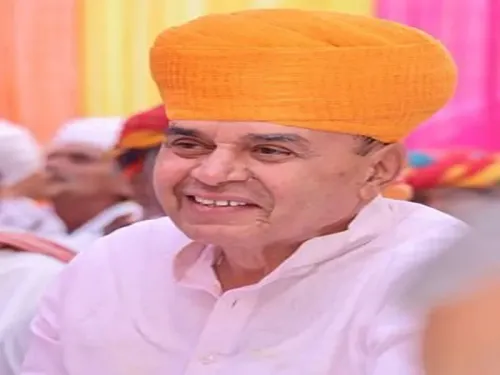
Rajasthan Congress president Govind Singh Dotasra argued that meaningful public consultation is impossible without prior disclosure of the proposed law's provisions. He described the state government's approach as opaque and politically calculated, alleging that the UCC exercise is being used to divert attention from more immediate concerns — including electricity shortages, water supply failures, unemployment, and a deteriorating law-and-order situation.
'The government is busy seeking suggestions on the UCC, but where are the public hearings on electricity, water and employment?' Dotasra said, according to reports. He also raised questions about the composition of the committee examining the UCC, alleging that members with a specific ideological orientation had been appointed to the panel.
Leader of Opposition Tikaram Jully reinforced the demand, arguing that citizens cannot offer informed input on a law whose contents remain undisclosed. 'If people do not know what the law proposes, what suggestions can they possibly give?' Jully said. He additionally reminded the government of an unfulfilled pledge to introduce legislation for the conservation of the Khejri tree, claiming no concrete steps have followed earlier assurances. The Congress has stated it will present a detailed position if a UCC Bill is formally introduced in the Rajasthan Assembly, but maintains that transparency must precede any public engagement.
The BJP's Defence of the Consultation Process
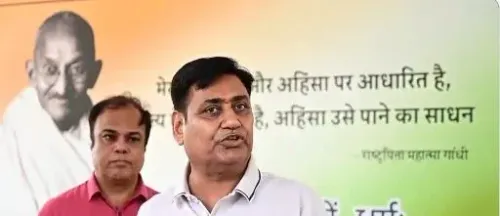
Rajasthan BJP president Madan Rathore rejected the opposition's objections as misplaced, contending that the very purpose of the consultation is to build the legislation from public input rather than present a finished document. He said the government has made no final decisions regarding Hindu law, Muslim Personal Law, or related legal provisions, and that all decisions will be guided by feedback received from diverse sections of society.
'The objective is to achieve maximum consensus before preparing the legislation,' Rathore said. He added that Rajasthan is studying UCC models adopted by other states and is accounting for local circumstances before drafting its own version. Rathore also questioned why the Congress was opposing a process of public opinion-gathering, and suggested the opposition should raise specific legislative concerns in the Assembly rather than challenge the consultation itself.
Why the Timing Matters
This comes amid a broader national debate on the UCC, which has remained a central plank of the BJP's political agenda. Uttarakhand became the first state to enact a UCC in 2024, and several BJP-governed states have since signalled intent to follow suit. Rajasthan's BJP government, which returned to power in December 2023, has positioned the UCC as a governance priority — though critics argue the sequencing of consultation before drafting is procedurally unusual and undermines informed civic participation.
Notably, the Congress's challenge is two-pronged: it is simultaneously questioning the process on procedural grounds while accusing the government of using the UCC as a political distraction — a framing that reflects the party's broader strategy of linking identity-based legislation to governance failures.
What Happens Next
The government's consultation process is ongoing, with no timeline announced for when a draft will be made public or when legislation might be introduced in the Assembly. Political observers expect the UCC to remain a live issue through the next session of the Rajasthan Assembly, with both parties likely to sharpen their positions as the process advances.
Point of View
Unemployment) risks diluting both messages. The BJP's framing — that consultation shapes the draft — is politically convenient but inverts standard legislative practice, where a draft is typically the starting point for public comment. What neither side is addressing is the substantive question: what will Rajasthan's UCC actually say, and how will it differ from Uttarakhand's version? Until that is answered, the debate is largely performative on both sides.
NationPress
6 Oct 2026
Frequently Asked Questions
What is the UCC debate in Rajasthan about?
The debate centres on whether the BJP government should release a draft of the proposed Uniform Civil Code before inviting public suggestions. The Congress argues that citizens cannot give meaningful feedback without knowing the law's provisions, while the BJP contends that public input is meant to shape the draft itself.
What has Congress president Govind Singh Dotasra demanded?
Dotasra has demanded that the Rajasthan government first make the UCC draft public before seeking public suggestions. He also alleged that the consultation exercise is politically motivated and is being used to divert attention from governance issues such as electricity shortages, water supply, and unemployment.
What is the BJP's position on the UCC consultation process?
BJP state president Madan Rathore has defended the consultation, saying no final decisions have been taken on Hindu law, Muslim Personal Law, or other provisions, and that all decisions will be based on public feedback. He said Rajasthan is studying UCC models from other states before finalising its own draft.
Which state enacted the UCC first, and does it influence Rajasthan?
Uttarakhand became the first Indian state to enact a UCC in 2024. Rajasthan's BJP government has reportedly been studying the Uttarakhand model while also accounting for local conditions before preparing its own draft legislation.
What is the Congress's position if a UCC Bill is introduced in the Rajasthan Assembly?
The Congress has said it will present a detailed position once a UCC Bill is formally introduced in the Rajasthan Assembly. However, the party insists that full transparency — including public release of the draft — must precede any consultation process.