PM Modi, Prabowo Inaugurate Prambanan Heritage Project
Synopsis
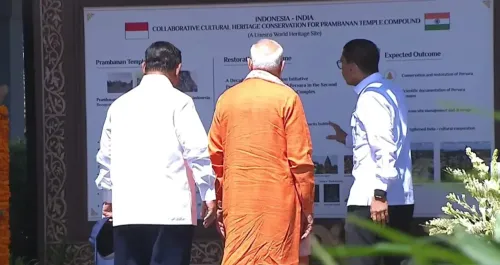
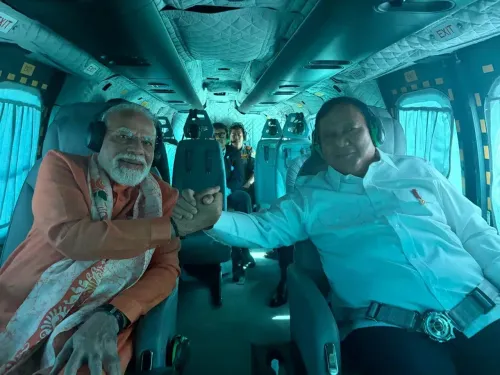
Prime Minister Narendra Modi and Indonesian President Prabowo Subianto on 8 July 2026 jointly inaugurated the UNESCO World Heritage Prambanan Temple Compound Restoration and Conservation Project, underlining the ancient civilisational bonds between India and Indonesia and advancing India's Act East cultural diplomacy.
Key Takeaways
PM Modi and President Prabowo Subianto jointly inaugurated the UNESCO World Heritage Prambanan Temple Compound Restoration and Conservation Project on 8 July 2026 .
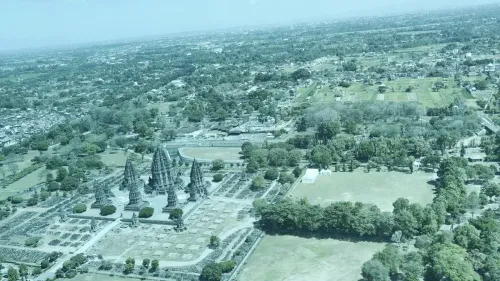
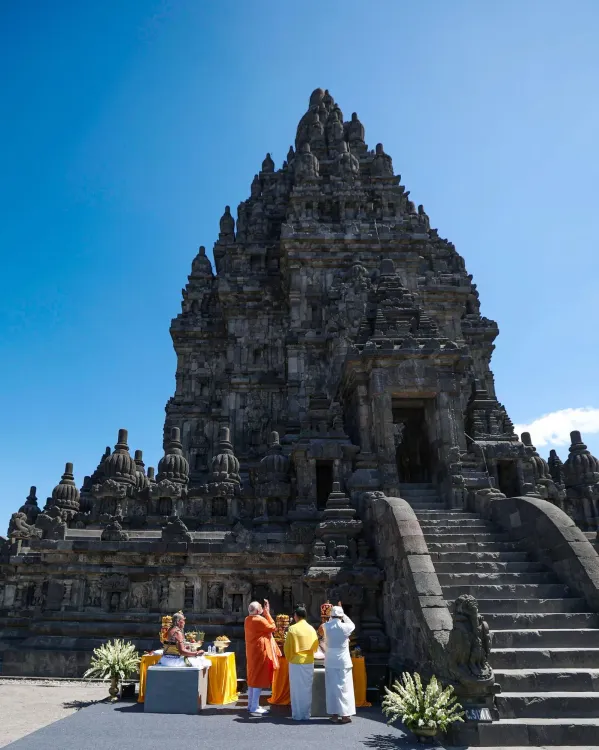
The Prambanan Temple Compound is a 9th-century Hindu complex in Central Java , inscribed as a UNESCO World Heritage Site in 1991 .
India and Indonesia have maintained a bilateral cultural cooperation agreement since 1955 and elevated ties to a Comprehensive Strategic Partnership in 2018 .
The project aligns with India's Act East Policy , which uses cultural diplomacy to deepen engagement with ASEAN nations.
Heritage conservationists and the Central Java tourism sector are among the primary beneficiaries of the restoration initiative.
Follow-on phases and additional heritage MoUs are expected at the next India-Indonesia Joint Commission meeting.
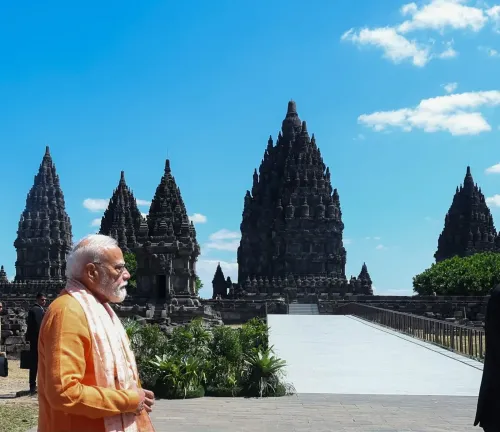
Prime Minister Narendra Modi and Indonesian President Prabowo Subianto jointly inaugurated the UNESCO World Heritage Prambanan Temple Compound Restoration and Conservation Project on Wednesday, 8 July 2026, marking a landmark moment in India-Indonesia cultural diplomacy.
Context
In a post on X, Prime Minister Modi described the initiative as 'a shining example of the enduring civilisational bonds between India and Indonesia, rooted in a shared heritage that has connected our people for centuries.' The joint inauguration signals a deepening of bilateral ties that go well beyond trade and defence into the realm of living cultural heritage.
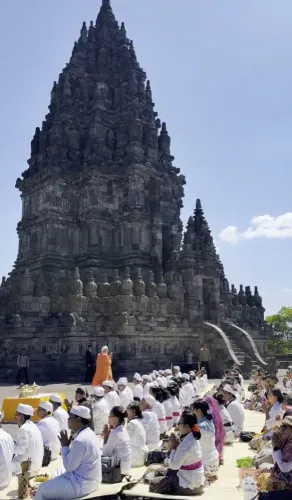
The Prambanan Temple Compound, a 9th-century Hindu temple complex in Central Java dedicated to the Trimurti — Brahma, Vishnu, and Shiva — was inscribed as a UNESCO World Heritage Site in 1991. It stands as one of the most significant surviving monuments of Hindu civilisation outside the Indian subcontinent.
Policy Backdrop
The restoration project fits squarely within India's Act East Policy, which prioritises cultural diplomacy and people-to-people ties with ASEAN nations alongside economic and defence engagement. India and Indonesia have maintained a bilateral cultural cooperation agreement since 1955, enabling technical exchanges and conservation assistance over decades.
The two countries elevated their relationship to a Comprehensive Strategic Partnership during Prime Minister Modi's 2018 visit to Jakarta, with shared civilisational heritage explicitly cited as a pillar of that framework. The Prambanan project represents a tangible, high-visibility expression of that commitment, connecting the ancient maritime links forged through kingdoms such as Srivijaya and Majapahit to present-day state cooperation.
Indonesia, the largest ASEAN nation, holds strategic importance for India in the Indo-Pacific. President Prabowo Subianto, who took office in October 2024, has signalled a focus on expanding strategic and cultural ties with New Delhi, making this inauguration an early landmark of his engagement with India.
Stakeholders and Impact
Heritage conservationists in both countries stand to benefit from the technical collaboration and shared expertise that the project brings. UNESCO's involvement lends international institutional weight to the initiative, potentially opening pathways for further multilateral support for heritage sites across the region.
The Central Java tourism sector is also a direct beneficiary. Prambanan draws hundreds of thousands of visitors annually, and a well-documented, internationally supported restoration project is expected to reinforce its profile as a premier heritage destination. Broader people-to-people links between India and Indonesia — including the Indian diaspora, academic exchanges, and cultural tourism — are likely to receive renewed momentum.
What's Next
Attention will now turn to the next India-Indonesia Joint Commission meeting, where follow-on phases of the Prambanan project and potential additional heritage memoranda of understanding are expected to be discussed. Analysts will watch whether this cultural initiative translates into a broader package of bilateral agreements during President Prabowo's term, particularly in connectivity, maritime cooperation, and the digital economy.
The inauguration sets a precedent for India to leverage its ancient civilisational reach as a soft-power instrument across Southeast Asia, complementing its growing strategic footprint in the Indo-Pacific.
Point of View
Allowing India to assert cultural leadership in Southeast Asia without the friction that accompanies security or trade negotiations. By anchoring the bilateral relationship in a pre-colonial, shared Hindu heritage, New Delhi signals continuity and depth that outlasts any single government. For President Prabowo, associating his early tenure with a high-profile UNESCO project reinforces Indonesia's identity as a guardian of its Hindu-Buddhist past while cementing ties with a rising Indo-Pacific partner. The move also advances India's broader strategy of using soft power — temples, yoga, Ayurveda, and shared epics — as a complement to its hard-power ambitions in the region.
NationPress
8 Jul 2026
Frequently Asked Questions
What is the Prambanan Temple Compound Restoration Project?
It is a conservation initiative for the 9th-century UNESCO World Heritage Prambanan Hindu temple complex in Central Java, Indonesia , jointly inaugurated by PM Modi and President Prabowo Subianto on 8 July 2026 .
Why is Prambanan significant to India?
Prambanan is one of the largest surviving Hindu temple complexes outside India, dedicated to the Trimurti, and reflects the deep civilisational and maritime links between the Indian subcontinent and Southeast Asia through ancient kingdoms like Srivijaya and Majapahit .
What is India's Act East Policy and how does this project relate to it?
India's Act East Policy prioritises strategic, economic, and cultural engagement with ASEAN nations. The Prambanan restoration project is a direct expression of the policy's cultural diplomacy pillar, using shared heritage to strengthen people-to-people ties with Indonesia .
When did India and Indonesia become Comprehensive Strategic Partners?
India and Indonesia established their Comprehensive Strategic Partnership during PM Modi's 2018 visit to Jakarta , with shared civilisational heritage cited as a key foundation of the relationship.
What happens next after the Prambanan inauguration?
Analysts expect follow-on phases of the restoration project and additional heritage MoUs to be taken up at the next India-Indonesia Joint Commission meeting, alongside broader bilateral discussions on connectivity and maritime cooperation.