Jaish-e-Mohammed launches digital propaganda drive after Operation Sindoor losses
Synopsis
Cornered by Operation Sindoor's destruction of its Bahawalpur headquarters and the silencing of chief Masood Azhar, Jaish-e-Mohammed has abandoned kinetic ambitions for now and pivoted to a doctored-video propaganda blitz — a telling sign that India's strikes have pushed one of its most lethal adversaries into an existential corner.
Key Takeaways
Jaish-e-Mohammed has launched an extensive digital propaganda campaign, reportedly guided by Pakistan's ISI , following heavy losses in Operation Sindoor .
The campaign aims to radicalise youth in India and Pakistan and includes plans for doctored videos falsely depicting Indian army atrocities in Jammu and Kashmir .
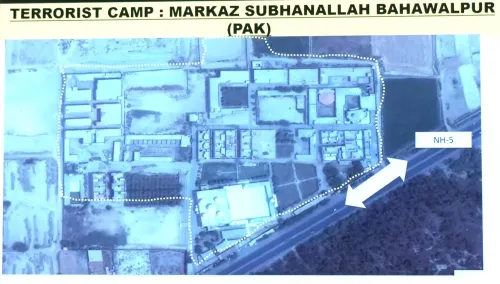
Operation Sindoor destroyed JeM's Markaz Subhan Allah headquarters in Bahawalpur ; the facility previously housed around 600 active cadres .
JeM chief Masood Azhar has remained incommunicado since the strikes; reports suggest he may be seriously unwell.
Top JeM leaders have been relocated near Pakistani army installations for protection; the rebuilt Bahawalpur structure remains largely inactive.
Experts describe this as the deepest crisis JeM has faced, with the outfit unable to mount operations in Jammu and Kashmir amid tightened border security.
Jaish-e-Mohammed (JeM), battered by India's Operation Sindoor and struggling to rebuild operational capacity, has launched an extensive digital propaganda campaign to retain relevance and prevent cadre attrition, according to Intelligence Bureau officials. The campaign, reportedly guided by Pakistan's ISI, marks what experts describe as the deepest crisis the outfit has faced in its history.
What the Campaign Targets
According to intelligence officials, the propaganda drive has two distinct objectives: radicalising youth in both India and Pakistan, and signalling to existing cadres that the organisation remains active and committed. Officials say intercepts confirm the campaign is already underway.
The material reportedly includes jihad-related content and plans to release doctored videos falsely depicting Indian armed forces as torturing civilians in Jammu and Kashmir. In India, the content is aimed at recruitment and the formation of homegrown terror cells. In Pakistan, it is designed to motivate local youth to join the outfit and take up arms against India.
How Operation Sindoor Crippled JeM
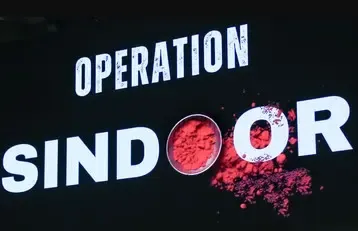
Operation Sindoor, India's retaliatory strike launched in the aftermath of the Pahalgam attack, dealt a severe blow to JeM's infrastructure. The outfit's headquarters at Bahawalpur's Markaz Subhan Allah compound was destroyed, and several senior functionaries and cadres were killed. Before the operation, the Bahawalpur facility reportedly housed around 600 active cadres, including top leadership. Those numbers have since dwindled sharply.
Officials note that while Lashkar-e-Taiba has shown signs of gradual recovery — through renewed infiltration attempts and command restructuring — JeM has failed to recover at a comparable pace. Even operations in Jammu and Kashmir have declined, owing to tightened security both within the Union Territory and along the India-Pakistan border.
Masood Azhar's Silence and Whereabouts
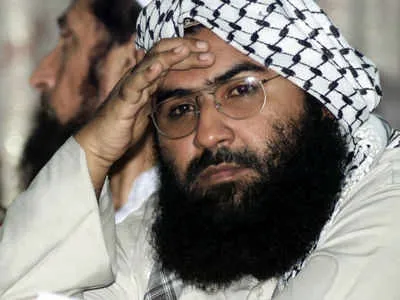
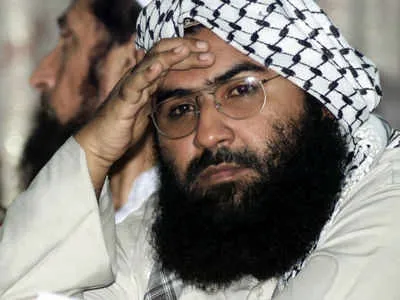
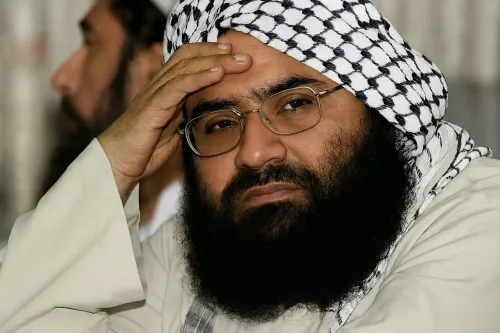
JeM chief Masood Azhar has remained incommunicado since Operation Sindoor, and the outfit's leadership has offered no public explanation for his prolonged absence. Officials say Azhar no longer visits the Bahawalpur facility — a deliberate security precaution after several of his close associates were reportedly targeted and killed during the Indian strikes.
There are reports, according to officials, that Azhar may be seriously unwell. Many top JeM leaders have since been relocated closer to Pakistani army installations, reportedly to ensure their protection. This is described as the longest period of silence from the outfit's top leadership in its operational history.
The Rebuilt Headquarters and What It Signals
Officials acknowledge that JeM has managed to reconstruct the physical structure of the Markaz Subhan Allah compound at Bahawalpur. However, activity at the site remains low — a sign, officials say, that the group is deliberately avoiding drawing attention from Indian intelligence agencies too soon after the strikes.
The pivot to digital propaganda, rather than operational activity, underscores the group's current limitations. Experts say this shift reflects a calculated attempt to maintain ideological influence when kinetic capacity has been severely degraded.
What Comes Next
Intelligence officials warn that the digital campaign could accelerate radicalisation among vulnerable youth if left unchecked, particularly through social media platforms where doctored content spreads rapidly. Authorities are monitoring the campaign closely, and the shift in JeM's strategy is expected to inform India's counter-terrorism posture in the weeks ahead.
Point of View
The emptied Bahawalpur compound, and the flight of top commanders to army-adjacent safe houses collectively paint a picture of an organisation in structural decline. The danger, however, shifts rather than disappears: radicalisation through social media is cheaper, faster, and harder to interdict than physical infiltration. India's security establishment will need to match its kinetic success with an equally sharp counter-narrative capability — something that has historically lagged.
NationPress
8 Jul 2026
Frequently Asked Questions
Why has Jaish-e-Mohammed launched a digital propaganda campaign?
JeM launched the campaign because Operation Sindoor severely degraded its operational capacity, destroying its Bahawalpur headquarters and killing several senior leaders. With physical operations curtailed by tight security in Jammu and Kashmir, the outfit has turned to digital propaganda to retain cadres and radicalise new recruits, according to intelligence officials.
What did Operation Sindoor do to Jaish-e-Mohammed?
Operation Sindoor destroyed JeM's Markaz Subhan Allah headquarters in Bahawalpur, killed multiple senior functionaries, and forced the dispersal of its leadership. The facility previously housed around 600 active cadres; those numbers have since fallen sharply, and top leaders have been moved near Pakistani army installations for protection.
Where is Masood Azhar and why has he gone silent?
JeM chief Masood Azhar has remained incommunicado since Operation Sindoor, and the outfit's leadership has not publicly explained his absence. Intelligence officials say several of his close associates were killed in the Indian strikes, and there are reports he may be seriously unwell. He no longer visits the Bahawalpur compound as a deliberate security measure.
What does JeM's propaganda campaign involve?
According to intelligence officials, the campaign includes jihad-related material and plans to release doctored videos falsely depicting Indian armed forces torturing civilians in Jammu and Kashmir. In India, the content targets youth for recruitment into homegrown terror cells; in Pakistan, it is aimed at motivating local recruits to join the outfit.
How does JeM's recovery compare to Lashkar-e-Taiba after Operation Sindoor?
Lashkar-e-Taiba has shown signs of gradual recovery through renewed infiltration attempts and command restructuring, according to officials. JeM, by contrast, has failed to recover at a similar pace and has pivoted to digital propaganda rather than operational activity — a reflection of its comparatively deeper losses.