Rajasthan forms UCC panel headed by Justice Desai to draft 2026 legislation
Synopsis
Rajasthan has constituted a high-level UCC drafting committee chaired by former Supreme Court judge Justice Ranjana Prakash Desai, covering marriage, divorce, inheritance, and a polygamy ban — making it the second BJP-governed state after Uttarakhand to formally advance a Uniform Civil Code. The government's tribal-rights carve-out signals it is aware of the constitutional tightrope it must walk.
Key Takeaways
Rajasthan constituted a high-level committee on 22 June to draft The Rajasthan Uniform Civil Code, 2026 .
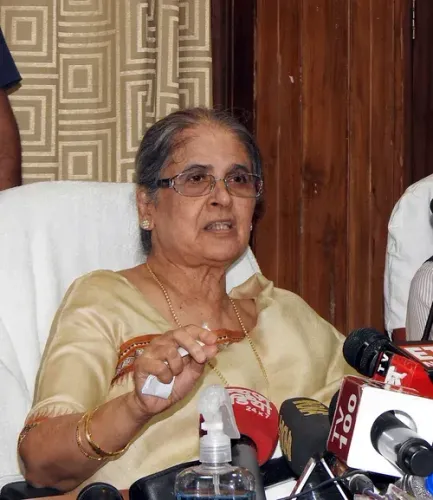
The committee is chaired by former Supreme Court judge Justice Ranjana Prakash Desai .
The Cabinet decision was taken on 14 April 2026 under Chief Minister Bhajanlal Sharma .
Key provisions include a ban on polygamy , mandatory registration of marriages, divorces and live-in relationships , and equal inheritance rights for sons and daughters.
The government has assured that tribal customs and rights will remain protected under constitutional provisions.
Divisional-level consultations and a dedicated online platform for public suggestions will inform the draft.
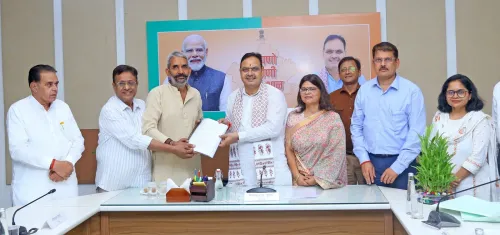
Rajasthan is moving decisively toward implementing a Uniform Civil Code (UCC), with the state government constituting a high-level committee to draft The Rajasthan Uniform Civil Code, 2026. Parliamentary Affairs Minister Jogaram Patel and Minister of State for Home Jawahar Singh Bedham made the announcement on Monday, 22 June, at a press conference held at the Government Secretariat, Jaipur.
The Committee and Its Composition
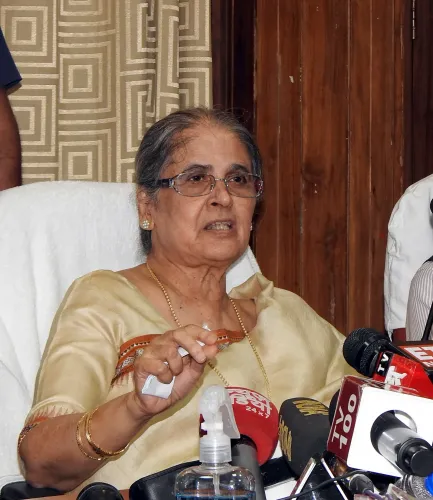
The drafting committee is chaired by former Supreme Court judge Justice Ranjana Prakash Desai. Other members include retired IAS officer Shatrughna Singh, Rajasthan High Court Additional Advocate General Basant Singh Chhaba, former Principal of Government Law College, Sri Ganganagar, Ramswaroop Agarwal, and Dr Shuchi Chauhan. The Additional Chief Secretary (Home) has been appointed as Member-Secretary.
The committee will hold consultations at the divisional level across the state. Citizens will also be able to submit suggestions through a dedicated online platform, with public participation described as central to the drafting process.
Cabinet Decision and Constitutional Basis
Minister Patel stated that the decision to pursue the UCC was taken at a Cabinet meeting chaired by the Chief Minister on 14 April 2026. He described the move as a historic step aligned with Article 44 of the Constitution, which forms part of the Directive Principles of State Policy and directs the state to strive for a uniform civil law for all citizens.
Patel added that the initiative will be undertaken in accordance with the constitutional spirit while ensuring that the customs, traditions and rights of tribal communities remain protected under constitutional provisions — a notable carve-out that mirrors the approach taken by Uttarakhand, the only state to have enacted a UCC so far.
What the Proposed Law Covers
According to the ministers, the UCC aims to establish a common civil law framework governing marriage, divorce, inheritance, adoption and maintenance, irrespective of religion, caste or community. Currently, these matters are regulated by separate personal laws applicable to different religious communities.
The proposed framework includes mandatory registration of marriages and divorces, a complete ban on polygamy, mandatory registration of live-in relationships, and equal rights for sons and daughters in ancestral property. The government stated that the legislation is intended to promote gender equality and ensure equal rights for women.
Broader Political Context
Rajasthan's push for the UCC comes under the Bharatiya Janata Party (BJP) government led by Chief Minister Bhajanlal Sharma, and reflects the party's longstanding national commitment to implementing a uniform civil code — a promise reiterated in successive BJP election manifestos. The move also follows the Law Commission of India reopening public consultations on the UCC at the national level.
Critics, including opposition voices and several minority community organisations, have historically argued that a UCC, if not carefully drafted, risks overriding constitutionally protected religious freedoms. The government's explicit assurance on tribal protections appears designed to pre-empt some of those concerns.
What Comes Next
The committee is expected to conduct divisional-level consultations before finalising the draft legislation. No deadline for the submission of the draft has been publicly announced. Once the committee submits its report, the state legislature will need to pass the bill — a process that will draw national attention given the political and constitutional significance of the UCC debate.
Point of View
And it will determine whether the law survives a constitutional challenge. What the announcement does not address is the enforcement architecture — mandatory registration of live-in relationships and divorces sounds progressive on paper, but without a robust civil registry infrastructure in rural Rajasthan, implementation risk is high. The real test will be the committee's draft, not the press conference.
NationPress
21 Sept 2026
Frequently Asked Questions
What is The Rajasthan Uniform Civil Code, 2026?
It is a proposed legislation that would establish a common civil law framework for all citizens of Rajasthan, covering marriage, divorce, inheritance, adoption and maintenance regardless of religion, caste or community. A high-level drafting committee headed by former Supreme Court judge Justice Ranjana Prakash Desai has been constituted to prepare the draft.
Who is heading the Rajasthan UCC drafting committee?
The committee is chaired by former Supreme Court judge Justice Ranjana Prakash Desai. Other members include retired IAS officer Shatrughna Singh, Rajasthan High Court Additional Advocate General Basant Singh Chhaba, former Principal of Government Law College Sri Ganganagar Ramswaroop Agarwal, and Dr Shuchi Chauhan.
What are the key provisions of the proposed Rajasthan UCC?
The proposed framework includes mandatory registration of marriages and divorces, a complete ban on polygamy, mandatory registration of live-in relationships, and equal rights for sons and daughters in ancestral property. It also aims to promote gender equality across all communities.
Will the Rajasthan UCC affect tribal communities?
The state government has explicitly stated that the customs, traditions and rights of tribal communities will remain protected under constitutional provisions. This tribal carve-out mirrors the approach taken by Uttarakhand, the only state to have enacted a UCC to date.
When was the decision to pursue the UCC taken, and what is the constitutional basis?
The Cabinet decision was taken on 14 April 2026, chaired by Chief Minister Bhajanlal Sharma. The government has cited Article 44 of the Constitution — part of the Directive Principles of State Policy — which directs the state to strive for a Uniform Civil Code for all citizens.