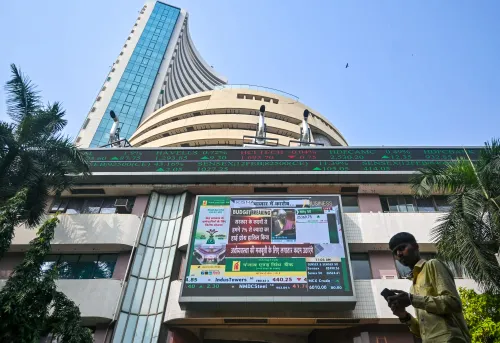
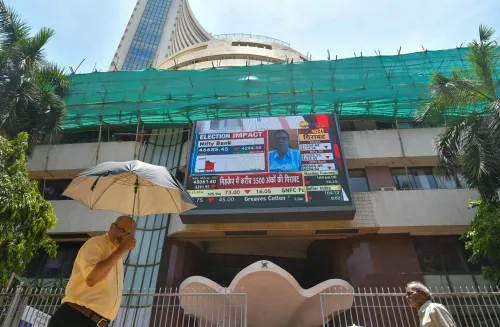
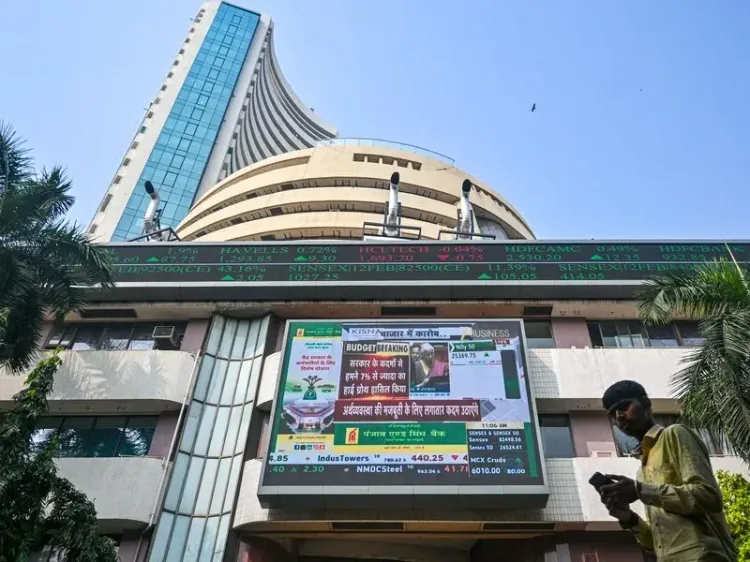
Sensex crashes 1,600 points as Trump declares Iran ceasefire 'over'
Synopsis
Trump's declaration that the Iran ceasefire is 'over' sent Indian markets into a tailspin on 8 July, wiping out nearly ₹4 lakh crore in a single session. With crude spiking and 45 of 50 Nifty stocks in the red, this was not a routine correction — it was a geopolitical shock transmission playing out in real time on Dalal Street.
Key Takeaways
Sensex crashed more than 1,600 points and Nifty50 fell nearly 500 points on 8 July , both losing over 2 per cent .
US President Donald Trump declared the interim Iran ceasefire 'over', triggering a surge in crude oil prices and a global risk-off mood.
Nearly ₹4 lakh crore in investor wealth was erased; BSE total market cap fell below ₹476 lakh crore .
45 of 50 Nifty constituents traded in the red, reflecting broad-based selling across sectors.
Nifty Oil & Gas led sectoral losses; Nifty PSU Bank , Nifty Auto , Nifty Metal , and others also declined.
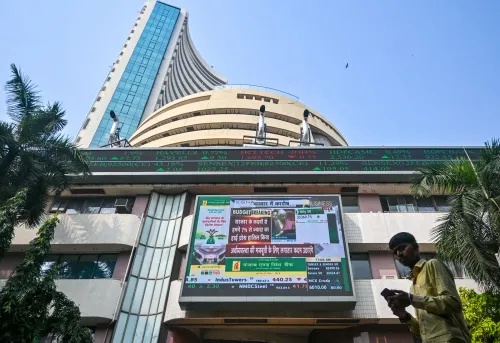
BSE Sensex plunged over 1,600 points on Wednesday, 8 July, as Indian benchmark equity indices suffered a sharp selloff driven by surging crude oil prices, weak global cues, and a fresh escalation in Middle East geopolitical tensions. The rout deepened after US President Donald Trump declared that an interim agreement with Iran to end the conflict was 'over', rattling global energy markets and triggering a broad-based risk-off wave.
Scale of the Selloff
By noon trade, the Sensex had shed more than 1,600 points, while the Nifty50 was down nearly 500 points — both benchmarks falling more than 2 per cent each. A staggering 45 of the 50 Nifty constituents were trading in the red, underscoring the breadth of the decline.
The sharp correction erased nearly ₹4 lakh crore in investor wealth, with the combined market capitalisation of all BSE-listed companies slipping below ₹476 lakh crore.
What Triggered the Crash
The selloff gathered pace in the second half of the session after Trump's remarks on the Iran ceasefire collapse sent crude oil prices spiking. For India — which imports the bulk of its crude requirements — a sustained rise in oil prices translates directly into wider fiscal and current account deficits, elevated inflation risk, and pressure on the rupee. This is the kind of macro cocktail that prompts institutional investors to de-risk rapidly.
Notably, markets had opened under pressure even before Trump's remarks, with the Sensex starting the session 364.27 points or 0.46 per cent lower at 77,816.45, and the Nifty slipping 139.15 points or 0.57 per cent to 24,259.55, reflecting weak overnight global cues.
Sectors Under Pressure
Nifty Oil & Gas led sectoral losses, declining more than 1 per cent in the opening session as crude price volatility hit downstream and upstream names alike. Nifty Media, Nifty PSU Bank, Nifty Realty, Nifty Cement, Nifty Metal, Nifty Auto, and Nifty FMCG also declined by up to nearly 1 per cent in early trade, reflecting the broad-based nature of the selling.
What to Watch Next
Markets will closely track any further developments in the Iran situation and their impact on global crude benchmarks. A sustained spike in oil above key levels could force the Reserve Bank of India (RBI) to reassess its inflation trajectory. Domestically, foreign institutional investor (FII) positioning and the rupee's movement against the dollar will be key gauges of sentiment in the sessions ahead.
Point of View
But through the very tangible channel of crude oil. India's import dependence means every escalation in the Gulf is also a fiscal event: wider deficits, rupee pressure, and inflation risk follow in sequence. The speed of the selloff — 1,600 Sensex points in a single session — suggests institutional investors are not waiting to see how the Iran situation develops. What mainstream coverage often misses is that this is not purely a geopolitical story; it is a stress test of India's macro buffers, and the RBI's next move on rates and liquidity will matter as much as any diplomatic development in Tehran.
NationPress
8 Jul 2026
Frequently Asked Questions
Why did the Sensex crash on 8 July?
The Sensex crashed over 1,600 points on 8 July after US President Donald Trump declared that an interim ceasefire agreement with Iran was 'over', sending crude oil prices sharply higher and triggering a global risk-off selloff. Weak global cues had already weighed on markets at the open before Trump's remarks accelerated the decline.
How much investor wealth was wiped out in the crash?
The sharp correction erased nearly ₹4 lakh crore in investor wealth in a single session, with the combined market capitalisation of all BSE-listed companies falling below ₹476 lakh crore.
Which sectors were hit hardest?
Nifty Oil & Gas led sectoral losses, declining more than 1 per cent. Nifty PSU Bank, Nifty Realty, Nifty Cement, Nifty Metal, Nifty Auto, Nifty Media, and Nifty FMCG also declined by up to nearly 1 per cent, reflecting broad-based selling.
How does the Iran ceasefire collapse affect India?
India imports the bulk of its crude oil requirements, so a spike in global oil prices driven by Middle East tensions raises India's import bill, widens the current account deficit, pressures the rupee, and risks stoking domestic inflation. These macro risks prompt institutional investors to reduce equity exposure quickly.
What should investors watch after this crash?
Investors should monitor further developments in the Iran situation and their impact on crude oil benchmarks, as well as foreign institutional investor flows, the rupee-dollar rate, and any commentary from the Reserve Bank of India on inflation and liquidity in the wake of the oil price spike.