Sensex drops 500 points, Nifty at 24,158 as US-Iran tensions flare
Synopsis
Indian benchmarks shed 0.7% as US-Iran hostilities threatened a fragile ceasefire and sent Brent crude past $102 a barrel. The twist: even as banks and auto stocks bled, the Nifty Midcap index hit a record high — a striking divergence that signals domestic retail confidence is holding even as global macro turns hostile.
Key Takeaways
Sensex fell over 500 points to an intraday low of 77,291.72 on 8 May , down 0.71% .
Nifty50 slipped 168 points or 0.69% to 24,158.15 .
Nifty Private Bank , PSU Bank , Auto , and Oil & Gas were top sectoral losers; IT , Pharma , and Healthcare gained.
Brent crude surged 2.82% to $102.89/barrel ; WTI jumped 4% to $98.64/barrel .
Nifty Midcap index hit a record high despite broader market pressure, signalling domestic investor resilience.
US President Donald Trump said the ceasefire remained in effect as Washington awaited Tehran's response to a new peace proposal.
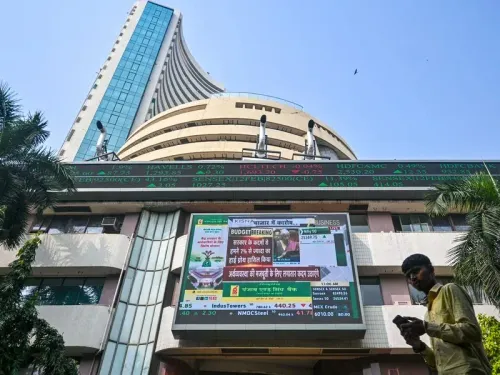
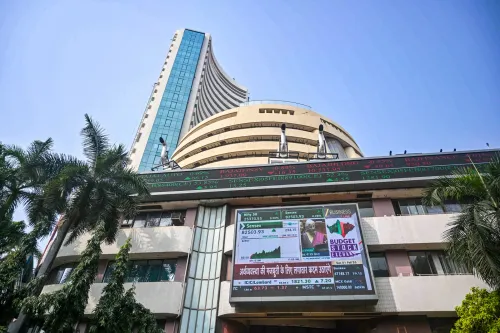
BSE Sensex tumbled over 500 points in early trade on Friday, 8 May, hitting an intraday low of 77,291.72 — a fall of 0.71% — as renewed hostilities between the United States and Iran strained a fragile ceasefire and rattled investor sentiment across global markets. The Nifty50 slipped 168 points or 0.69% to 24,158.15, with both benchmarks declining roughly 0.7% each in the morning session.
Sectoral Damage and Key Laggards
Private and public sector banks bore the brunt of the selloff, with Nifty Private Bank, Nifty PSU Bank, Nifty Auto, and Nifty Oil & Gas emerging as the top losing sectoral indices. Among individual stocks, HDFC Bank, Axis Bank, ICICI Bank, Mahindra & Mahindra, Tata Motors, Maruti Suzuki, Eicher Motors, Shriram Finance, and Eternal featured among the key laggards in the Nifty pack.
However, not all sectors retreated. Nifty IT, Nifty Chemicals, Nifty Pharma, and Nifty Healthcare bucked the broader trend and posted gains, reflecting a flight toward defensives and export-oriented sectors less exposed to crude oil price swings.
The Geopolitical Trigger: US-Iran Ceasefire Under Strain
Iran accused Washington of violating a month-long ceasefire, while the US maintained that its strikes were retaliatory, triggered by Iranian forces firing on American naval vessels transiting the Strait of Hormuz on Thursday. Iran's military said US forces targeted an Iranian oil tanker, a second ship, and civilian areas in the strait and on the mainland.
Meanwhile, US President Donald Trump told reporters that the ceasefire remained in effect, as Washington awaited Tehran's response to its latest peace proposal. The conflicting narratives from both sides have deepened market uncertainty, with analysts flagging the Strait of Hormuz — through which roughly 20% of global oil supply transits — as the key flashpoint to watch.
Crude Oil Surges, Global Markets Under Pressure
Oil prices surged sharply on the back of the renewed tensions. International benchmark Brent crude jumped 2.82% to $102.89 per barrel, while US West Texas Intermediate (WTI) advanced 4% to $98.64 per barrel. Elevated crude prices are a direct headwind for India, which imports over 85% of its oil needs, raising concerns about the current account deficit and inflationary pressures.
Asian equities were broadly under pressure, with the Nikkei, Hang Seng, and KOSPI each trading up to 1% lower. Overnight on Wall Street, the S&P 500 closed 0.38% lower, while the Nasdaq ended down 0.13%.
A Notable Divergence: Midcap Resilience
A market expert noted that the
Point of View
Which would force the RBI into a tighter-for-longer stance just as growth momentum is building. Markets are pricing a ceasefire resumption; if that bet fails, the next leg down could be sharper.
NationPress
25 Sept 2026
Frequently Asked Questions
Why did Sensex and Nifty fall on 8 May 2025?
Sensex and Nifty fell about 0.7% each on 8 May 2025 after renewed US-Iran hostilities strained a month-long ceasefire and sent Brent crude surging past $102 a barrel. The geopolitical uncertainty rattled global investor sentiment, dragging banking, auto, and oil-linked stocks lower.
How much did crude oil prices rise due to US-Iran tensions?
Brent crude jumped 2.82% to $102.89 per barrel, while US WTI advanced 4% to $98.64 per barrel following reports of US strikes on Iranian vessels and civilian areas near the Strait of Hormuz.
Which sectors gained despite the market fall on 8 May?
Nifty IT, Nifty Chemicals, Nifty Pharma, and Nifty Healthcare bucked the broader selloff and posted gains, reflecting investor preference for defensive and export-oriented sectors less exposed to crude price volatility.
What did US President Trump say about the US-Iran ceasefire?
US President Donald Trump told reporters that the ceasefire remained in effect, even as Washington awaited Tehran's response to its latest peace proposal. Iran, however, accused the US of violating the ceasefire through strikes on an oil tanker and civilian areas.
What is the significance of the Nifty Midcap hitting a record high?
The Nifty Midcap index reaching a record high despite broad market pressure signals that domestic retail investors remain confident in India's growth story, even as foreign institutional investors turn cautious on global macro headwinds. Analysts have flagged elevated valuations as a risk to watch.