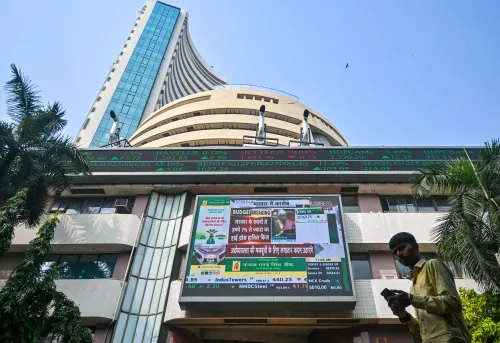
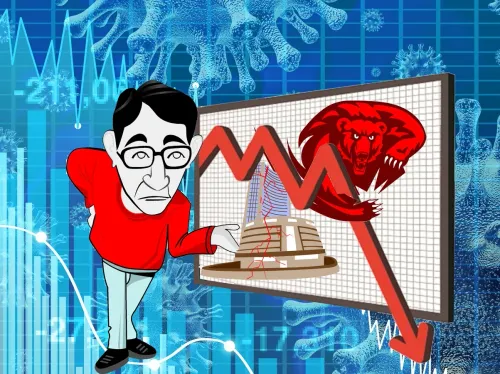
Sensex falls 516 points as US-Iran tensions rattle markets on 8 May
Synopsis
Indian equities took a geopolitical hit on 8 May as US-Iran hostilities near the Strait of Hormuz sent Brent crude past $100 a barrel and triggered a banking-led selloff. With Sensex down 516 points and oil prices surging, India's oil-import vulnerability is back in sharp focus.
Key Takeaways
Sensex closed down 516.33 points at 77,328.19 and Nifty50 fell 150.50 points to 24,176.15 on 8 May .
US-Iran tensions near the Strait of Hormuz were the primary trigger after Iran reportedly claimed a ceasefire violation by the US.
Brent crude rose 0.66% to $100.72 per barrel , raising inflation and current account concerns for India .
Nifty Bank , Nifty PSU Bank , and Nifty Private Bank were the worst-performing sectoral indices; SBI , HDFC Bank , and Axis Bank led losses.
Nifty IT outperformed on defensive buying; Titan , Apollo Hospitals Enterprise , and Asian Paints were top gainers.
Key Nifty support sits at 24,100–24,000 ; resistance at 24,250–24,500 .
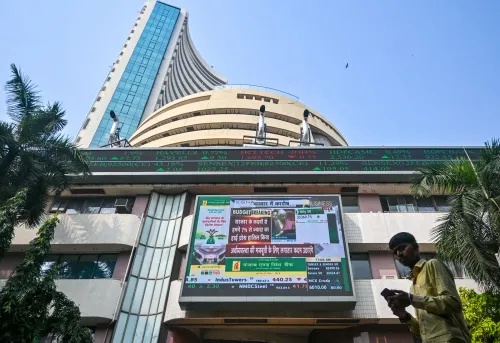
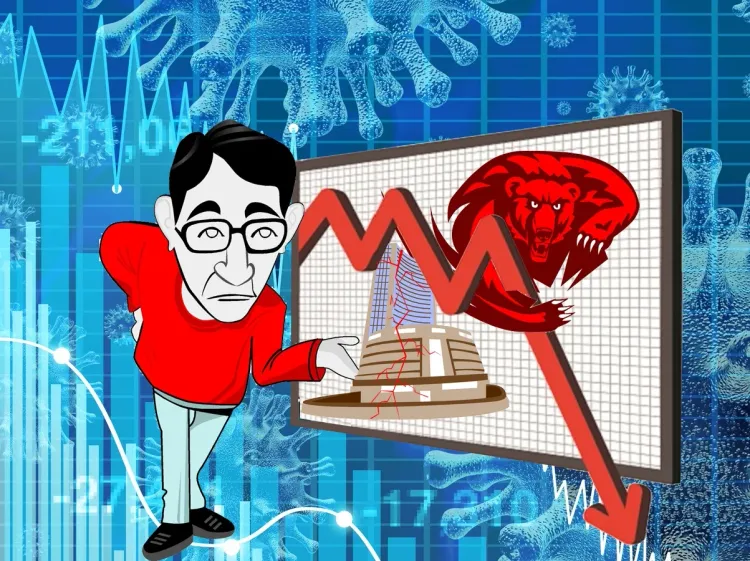
BSE Sensex closed 516.33 points or 0.66% lower at 77,328.19 on Friday, 8 May, while the Nifty50 shed 150.50 points or 0.62% to end at 24,176.15, as renewed hostilities between the United States and Iran near the Strait of Hormuz dampened global risk appetite and triggered broad-based selling across Indian equities. Banking stocks bore the brunt of the selloff, though gains in IT shares helped cushion the decline.
What Triggered the Selloff
According to market analysts, the trigger was a sharp deterioration in US-Iran relations after Iran reportedly claimed that the US had violated a ceasefire agreement, reigniting fears of an escalation near the strategically critical Strait of Hormuz. Brent crude futures rose 0.66% to $100.72 per barrel on the Intercontinental Exchange as hopes for a near-term resolution faded, adding to concerns over inflation and import costs for oil-dependent economies like India.
"Renewed hostilities between US and Iranian forces near the Strait of Hormuz triggered a sharp unwinding of optimism across global markets and risk assets, after Iran claimed the US had violated the ceasefire agreement," an analyst stated.
Sectoral Performance
Banking counters were the session's worst performers. The Nifty PSU Bank, Nifty Private Bank, and Nifty Bank indices all emerged as the weakest sectoral gauges, as investors trimmed exposure to financial stocks amid rising geopolitical uncertainty. SBI, Coal India, HDFC Bank, Axis Bank, and Bajaj Finance featured among the top laggards on the Nifty.
In contrast, the Nifty IT index outperformed, supported by defensive buying and expectations of stable demand for technology services. Titan, Apollo Hospitals Enterprise, and Asian Paints bucked the broader market weakness to close among the top gainers on the Nifty.
Technical Outlook for Nifty
Analysts noted that the 24,250–24,300 level continues to act as an immediate resistance zone for the Nifty. A sustained breakout above this mark could strengthen momentum toward the broader hurdle near the 24,400–24,500 range. On the downside, the 24,100–24,000 region remains a crucial support area, the maintenance of which will be critical to preserving the current market structure, according to technical experts.
Macro Implications for India
Rising crude oil prices are a particular concern for India, which imports a significant share of its energy needs. A sustained rally in Brent crude above $100 per barrel could widen the current account deficit and put upward pressure on domestic fuel prices and inflation. This comes amid an already cautious global environment, with investors monitoring developments in West Asia closely. All eyes now turn to how quickly diplomatic channels can de-escalate the US-Iran standoff and whether crude prices stabilise in the sessions ahead.
Point of View
Particularly through the crude oil channel. With Brent crossing $100 a barrel, the risk is no longer abstract — a prolonged spike would pressure India's import bill, stoke retail inflation, and complicate the RBI's rate trajectory. Banking stocks bore the sharpest selling, which is telling: if crude stays elevated and inflation expectations shift, the rate-cut hopes that have supported financials in 2025 could unravel quickly. The IT sector's resilience is a silver lining, but it cannot carry the broader market if the macro backdrop deteriorates further.
NationPress
23 Sept 2026
Frequently Asked Questions
Why did Sensex and Nifty fall on 8 May?
Sensex fell 516 points to 77,328 and Nifty dropped 150 points to 24,176 on 8 May primarily due to renewed US-Iran hostilities near the Strait of Hormuz, which spiked crude oil prices and triggered risk-off selling across global markets. Banking stocks were the hardest hit in India.
How high did Brent crude rise amid US-Iran tensions?
Brent crude futures rose 0.66% to $100.72 per barrel on the Intercontinental Exchange on 8 May, as hopes for a near-term resolution to the US-Iran conflict faded. Elevated crude prices raise inflation and current account risks for India.
Which sectors and stocks were most affected by the selloff?
Nifty Bank, Nifty PSU Bank, and Nifty Private Bank were the worst-performing sectoral indices. SBI, Coal India, HDFC Bank, Axis Bank, and Bajaj Finance led losses, while Nifty IT outperformed on defensive buying.
What are the key Nifty support and resistance levels to watch?
Analysts identify 24,100–24,000 as a crucial support zone for the Nifty. On the upside, 24,250–24,300 is the immediate resistance, with a broader hurdle near 24,400–24,500 if that level is breached.
Why are US-Iran tensions particularly concerning for India?
India is a major oil importer, making it vulnerable to crude price spikes triggered by West Asian conflicts. A sustained rally in Brent crude above $100 a barrel could widen India's current account deficit, push up domestic fuel prices, and complicate the RBI's monetary policy outlook.