Hormuz blockade sparks IOR nations' debate on sea-route restrictions
Synopsis
The two-month Hormuz blockade has done more than spike oil prices — it has handed Indian Ocean nations a template. From Indonesia floating Malacca toll charges to Thailand planning a land bridge, the strategic calculus of the world's most critical shipping lanes is quietly but unmistakably shifting.
Key Takeaways
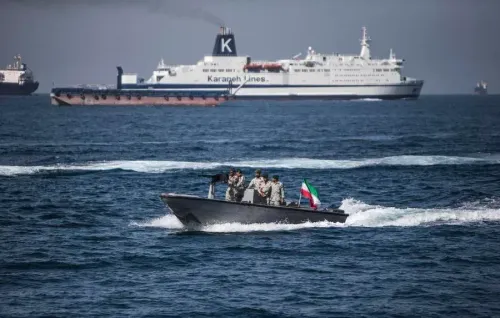
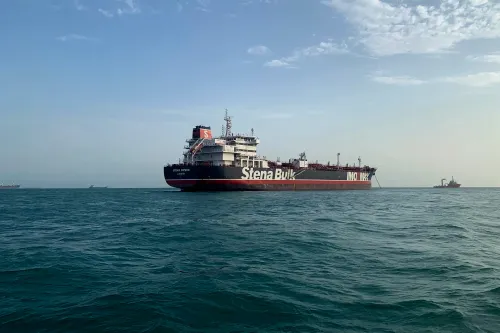
The Strait of Hormuz has been blockaded for roughly two months by Iranian and US forces , driving up global oil prices.
Iran's proposal to levy fees on transiting vessels has prompted IOR nations to debate similar measures on their own sea-routes.
Indonesia's Finance Minister reportedly suggested collecting fees from ships in the Strait of Malacca , split among Indonesia , Malaysia , and Singapore .
Singapore's FM Vivian Balakrishnan invoked Article 44 of UNCLOS , urging states to uphold freedom of transit passage.
Thailand is reportedly planning a land bridge linking the Andaman Sea and the Gulf of Thailand .
For India , 95% of trade by volume and 70% by value transits through the IOR , making maritime stability a core national interest.
The Strait of Hormuz blockade, sustained for roughly two months by Iranian and US forces in the Persian Gulf, has driven up global oil prices and triggered a wider geopolitical debate: should nations bordering the Indian Ocean Region (IOR) impose similar restrictions or toll charges on their own strategic sea-routes? The question, once largely academic, is now being openly discussed by governments from Singapore to Indonesia, according to a report by the portal PRF.
Background: The Hormuz Crisis
The Strait of Hormuz has been at the epicentre of the US-Iran confrontation, with the standoff sending shockwaves through oil-dependent economies worldwide. US forces recently launched 'Project Freedom' to reopen the waterway, but the operation was paused amid prospects of a peace deal between the two nations. Separately, Iran has floated the idea of levying fees on all vessels transiting through its ports — a move that has catalysed a wider conversation across the IOR.
IOR Nations Weigh a Tit-for-Tat Response
According to the PRF report, IOR countries have not yet articulated a formal policy, but Iran's tactics have prompted discussions on ensuring freedom of navigation — and potentially mirroring Iran's approach. Singapore's Foreign Minister Vivian Balakrishnan drew attention to a key geographic contrast: the Strait of Hormuz is approximately 21 miles wide, while the Strait of Malacca at its narrowest is just two miles wide — making it an even more potent chokepoint.
While Balakrishnan stopped short of suggesting Singapore would levy transit fees, he called on all nations to rigorously adhere to Article 44 of UNCLOS, which obligates states bordering narrow sea-routes to ensure there is no suspension of transit passage.
Indonesia and the Malacca Toll Debate
Indonesia's President Prabowo Subianto underscored the stakes, noting that the Strait of Hormuz determines the fate of many nations, including oil prices, and asking: "Do we realise that 70 per cent of East Asia's energy needs and 70 per cent of its trade pass through the Indonesian straits?" Meanwhile, Indonesia's Finance Minister reportedly stated that his country could take inspiration from Iran and collect substantive fees from ships passing through the Strait of Malacca, with proceeds split among Indonesia, Malaysia, and Singapore.
Thailand's Land Bridge Plan
Thailand, too, is drawing lessons from the Hormuz closure. The country is reportedly planning to build a land bridge connecting the Andaman Sea and the Gulf of Thailand — a long-discussed infrastructure project that has gained renewed urgency in the current climate.
India's Strategic Stakes and the Way Forward
For India, the implications are enormous. An estimated 95 per cent of India's trade by volume and approximately 70 per cent by value transits through the IOR. The region comprises around 33 nations, 2.9 billion people, and handles 42 per cent of global crude oil. Key chokepoints beyond Hormuz — including Bab el-Mandeb, the Strait of Malacca, the Sunda Strait, and the Lombok Strait — all define the movement of goods across the region.
India's External Affairs Minister S. Jaishankar has called on IOR countries to work towards greater collective resilience by building trusted partnerships. The PRF analysis warns that if IOR nations emulate Iran and levy tolls on ships transiting international straits, it would make international trade significantly costlier and generate considerable geopolitical instability. With no formal policy yet announced by any IOR state, the debate remains in its early stages — but the direction of travel is unmistakable.
Point of View
Which routes virtually all of its seaborne trade through the IOR, the risk is not just oil prices — it is the potential fragmentation of a rules-based maritime order that New Delhi has spent years trying to champion. Jaishankar's call for collective resilience is the right instinct, but it will require India to move from rhetoric to architecture: concrete burden-sharing agreements, coordinated naval presence, and a credible multilateral response mechanism before the next blockade, not after.
NationPress
23 Sept 2026
Frequently Asked Questions
What is the Strait of Hormuz blockade and why does it matter?
The Strait of Hormuz has been blockaded for approximately two months by Iranian and US forces in the Persian Gulf, disrupting global crude oil supplies and pushing up energy prices worldwide. The strait is one of the world's most critical shipping chokepoints, and its closure has cascading effects on oil-dependent economies globally.
Why are IOR nations discussing toll charges on their own sea-routes?
Iran's proposal to levy fees on vessels transiting through its ports has prompted Indian Ocean Region nations to debate whether they could impose similar charges on strategic straits they border, such as the Strait of Malacca. The discussion is framed both as a potential revenue measure and as a geopolitical bargaining tool.
What did Indonesia say about imposing fees on the Strait of Malacca?
Indonesia's Finance Minister reportedly stated that Indonesia could take inspiration from Iran and collect substantive fees from ships passing through the Strait of Malacca, with proceeds split among Indonesia, Malaysia, and Singapore. President Prabowo Subianto also highlighted that 70 per cent of East Asia's energy and trade passes through Indonesian straits.
What is Singapore's position on restricting sea-route transit?
Singapore's Foreign Minister Vivian Balakrishnan stopped short of endorsing any transit fee, but highlighted that the Strait of Malacca is just two miles wide at its narrowest point, and called on all nations to adhere to Article 44 of UNCLOS, which prohibits suspension of transit passage through international straits.
How significant is the Indian Ocean Region to India's trade?
The IOR comprises around 33 nations and 2.9 billion people, and handles 42 per cent of global crude oil. For India specifically, 95 per cent of its trade by volume and approximately 70 per cent by value transits through the IOR, making maritime stability in the region a core national interest.