UN Chief Urges Hormuz Sailor Evacuation, Slams Shipping Blockade
Synopsis
Over 20,000 seafarers are stranded in the Strait of Hormuz as the UN Secretary-General demands an end to using merchant shipping as political leverage. With 30 Indian-flagged ships trapped, 3 Indian sailors killed, and Iran proposing illegal tolls, the crisis threatens a global food emergency affecting millions in Africa and South Asia.
Key Takeaways
UN Secretary-General António Guterres on April 27 called for ending the use of merchant shipping as a tool of political pressure at the UN Security Council .
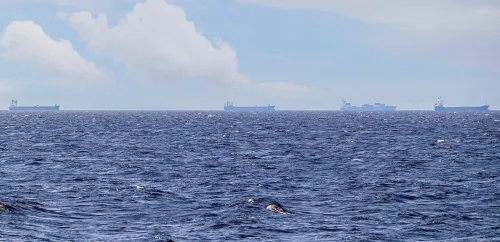
More than 20,000 seafarers are stranded aboard over 2,000 commercial vessels in the Strait of Hormuz .
Approximately 30 Indian-flagged ships with over 1,000 Indian personnel are trapped in the Hormuz region; 3 Indian sailors have died in vessel attacks.
20% of global oil and gas and one-third of internationally traded fertilisers pass through the strait, making disruption a global food and energy security threat.
Iran's parliament is reportedly advancing legislation to impose tolls on Hormuz shipping, a move IMO Secretary-General Arsenio Dominguez declared has "no legal basis." The IMO's emergency evacuation framework , supported by an Iran-Oman maritime corridor , has been proposed as the immediate mechanism for crew safety.
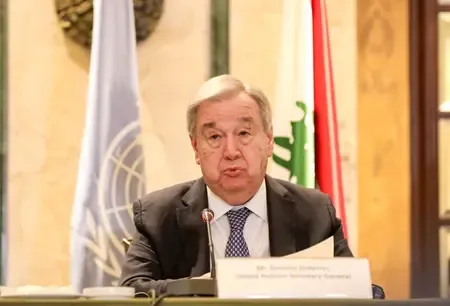
United Nations, April 27: UN Secretary-General António Guterres on Monday issued an urgent plea at the UN Security Council to end the use of merchant shipping as a tool of political pressure, warning that the ongoing blockade of the Strait of Hormuz is pushing the world toward a humanitarian and economic catastrophe. The appeal came as more than 20,000 seafarers remain stranded aboard over 2,000 commercial vessels caught in what Guterres described as "a web of risks and restrictions to navigation."
Key Developments at the Security Council
Speaking at a special session on maritime security, Guterres called for the immediate implementation of an emergency evacuation framework developed by the International Maritime Organisation (IMO). He urged all member nations to support a coordinated plan "to ensure the safe movement, assistance, and protection of affected crews." His remarks carried particular urgency as the humanitarian toll continues to mount with each passing day of the disruption.
"Their safety, their well-being, and their rights must be protected — at all times, and in all waters," Guterres stated, according to remarks delivered at the session.
Indian Sailors Among Those Most Affected
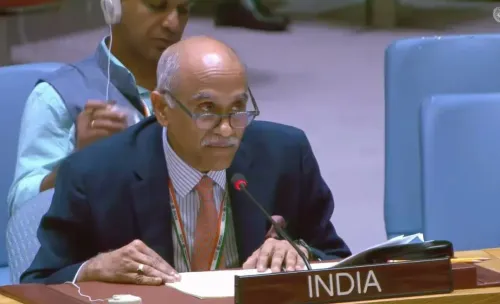
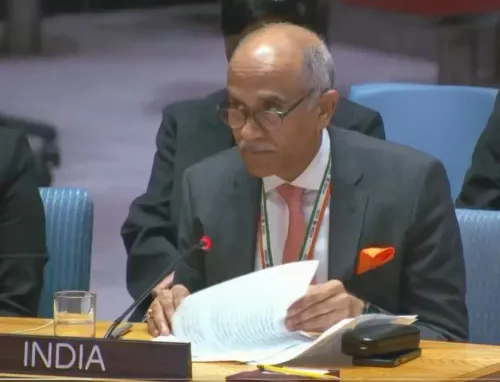
The crisis has struck India with disproportionate force. According to reports, approximately 30 Indian-flagged ships carrying over 1,000 personnel are currently trapped in the Hormuz region. Additionally, thousands of Indian sailors are reportedly stranded aboard vessels flagged under other nations operating within the zone. Critically, three Indian sailors have died in attacks on their vessels, and three Indian-flagged ships have been attacked by Iran — a development that has drawn sharp concern from New Delhi and maritime advocacy groups alike.
This comes amid a broader pattern of escalating tensions in the Persian Gulf, where freedom of navigation has been repeatedly challenged over the past several years, particularly since 2019 when Iran began seizing foreign vessels in disputed circumstances.
Global Food and Energy Security at Stake
Guterres issued a stark warning about the downstream consequences of prolonged disruption. "Prolonged disruption risks triggering a global food emergency — pushing millions, especially in Africa and South Asia, into hunger and poverty," he said. The stakes are enormous: roughly 20 per cent of the world's oil and gas supply and approximately one-third of all internationally traded fertilisers transit through the strait annually. "Safe, unimpeded passage is an economic and humanitarian imperative," he added.
Notably, the economic shock is already being felt globally. "The economic shock has been immediate — and everyone is paying the price," Guterres warned, underscoring that no nation is insulated from the fallout of a prolonged Hormuz blockade.
Iran's Toll Proposal Draws Legal Challenge
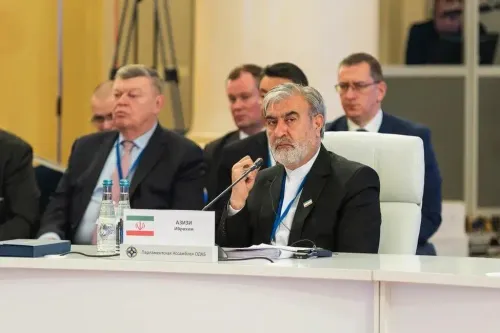
Ebrahim Azizi, chairman of the Iranian Parliament's National Security and Foreign Policy Committee, told Iranian state television that legislation is being prepared to impose tolls on shipping passing through the strait, to be collected in Iranian Rials. The proposal immediately drew a sharp legal rebuke from IMO Secretary-General Arsenio Dominguez, who stated unequivocally: "There is no legal basis for any country to introduce payments or impose tolls, fees, or discriminatory conditions on international straits."
Dominguez also called for the full upholding of the traffic separation scheme — a maritime corridor jointly devised by Iran and Oman under IMO auspices and accepted by both nations — as the most immediate mechanism to restore safe passage.
What Happens Next
The Security Council session signals growing multilateral pressure on Tehran to de-escalate its posture in the strait. However, with Iran advancing domestic legislation to monetise passage rights and geopolitical fault lines deepening, a swift resolution remains uncertain. The IMO's emergency evacuation framework is expected to be the immediate focus of diplomatic efforts, with Indian officials likely to push hard for the safe return of their nationals. All eyes now turn to whether member states will translate Guterres's appeal into coordinated action — or whether the crisis will deepen further in the weeks ahead.
Point of View
And India finds itself dangerously exposed. With over 1,000 Indian nationals trapped and three already dead, New Delhi's response has been conspicuously muted, raising uncomfortable questions about the limits of India's much-celebrated 'strategic autonomy' when confronted with Iranian aggression. What mainstream coverage misses is the fertiliser dimension: if a third of globally traded fertilisers are blocked, India's agricultural sector — already under pricing pressure — faces a supply shock that could ripple into food inflation by the Kharif season. The UN's intervention is welcome, but the Security Council's structural paralysis means Guterres's words may carry more moral weight than operational force.
NationPress
16 Sept 2026
Frequently Asked Questions
Why are sailors trapped in the Strait of Hormuz?
Over 20,000 seafarers are trapped in the Strait of Hormuz because of an ongoing blockade and escalating restrictions on navigation, with commercial vessels caught amid geopolitical tensions involving Iran. The UN has called it a humanitarian crisis requiring immediate international action.
How many Indian sailors are affected by the Hormuz blockade?
Approximately 30 Indian-flagged ships with over 1,000 Indian personnel are trapped in the Hormuz region, according to reports. Additionally, thousands more Indian sailors are stranded on foreign-flagged vessels in the zone, and three Indian sailors have died in attacks.
What is the IMO's emergency evacuation framework for Hormuz?
The IMO's emergency evacuation framework is a coordinated international plan to ensure the safe movement, assistance, and protection of crews stranded in the Strait of Hormuz. It works alongside a traffic separation scheme — a maritime corridor jointly accepted by Iran and Oman — to restore safe passage.
Can Iran legally impose tolls on ships in the Strait of Hormuz?
No — IMO Secretary-General Arsenio Dominguez stated there is "no legal basis" for any country to impose tolls, fees, or discriminatory conditions on international straits. Despite this, Iran's parliament is reportedly advancing legislation to collect such tolls in Iranian Rials.
Why does the Hormuz blockade matter for global food security?
The Strait of Hormuz is a critical global chokepoint through which 20% of the world's oil and gas and one-third of internationally traded fertilisers pass. A prolonged disruption could trigger a global food emergency, particularly affecting populations in Africa and South Asia, according to UN Secretary-General Guterres.