G4 ministers flag 18 years of stalled UNSC reform, vow to widen outreach
Synopsis
After 18 years of stalled talks, the G4 — India, Brazil, Germany, and Japan — are done waiting for the IGN to deliver. Meeting in New York on the sidelines of the UN General Assembly's 80th session, their foreign ministers declared the existing framework 'largely ineffective' and signalled a coalition-building push across other forums to force text-based negotiations on expanding the Security Council.
Key Takeaways
The G4 (India, Brazil, Germany, Japan) declared the IGN framework 'largely ineffective' after 18 years of UNSC reform negotiations without concrete outcomes.
External Affairs Minister S.
Jaishankar chaired the ministerial meeting in New York on 23 September 2026 .
The G4 will now engage 'other forums' and build synergies with reform-oriented groups to push for text-based negotiations .
The ministers backed expansion of the UNSC in both permanent and non-permanent categories , with stronger representation for Africa , Asia-Pacific , and Latin America and the Caribbean .
The G4 has 'serious reservations' against a so-called 'bridging proposal' being floated before text-based negotiations even begin.
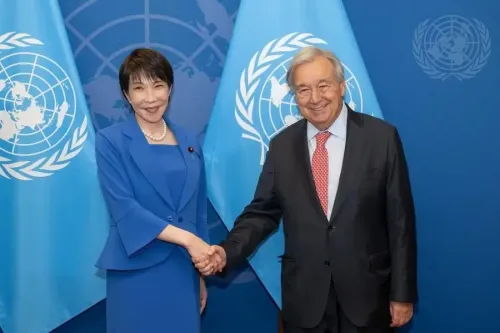
UN Secretary-General António Guterres and Japanese PM Takaichi Sanae separately called for urgent UNSC reform at the high-level General Assembly meeting.
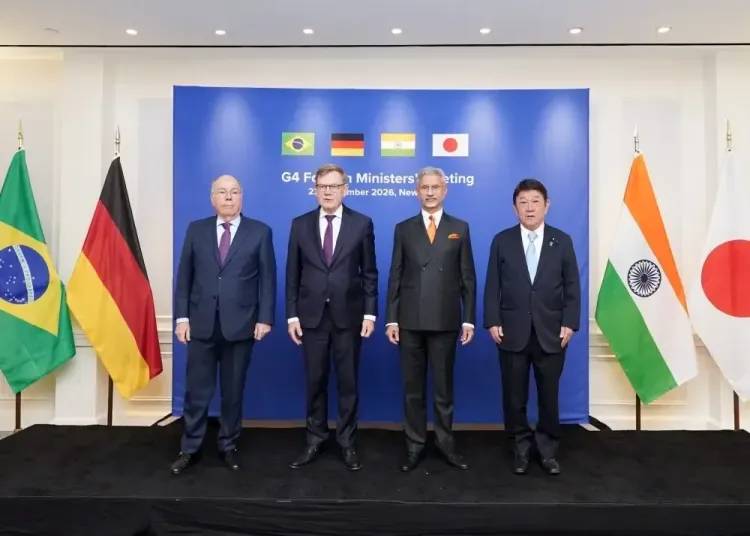
The Foreign Ministers of the G4 — comprising India, Brazil, Germany, and Japan — expressed 'strong concern' on Wednesday, 23 September 2026, over nearly two decades of failed negotiations on United Nations Security Council (UNSC) reform, and announced plans to expand engagement beyond the existing Inter-Governmental Negotiations (IGN) framework. The joint statement was issued after a ministerial meeting in New York on the sidelines of the UN General Assembly's 80th session.
18 Years of the IGN — and Little to Show
The G4 ministers said the Inter-Governmental Negotiations (IGN) framework, which has been the primary vehicle for UNSC reform discussions, 'has been largely ineffective in forging any concrete outcomes towards real UNSC reform despite 18 years of activities.' They specifically called out the 'lack of progress during the previous IGN session' as a source of serious concern.
A key flashpoint is the attempt by some member states to introduce a so-called 'bridging proposal' — a document that would outline parameters of competing proposals without advancing actual negotiations. The G4 has 'serious reservations' against this approach, arguing it sidesteps the adoption of a proper negotiating text, which the grouping has long demanded as the essential first step.
What the G4 Is Proposing Now
Rather than continuing to operate solely within the IGN, the ministers said they would 'engage with the wider UN membership on this issue in other forums.' The G4 intends to 'collaborate and identify synergies with other reform-oriented groups' to develop a 'consolidated model that properly reflects the voice of a majority of Member States' and to commence text-based negotiations as a high priority.
Central to the G4's position is the expansion of the Security Council in both the permanent and non-permanent categories of membership — a stance they say is 'supported by a majority of Member States.' They also underscored the need to improve representation of Africa, Asia-Pacific, and Latin America and the Caribbean, describing the current structure as perpetuating 'historical injustices.'
Jaishankar Chairs the Meeting; Post on X
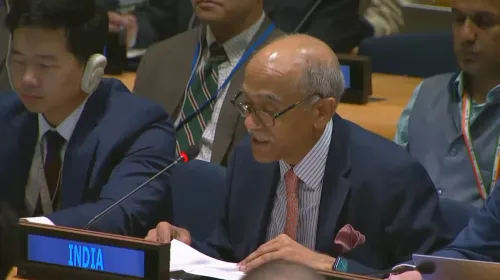
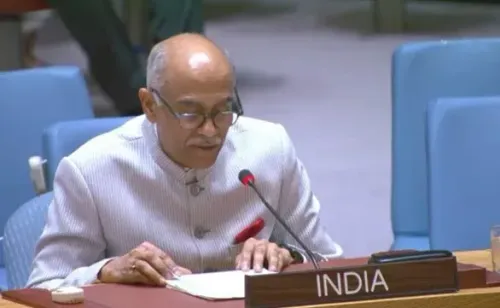
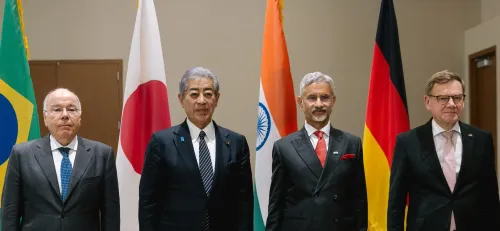
External Affairs Minister S. Jaishankar chaired the meeting alongside Foreign Minister Mauro Vieira of Brazil, Foreign Minister Johann Wadephul of Germany, and Foreign Minister Motegi Toshimitsu of Japan. In a post on social media platform X, Jaishankar said the ministers 'discussed the imperative of reformed multilateralism and a more representative, responsive and effective UN Security Council that reflects today's global realities,' and confirmed they 'will continue to work together to advance this shared objective.'
Africa and the Broader Reform Push
The G4 welcomed the presentation of the African Group's reform model during the IGN's 80th session, reiterating 'continuing support for Africa's compelling case for enhanced representation in the UNSC, including in the permanent category.' This position was echoed at the highest levels of the General Assembly, with UN Secretary-General António Guterres and several world leaders pressing for African permanent representation during Tuesday and Wednesday's high-level meetings.
Japanese Prime Minister Takaichi Sanae told assembled leaders that UNSC reform is of 'utmost import' and that the international community must 'transform it without delay into a structure that truly reflects the current realities of the international community.'
The Structural Obstacle: 'Uniting for Consensus'
Progress has repeatedly been blocked by a bloc of countries known as Uniting for Consensus, which has used procedural manoeuvres to prevent the adoption of a negotiating text within the IGN. The G4's pivot toward other forums signals a growing frustration with that blocking dynamic. The ministers described the current Security Council as an 'anachronistic eight-decades old architecture' that is 'not reflective of contemporary geopolitical realities' and constitutes an 'impediment' to addressing present and future global challenges around peace and security.
With the UN marking its 80th year in 2025–26 and reform pressure building across the Global South, the G4's move to widen its coalition could shift the political arithmetic — though bridging deep divisions among 193 member states remains a formidable task.
Point of View
Primarily by the Uniting for Consensus bloc. After 18 years of motion without movement, signalling a willingness to organise outside that framework is the most substantive tactical escalation the G4 has made in years. The real question is whether widening outreach translates into a credible negotiating bloc or merely adds more forums to the same impasse. India's stakes are particularly high: a permanent UNSC seat remains the single biggest structural prize in its foreign policy agenda, and each year of delay is also a year in which the geopolitical moment — favourable to a multipolar argument — could shift.
NationPress
23 Sept 2026
Frequently Asked Questions
What is the G4 group and what does it want at the UN?
The G4 is a grouping of India, Brazil, Germany, and Japan that jointly advocates for reform of the United Nations Security Council, including expansion of permanent membership. Each of the four countries supports the others' bids for a permanent seat on the Council.
Why have UNSC reform negotiations failed after 18 years?
The Inter-Governmental Negotiations framework has been unable to produce a negotiating text, partly due to procedural blocking by a group of countries called Uniting for Consensus. A proposed 'bridging proposal' — which would outline parameters of competing views without advancing actual negotiations — has further frustrated reform advocates like the G4.
What new approach is the G4 taking after the New York meeting?
The G4 ministers announced they would engage with the broader UN membership through forums beyond the IGN and build synergies with other reform-oriented groups. Their goal is to develop a consolidated reform model and commence text-based negotiations as a high priority.
Which regions does the G4 say need better representation on the UNSC?
The G4 specifically highlighted Africa, Asia-Pacific, and Latin America and the Caribbean as underrepresented or unrepresented regions in both permanent and non-permanent categories of UNSC membership, calling the current situation a perpetuation of historical injustices.
What did External Affairs Minister Jaishankar say about the meeting?
Jaishankar, who chaired the G4 ministerial meeting, said on social media platform X that the ministers 'discussed the imperative of reformed multilateralism and a more representative, responsive and effective UN Security Council that reflects today's global realities,' and confirmed the group will continue working together toward that objective.