Should G4 Nations Urge Immediate Action on UNSC Reform to Prevent More Human Suffering?
Synopsis
The G4 nations have raised urgent concerns about the need for immediate reforms in the UN Security Council, warning that any delays could exacerbate global human suffering. As they present a comprehensive model for restructuring, the call for action is louder than ever. Will the international community respond in time?
Key Takeaways
G4 nations emphasize urgent need for UNSC reform.
Delays in reform could worsen global human suffering.
Proposed model includes increasing council size and new permanent seats.
Challenges from the Uniting for Consensus group impede progress.
International collaboration is essential for effective reforms.
United Nations, Jan 22 (NationPress) The G4 nations have cautioned that postponing reforms in the Security Council could lead to “increased human suffering and hardship”. This warning was issued as they introduced a framework aimed at expediting the restructuring of the UN's principal decision-making assembly.
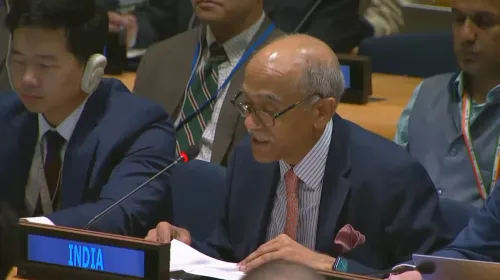
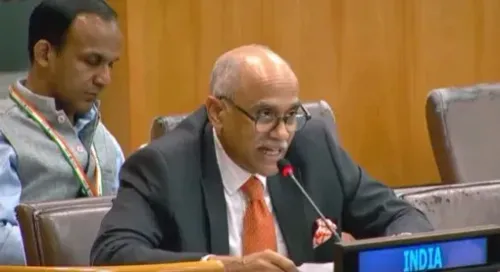
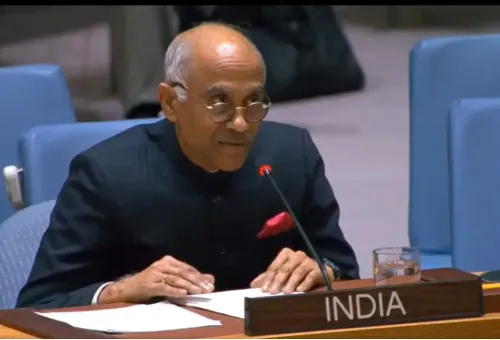
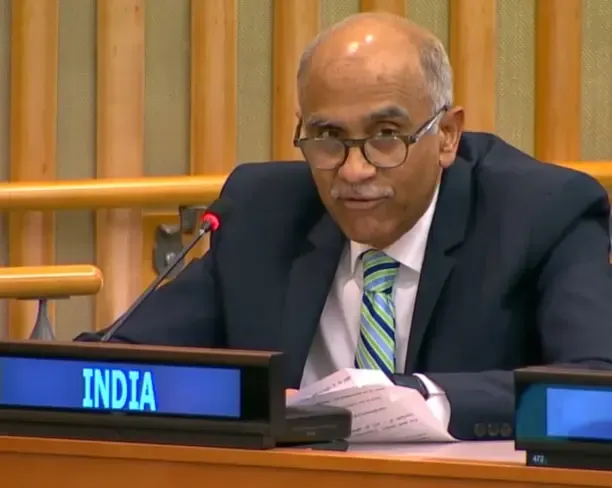
With “countless innocent lives” lost daily to ongoing conflicts, India's Permanent Representative P. Harish emphasized that “we must collectively make every moment count” during the Inter-Governmental Negotiations (IGN) for Security Council reforms on Wednesday.
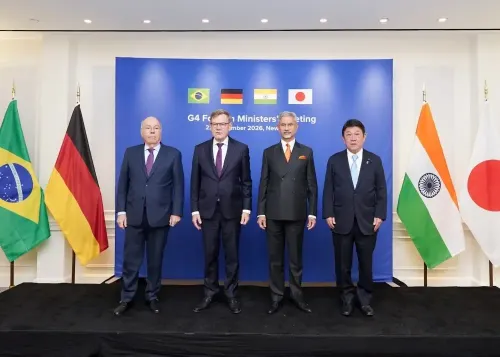
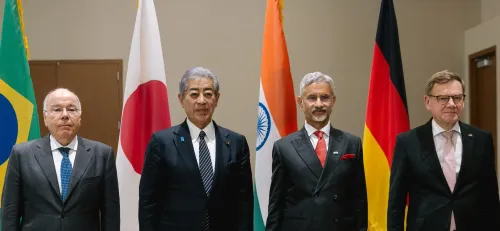
The G4, comprising India, Brazil, Germany, and Japan, advocates for reforming the Council and supports each other in securing permanent seats on a reformed panel.
Harish remarked, “The world is facing unprecedented challenges,” highlighting the scrutiny the UN's credibility and effectiveness is under due to its failure to address ongoing conflicts.
He stated, “For decades, those favoring the status quo have posed obstacles and hindered progress. Their actions contribute to the Security Council's inefficacy.”
The IGN reform process is encountering barriers from a small coalition of nations known as the Uniting for Consensus (UfC), who utilize procedural tactics to block the establishment of a negotiating text that would facilitate progress.
Gianluca Greco, Italy's deputy permanent representative leading the UfC group, insisted on the necessity for consensus on all issues before establishing a reform text.
He reaffirmed the UfC's primary goal of preventing an expansion of permanent membership.
Harish asserted that the G4 firmly believes that “negotiations based on a clearly defined text, including milestones and timelines, are essential” to the IGN process.
As a foundational step towards this objective, he stated that the “G4 is dedicated to developing a consolidated model to serve as a precursor for text-based negotiations.”
This consolidated model would amalgamate suggestions from all UN members and present them in a format conducive to negotiations.
Harish outlined the G4's detailed reform model encompassing all categories and regions.
He proposed that the Council's membership should increase from the current 15 to 25 or 26, with six new permanent positions.
Reflecting “contemporary geopolitical realities” is a “core principle” of the G4 model.
According to this proposal, two of the six new permanent seats should be allocated to the African region, two to the Asia-Pacific, and one each to Latin America and Western Europe.
Implicit in this model is the allocation of Asia-Pacific seats to India and Japan, the Latin American seat to Brazil, and the Western European seat to Germany.
One or two of the new non-permanent seats would be designated for Africa, with one each assigned to the Asia-Pacific, Latin America, and the Eastern European group.
Within the non-permanent category, “due consideration” should be provided to Small Island Developing States to guarantee their adequate representation.
The G4 opposes the introduction of new seats based on religion.
While he did not specify which religion, there have been suggestions to reserve seats for Islamic nations.
Harish commented, “Proposals to establish new criteria, such as religious affiliation, contradict established UN practice and complicate an already intricate discussion.”
He indirectly criticized the UfC for opposing permanent seats for Africa, which enjoys widespread support.
Harish stated, “G4 has articulated its framework to rectify historical injustices against Africa.”
He added, “One cannot advocate for addressing such injustices while simultaneously opposing the expansion of permanent seats for Africa.”
Japan's Permanent Representative, Yamazaki Kazuyuki, emphasized that the Asia-Pacific region is underrepresented in the Security Council.
The region holds only one-fifth of the seats—one permanent and two non-permanent—even though it comprises 54 UN member states and over half of the global population.
Point of View
It is essential to recognize the G4's call for reform as a pivotal moment in international diplomacy. Their proposal not only highlights the urgent need for a more representative Security Council but also addresses historical injustices faced by various nations. The emphasis on collaboration and negotiation is vital in ensuring that the voices of all member states are heard in this process.
NationPress
3 Oct 2026
Frequently Asked Questions
What are the G4 nations?
The G4 nations comprise India, Brazil, Germany, and Japan, which advocate for reforms in the UN Security Council.
Why are reforms in the UN Security Council necessary?
Reforms are necessary to address the growing challenges and conflicts worldwide and to ensure that the Council reflects contemporary geopolitical realities.
What is the proposed model for Security Council reform?
The proposed model suggests increasing the Council's size from 15 to 25 or 26 members, including six new permanent seats distributed among various regions.
What challenges does the reform process face?
The reform process faces challenges from a group known as the Uniting for Consensus (UfC), which opposes the expansion of permanent membership.
How can the international community respond to the G4's call for action?
The international community can respond by engaging in constructive dialogue and supporting the G4's reform proposals to enhance the effectiveness of the UN Security Council.