Strait of Hormuz, Malacca emerging as toll points: What it means for India
Synopsis
Iran has already turned the Strait of Hormuz into a toll booth — and Indonesia may be next with the Strait of Malacca. For India, which routes 50% of its crude through Hormuz and a third of its total trade through Malacca, this is not a distant geopolitical concern. It is a live, systemic threat to both its energy lifeline and its commercial artery.
Key Takeaways
Iran has moved to monetise transit through the Strait of Hormuz by charging fees on passing ships; Indonesia is reportedly considering a similar step for the Strait of Malacca .
50 per cent of India's crude and nearly 90 per cent of its LPG and LNG imports transit through the Strait of Hormuz .
India is currently rerouting 70 per cent of its crude via longer Arctic and Baltic sea lanes — a move analysts say is economically unsustainable long-term.
Over a third of India's global trade, especially with Southeast Asia , passes through the Strait of Malacca .
India's strategic responses include port investment, expansion of Andaman and Nicobar Islands infrastructure, and a proposed trans-shipment hub at Great Nicobar .
Analysts argue the most durable fix is domestic energy transition — electrification of transport and scaling renewable capacity — to reduce reliance on long maritime routes.
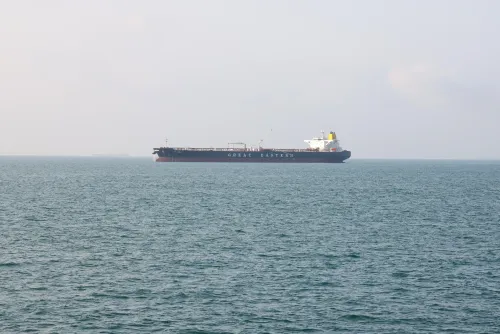
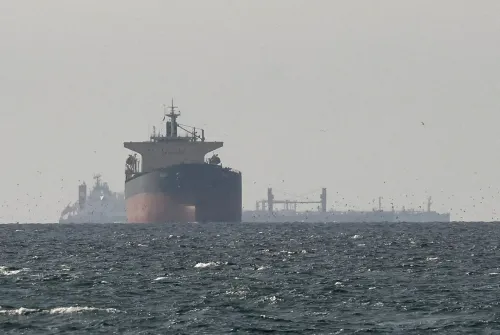
Critical maritime chokepoints — long treated as neutral international corridors — are increasingly being viewed as revenue assets by coastal states, posing a systemic threat to global trade flows and, in particular, to India's energy and commercial supply chains. The trend, flagged in a recent analysis by India Narrative, gained traction after Iran moved to monetise transit through the Strait of Hormuz by levying fees on passing vessels. Now, Indonesia is reportedly signalling a similar intent over the Strait of Malacca.
India's Energy Lifeline Under Pressure
The stakes for India are considerable. Roughly 50 per cent of the country's crude oil imports and nearly 90 per cent of its LPG and LNG imports pass through the Strait of Hormuz, making it India's single largest energy vulnerability. Since the strait's closure, India has been rerouting approximately 70 per cent of its crude imports through longer alternative sea lanes — including the Arctic and Baltic routes — drawing on West African and Russian crude. According to the analysis, this workaround is economically unsustainable over the long term.
Malacca: India's Trade Artery
While the Strait of Malacca is less central to India's energy imports, it carries more than a third of India's total global trade, particularly with Southeast Asia. The analysis draws a sharp distinction: Hormuz is India's energy lifeline; Malacca is its trade artery. Should Indonesia move to impose transit taxes or regulatory controls on Malacca, the consequences would not be marginal — they would be systemic, the analysis argues. Costs would rise unpredictably, and India's exposure to political decisions beyond its control would deepen, turning transit itself into a subject of economic and geopolitical negotiation.
Strategic Investments India Is Already Making
India has begun responding on multiple fronts. Investments in port infrastructure, expansion of domestic refining capacity, and the building of strategic petroleum reserves are under way. The development of Andaman and Nicobar Islands — and proposals for a trans-shipment hub at Great Nicobar — offer added strategic depth. Their proximity to the western approaches of the Strait of Malacca enables closer monitoring of maritime traffic and strengthens India's footprint in a critical corridor.
On the supply side, India could reduce chokepoint exposure by sourcing more oil from Western, Russian, and African suppliers, leaning more on overland and multi-modal corridors, and investing further in regional connectivity infrastructure.
The Long-Term Fix: Energy Transition
The analysis argues that the most durable solution lies not in rerouting but in reducing the volume of energy that travels long maritime routes in the first place. Domestic electrification of transport, expansion of renewable energy generation, and scaling up non-fossil base-load capacity would directly lower chokepoint risk — converting external dependence into domestic capacity. Strengthening strategic reserves, meanwhile, can provide a buffer against market volatility even when transit constraints cannot be controlled.
What Comes Next
Indonesia's posture on the Strait of Malacca may or may not crystallise into near-term policy. Even so, the signal itself introduces a new layer of strategic risk. For India, the analysis concludes, the response demands more than incremental adjustments — it requires an integrated framework that links energy planning with maritime strategy, and economic policy with geopolitical assessment.
Point of View
Not a temporary disruption — and India's exposure is asymmetric. Hormuz and Malacca together cover both its energy supply chain and its commercial trade routes, leaving virtually no strategic slack. India's current workarounds — longer Arctic and Baltic routes, diversified sourcing — are stopgaps, not solutions. The more uncomfortable truth the analysis surfaces is that India's real hedge is not maritime at all: it is domestic energy transition. Every gigawatt of renewable capacity built and every electric vehicle on the road is, in effect, a unit of geopolitical independence. That framing has yet to enter mainstream energy policy discourse with the urgency it warrants.
NationPress
7 Oct 2026
Frequently Asked Questions
Why are the Strait of Hormuz and Strait of Malacca being called chokepoints for India?
Both straits carry critical volumes of India's energy and trade. About 50 per cent of India's crude oil and nearly 90 per cent of its LPG and LNG imports pass through the Strait of Hormuz, while over a third of India's total global trade — particularly with Southeast Asia — transits the Strait of Malacca. Any fee, closure, or regulatory control on these passages directly threatens India's supply chains.
What has Iran done with the Strait of Hormuz?
Iran has exploited its geographical position to levy fees on ships transiting the Strait of Hormuz, effectively monetising a passage that was previously treated as a neutral international corridor. This move has prompted India to reroute roughly 70 per cent of its crude imports through longer Arctic and Baltic sea lanes.
Is Indonesia planning to charge fees on the Strait of Malacca?
Indonesia has reportedly signalled that it is contemplating steps similar to Iran's to raise revenue from the Strait of Malacca. No formal policy has been announced yet, but the signal itself is seen as introducing a new layer of strategic risk for countries dependent on the passage, including India.
How is India responding to chokepoint risks?
India has begun investing in port infrastructure, expanding domestic refining capacity, and building strategic petroleum reserves. It is also developing the Andaman and Nicobar Islands — including a proposed trans-shipment hub at Great Nicobar — to strengthen its maritime presence near the western approaches of the Strait of Malacca.
What is the long-term solution for India to reduce chokepoint vulnerability?
Analysts argue the most sustainable fix is reducing the volume of energy that travels long maritime routes altogether. This means accelerating domestic electrification of transport, scaling up renewable energy generation, and expanding non-fossil base-load capacity — converting external energy dependence into domestic capacity and directly lowering exposure to chokepoint risk.