Over Two-Thirds of India's LNG Imports Tied to Strait of Hormuz: Analysis
Synopsis
A recent report uncovers that nearly 69% of India's LNG imports for 2025 are sourced from West Asian countries, with significant implications for the energy sector if the Strait of Hormuz faces disruptions. This highlights the vulnerability of terminals and gas supply chains across the nation.
Key Takeaways
69% of India’s LNG imports linked to the Strait of Hormuz.
Potential disruptions could impact terminal utilization and margins.
Petronet LNG's Dahej terminal has the highest exposure.
Smaller terminals face significant risks due to reliance on Middle Eastern LNG.
GAIL remains resilient with diversified contracts.
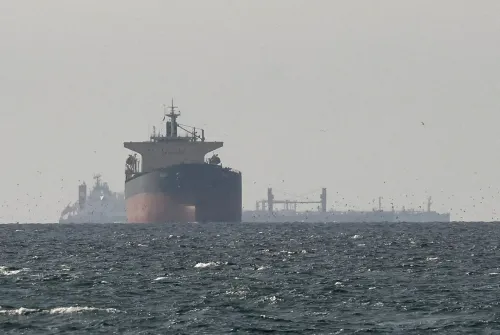
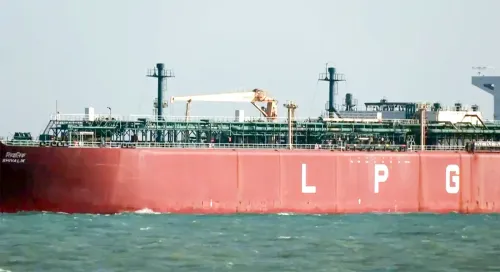
New Delhi, March 6 (NationPress) Approximately 69 percent of India’s liquefied natural gas (LNG) imports for the year 2025, totaling 17.5 million tonnes (63 mmscmd), originated from West Asian nations including Qatar, the UAE, and Oman, traversing or near the Strait of Hormuz, according to a report released on Friday.
After accounting for GAIL’s LNG swap volumes from the US, the effective risk exposure adjusts to 66 percent, indicating that concentration risk is still substantial, as noted by analysts from Elara Capital.
The report emphasizes that any disruption within the Hormuz corridor could sequentially impact the industry, affecting everything from terminal usage to transmission capacity and downstream industrial profit margins.
The highest terminal-level exposure is observed at Petronet LNG’s Dahej terminal, which processed 14.8 million tonnes in 2025, with 76 percent of its volumes sourced through the Strait.
Smaller terminals such as Kochi and Chhara are completely reliant on the Middle East, while Mundra (with 88 percent reliance), Dhamra (65 percent), and Ennore (62 percent) are also significantly at risk, according to the brokerage's findings. In contrast, Hazira (25 percent) and Dabhol (0 percent) benefit from LNG sourced outside the region, including the US, Russia, and Australia.
PLNG and Gujarat State Petronet are notably the most susceptible to supply disruptions.
With 77 percent of its exposure linked to the Strait, PLNG’s regasification earnings are directly impacted; the company has already issued force majeure notices to GAIL, IOCL, and BPCL due to interruptions at Ras Laffan, Qatar. Similarly, GUJS faces risks with 62 percent of its transmission volume for CY25 dependent on the Strait.
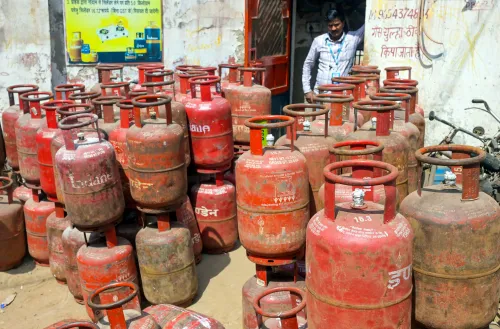
Gujarat Gas Ltd (GGL) is at risk in terms of both margins and supply, as LNG constitutes 73 percent of its provision, primarily catering to the Morbi industrial zone.
With a 48 percent dependence on the Strait, soaring spot LNG prices could undermine GGL's competitiveness against alternative fuels like propane, as indicated in the report.
The firm has also notified industrial customers about force majeure and plans to limit supply starting March 6, 2026, potentially reducing Daily Contracted Quantities (DCQ) for its industrial clients, the brokerage added.
GAIL’s marketing division, with only 16 percent exposure, remains the most resilient due to its diverse contracts from the US, Russia, and Australia, with actual dependency estimated at 30 percent, according to the brokerage.
Point of View
Particularly concerning LNG sourced from the Middle East. It reveals significant risks associated with reliance on the Strait of Hormuz, emphasizing the need for diversified sourcing strategies to mitigate potential disruptions.
NationPress
27 Sept 2026
Frequently Asked Questions
What percentage of India's LNG imports come from West Asia?
Approximately 69% of India's LNG imports in 2025 will come from West Asian countries, such as Qatar, the UAE, and Oman.
How does the Strait of Hormuz affect India's LNG supply?
The Strait of Hormuz is a critical transit route for LNG imports, and any disruption could significantly impact terminal utilization and downstream margins.
Which terminal has the highest exposure to the Strait?
Petronet LNG's Dahej terminal has the highest exposure, handling 14.8 million tonnes in 2025, with 76% of its volumes sourced via the Strait.
What risks do smaller terminals face?
Smaller terminals like Kochi and Chhara are entirely dependent on Middle Eastern LNG, exposing them to higher risk levels.
How does GAIL's marketing segment compare?
GAIL’s marketing segment is the most resilient with only 16% exposure, supported by diversified contracts from the US, Russia, and Australia.