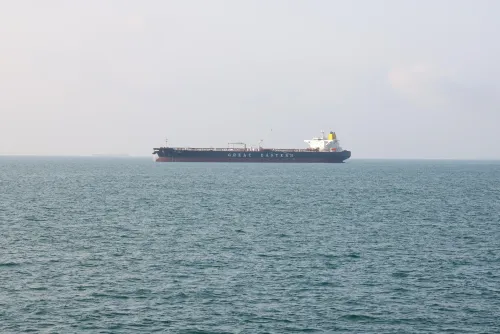
First loaded LNG tanker crosses Strait of Hormuz since West Asia conflict began
Synopsis
For the first time since the West Asia conflict began on 28 February, a loaded LNG tanker has reportedly crossed the Strait of Hormuz — a chokepoint carrying one-fifth of global LNG supply. The Mubaraz's passage is a fragile signal of relief, but with US-Iran diplomacy at a stalemate and Brent crude above $109, the energy crisis is far from over.
Key Takeaways
LNG tanker Mubaraz reportedly crossed the Strait of Hormuz — the first confirmed loaded LNG transit since the West Asia conflict began on 28 February .
The vessel loaded cargo from ADNOC's Das Island facility and is headed to China , with an estimated arrival of 15 May .
Ship movements through the strait had fallen to near zero over the previous two months amid reciprocal blockades by Iran and the United States .
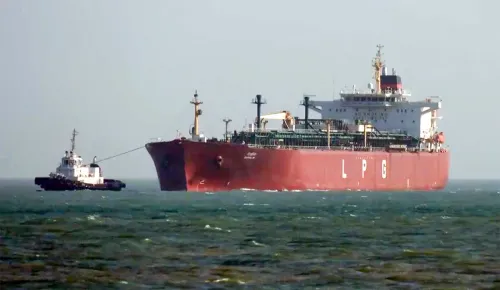
Indian vessel Green Asha earlier carried 15,400 tonnes of LPG through the strait, reaching JNPA, Navi Mumbai safely.
Brent crude rose 1% to $109.46 per barrel ; WTI gained 1.22% to $97.55 amid ongoing supply uncertainty.
US-Iran diplomacy remains at a stalemate, with President Trump reportedly unsatisfied with Iran's latest proposal over its nuclear programme.
The first loaded liquefied natural gas (LNG) tanker since the West Asia conflict began on 28 February has reportedly traversed the Strait of Hormuz, signalling a potential breakthrough at one of the world's most critical energy chokepoints, according to ship-tracking data cited in reports on Tuesday, 28 April. The development comes after nearly two months of near-zero LNG shipments through the strait, which carries roughly one-fifth of the world's LNG supply.
The Mubaraz Transit
The LNG tanker Mubaraz, which loaded cargo from Abu Dhabi National Oil Company (ADNOC)'s Das Island facility in early March, was tracked passing the southern tip of India on Monday, according to ship-tracking data. The vessel had remained idle inside the Persian Gulf for weeks and had stopped transmitting signals around 31 March before reappearing west of India. At the time of reporting, the Mubaraz was signalling a terminal in China as its destination, with an estimated arrival of 15 May.
Weeks of Near-Zero Shipments
Ship movements through the Strait of Hormuz had dropped to near zero over the previous two months amid escalating tensions and reciprocal blockades imposed by Iran and the United States. Several vessels carrying Qatari LNG had approached the strait in recent weeks but turned back due to persistent geopolitical pressures. Earlier in April, tracking data had indicated an empty LNG tanker exiting the strait — however, no loaded LNG cargo had been confirmed to have completed the transit until the Mubaraz's reported passage. This makes the Mubaraz's movement the first confirmed loaded LNG transit since the conflict began.
India's Earlier Breakthrough
Notably, earlier in April, the Indian merchant vessel Green Asha had crossed the Strait of Hormuz and safely reached Jawaharlal Nehru Port Authority (JNPA) in Navi Mumbai, carrying 15,400 tonnes of liquefied petroleum gas (LPG), according to the Indian government. That transit had been closely watched as an early indicator of whether commercial shipping could resume through the strait.
Diplomatic Stalemate Persists
Despite the apparent shipping breakthrough, the broader geopolitical situation remains unresolved. US President Donald Trump was reportedly unsatisfied with Iran's latest proposal, as it did not address the country's nuclear programme.
Point of View
The structural risk to global LNG supply remains acute. The real question is whether this transit triggers a queue of waiting vessels or remains an isolated data point. India, as a major LNG importer, has particular stakes here: every week of Hormuz disruption tightens domestic energy costs and widens the import bill at a time when the rupee is already under pressure.
NationPress
19 Sept 2026
Frequently Asked Questions
What is the significance of the LNG tanker Mubaraz crossing the Strait of Hormuz?
The Mubaraz is reportedly the first loaded LNG tanker to cross the Strait of Hormuz since the West Asia conflict began on 28 February 2025. The strait carries roughly one-fifth of the world's LNG supply, making this transit a closely watched indicator of whether energy shipments from the region can resume.
Why had LNG shipments through the Strait of Hormuz stopped?
Ship movements through the strait dropped to near zero over two months due to escalating tensions and reciprocal blockades imposed by Iran and the United States following the outbreak of the West Asia conflict on 28 February. Several Qatari LNG tankers approached the strait but turned back amid the standoff.
Where is the Mubaraz headed and when will it arrive?
According to ship-tracking data, the Mubaraz was signalling a terminal in China as its destination, with an estimated arrival date of 15 May. It loaded cargo from ADNOC's Das Island facility in early March before remaining idle in the Persian Gulf for weeks.
What is Iran's position on reopening the Strait of Hormuz?
Iran has reportedly offered to reopen the Strait of Hormuz if the United States lifts its blockade and hostilities end. However, US President Donald Trump was reportedly unsatisfied with Iran's proposal, as it did not address the country's nuclear programme, leaving the diplomatic situation at a stalemate.
How have oil prices been affected by the Hormuz disruption?
Oil prices remain elevated, with Brent crude rising 1% to $109.46 per barrel and US West Texas Intermediate (WTI) gaining 1.22% to $97.55 per barrel, reflecting ongoing uncertainty over energy supplies from the region.