Sensex Crashes 983 Points: Oil Spike Drags Nifty Below 24,000
Synopsis
Indian markets cratered on April 25 as Brent crude blasted past $107/barrel amid Strait of Hormuz disruption and collapsed US-Iran talks. The Sensex shed 983 points and Nifty slipped below 24,000, with IT stocks losing 5% in a single session — exposing India's deep vulnerability to global energy shocks.
Key Takeaways
Sensex dropped 982.71 points (1.27%) to close at 76,681.29 on Friday, April 25, 2025 .
Nifty 50 fell 275.10 points (1.14%) to settle at 23,897.95 , slipping below the key 24,000 psychological level.
Brent crude surged 2.07% to $107.25 per barrel , driven by a blockade at the Strait of Hormuz and stalled US-Iran nuclear talks .
The Nifty IT index tanked approximately 5% , with Infosys , TCS , and Tech Mahindra as the top losers.
Broader markets also declined, with Nifty MidCap down 0.96% and Nifty SmallCap falling 0.87% .
Analysts warn that sustained crude above $100/barrel could widen India's current account deficit and stoke inflation, complicating RBI policy decisions in 2025 .
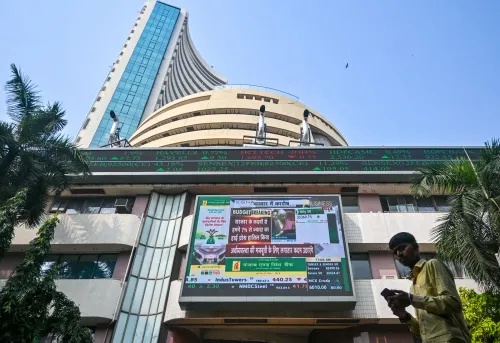
Mumbai, April 25 (NationPress) — Indian stock markets suffered a sharp selloff on Friday, April 25, as soaring global crude oil prices triggered a broad-based decline across sectors. The BSE Sensex plummeted 982.71 points (1.27%) to close at 76,681.29, while the NSE Nifty 50 dropped 275.10 points (1.14%) to settle at 23,897.95 — slipping below the psychologically critical 24,000 mark. The trigger: Brent crude futures surging past $107.25 per barrel, fuelled by a blockade at the Strait of Hormuz and a breakdown in US-Iran nuclear negotiations.
What Triggered the Market Crash
The primary catalyst for Friday's steep decline was a 2.07% spike in Brent crude oil prices, which crossed the $100-per-barrel threshold — a level that historically triggers alarm bells for oil-import-dependent economies like India. The surge was directly linked to escalating disruptions at the Strait of Hormuz, a narrow waterway through which nearly 20% of the world's oil supply transits daily.
Simultaneously, diplomatic efforts to revive the US-Iran nuclear deal stalled, removing any near-term hope of additional Iranian crude supply entering global markets. Analysts noted that the combination of constrained supply and geopolitical uncertainty created a perfect storm for energy prices.
"The week ended on a weak note, with no meaningful progress in Middle East ceasefire discussions and continued disruption in the Strait of Hormuz," a market expert noted, underscoring how geopolitical risks are now directly feeding into domestic equity volatility.
IT Sector Bears the Brunt of Selling
While the oil-price shock set the broader tone, the Nifty IT index bore the heaviest losses — falling approximately 5% in a single session. Infosys, Tata Consultancy Services (TCS), and Tech Mahindra emerged as the top laggards, dragging the technology sector into a sharp correction.
This decline in IT stocks adds to a broader pattern of pressure on Indian technology firms, which have been grappling with slowing discretionary tech spending in the United States and Europe — their two largest revenue markets. Macro headwinds, including fears of a US recession and cautious enterprise IT budgets, have already weighed on sector valuations in 2025.
Beyond IT, the Nifty Pharma and Nifty Media indices also closed in negative territory, compounding the overall market weakness. The Nifty MidCap index fell 0.96% and the Nifty SmallCap index declined 0.87%, confirming that the selloff was not confined to large-cap stocks.
Technical Outlook: Key Levels to Watch
Market analysts flagged the 24,000 level on Nifty as a critical resistance zone. What was previously a support level has now flipped into a supply zone — a bearish technical signal that suggests sellers are dominating at that price point.
"A decisive move above 24,000 is required to ease selling pressure and trigger a recovery towards 24,200, while a break below 23,800 could extend weakness towards the 23,600 level," an analyst stated. Traders and investors will closely monitor these levels in the coming sessions.
Notably, the Nifty Metal index displayed relative resilience, posting the smallest sectoral decline on the day — possibly reflecting expectations that higher oil revenues in Gulf nations could boost infrastructure and steel demand in the medium term.
Macroeconomic Implications for India
India imports approximately 85% of its crude oil requirements, making it acutely vulnerable to global energy price shocks. A sustained rise in oil prices above $100 per barrel carries multiple inflationary consequences: higher fuel costs feed directly into transportation, food, and manufacturing expenses — effectively acting as a tax on the entire economy.
Experts warned that elevated crude prices could widen India's current account deficit (CAD), which had shown signs of narrowing in recent quarters. A wider CAD typically puts downward pressure on the Indian rupee, which in turn raises import costs further — creating a feedback loop that the Reserve Bank of India (RBI) would need to manage carefully.
This comes amid an already complex macroeconomic backdrop. The RBI has been navigating a delicate balance between supporting growth and managing inflation. A fresh oil-driven inflationary impulse could complicate its rate-cut calculus for the remainder of 2025.
What to Expect in the Sessions Ahead
Market participants will closely track developments in Middle East geopolitics, particularly any movement in US-Iran talks or changes to the Strait of Hormuz situation over the weekend. Any de-escalation could provide relief to both crude oil prices and equity markets when trading resumes.
Domestically, upcoming Q4 FY2025 corporate earnings — especially from IT majors — and any commentary from the RBI on inflation management will be key drivers. If Brent crude remains elevated above $100 per barrel, expect continued pressure on broader indices, with the Nifty 23,600–23,800 band serving as the next critical support zone to defend.
Point of View
A single geopolitical flashpoint thousands of kilometres away in the Strait of Hormuz can instantly erase billions in market capitalisation and threaten the rupee. What's missing from the mainstream narrative is the urgency around India's long-delayed energy diversification strategy — renewable energy targets exist on paper, but the economy remains as oil-hostage as ever. Until that structural vulnerability is addressed, every Middle East crisis will continue to be India's financial crisis too.
NationPress
19 Sept 2026
Frequently Asked Questions
Why did Sensex fall today on April 25, 2025?
The Sensex fell 982.71 points on April 25, 2025, primarily due to a sharp surge in global crude oil prices, which crossed $107 per barrel amid disruptions at the Strait of Hormuz and stalled US-Iran nuclear talks. IT stocks, including Infosys, TCS, and Tech Mahindra, also declined sharply, compounding the selloff.
What is the Strait of Hormuz and why does it affect Indian markets?
The Strait of Hormuz is a narrow waterway between Iran and Oman through which approximately 20% of the world's daily oil supply passes. Any disruption there directly spikes global crude prices, which is a major concern for India since the country imports around 85% of its crude oil needs, making it highly sensitive to energy price shocks.
What are the key Nifty support and resistance levels to watch?
Analysts have identified 24,000 as a critical resistance zone for Nifty, which has transitioned from a support level to a supply zone. A sustained move above 24,000 could trigger recovery towards 24,200, while a break below 23,800 may push the index towards 23,600.
How does rising crude oil price impact India's economy?
Rising crude oil prices increase India's import bill, widen the current account deficit, and fuel domestic inflation across fuel, food, and manufacturing sectors. A sustained rise above $100 per barrel can also weaken the Indian rupee and complicate the RBI's monetary policy decisions.
Which sectors were worst affected in today's stock market fall?
The Nifty IT index was the worst performer, falling around 5%, with Infosys, TCS, and Tech Mahindra as the top losers. Nifty Pharma and Nifty Media also ended in the red, while the Nifty Metal index showed relative resilience with the smallest sectoral decline.