Indian Markets Retreat: Sensex and Nifty End Five-Day Rally Amid Oil Price Surge

Synopsis
On April 9, the Indian markets saw a decline as rising oil prices and geopolitical uncertainties led to a halt in the five-day gaining streak of the Sensex and Nifty indices. Experts highlight the need for significant market movements to restore investor confidence.
Key Takeaways
Indian equity benchmarks fell due to rising oil prices.
Nifty closed 0.93% lower, while Sensex dropped by 1.20%.
Broader markets showed resilience despite the downturn.
Geopolitical tensions contribute to market volatility.
Experts suggest a need for significant moves to restore investor confidence.
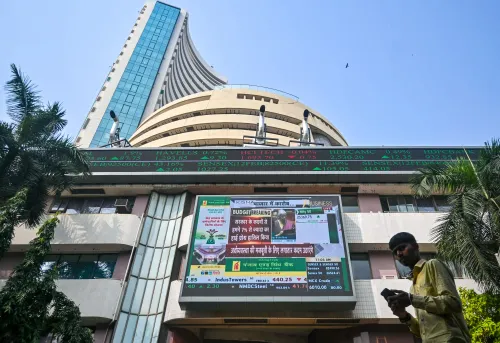
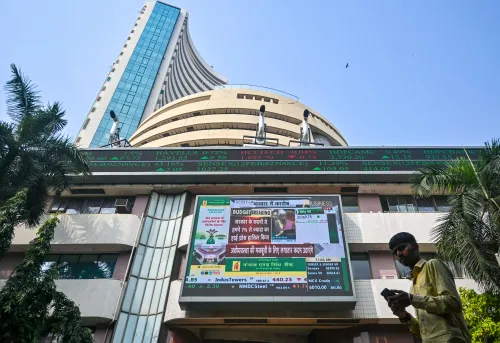
Mumbai, April 9 (NationPress) The Indian equity benchmarks fell on Thursday, halting a five-day upward trend, primarily due to increasing oil prices and concerns regarding the US-Iran ceasefire impacting investor confidence.
The Nifty index finished down by 0.93 percent, decreasing by 222.25 points to close at 23,775.10. Similarly, the Sensex experienced a significant drop, closing at 76,631.65, which reflects a decline of 1.20 percent or 931.25 points.
Experts analyzing the Nifty's technical perspective noted that the intraday charts indicated a range-bound price action with a slight bearish inclination, characterized by the formation of lower highs, suggesting ongoing selling pressure.
“A significant and consistent movement above 24,000 is essential to enhance market sentiment and affirm strength, while failing to maintain above 23,600 may lead the index into further downward pressure,” commented one analyst.
Notable selling activity was observed in major stocks, with Jio Financial Services, InterGlobe Aviation, and Larsen & Toubro being the biggest losers within the Nifty index.
Despite the decline in the main indices, broader market segments showed some resilience, with the Nifty MidCap and Nifty SmallCap indices posting gains of 0.25 percent and 0.20 percent, respectively.
Sector-wise, banking stocks contributed to the market's downturn, with both the Nifty Private Bank and Nifty Bank indices trailing behind their counterparts.
Conversely, metal stocks lent some support, with the Nifty Metal index emerging as the best-performing sector.
Investor sentiment remains cautious amid escalating geopolitical tensions. Iran’s Parliament Speaker, Mohammad Bagher Ghalibaf, expressed significant distrust towards the United States, pointing to repeated violations of agreements.
He highlighted Israel’s ongoing attacks on Lebanon and reported drone activities in Iranian airspace as contributing factors to the strained atmosphere, according to a statement shared on social media.
Experts noted that revived worries over the ceasefire's stability, coupled with rising oil prices, have added to market volatility, prompting profit-taking following the recent rally.
Meanwhile, the Indian rupee's five-day surge came to an abrupt end, retreating alongside its Asian counterparts.
“The spot USDINR is anticipated to trade within a range of 92.50 to 93.40, as traders weigh global energy risks against domestic capital outflows,” stated a market expert.
Point of View
It's vital to recognize the impact of global events on our local markets. Today's decline in the Sensex and Nifty reflects the delicate balance investors must navigate amidst rising oil prices and geopolitical uncertainties. Consistency in market performance remains crucial for long-term growth.
NationPress
23 Sept 2026
Frequently Asked Questions
What caused the decline in Sensex and Nifty?
The decline was primarily driven by rising oil prices and uncertainty around the US-Iran ceasefire, which weighed heavily on investor sentiment.
Which stocks were the biggest losers?
Jio Financial Services, InterGlobe Aviation, and Larsen & Toubro were among the top losers in the Nifty index.
How did the broader market perform?
Despite the main indices declining, the Nifty MidCap and Nifty SmallCap indices managed to close in positive territory.
What are the implications of the current market conditions?
The current conditions suggest a cautious investor sentiment, with potential volatility as concerns over global events persist.
What is the forecast for the Indian rupee?
The spot USDINR is expected to trade within a range of 92.50 to 93.40 as traders weigh global energy risks against domestic capital outflows.