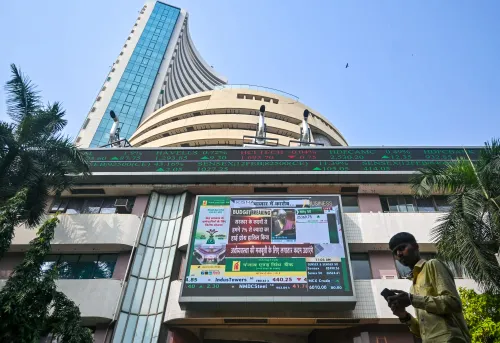
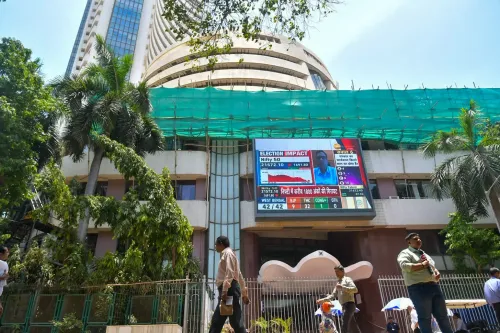
Indian Stock Markets Plummet as Geopolitical Tensions Rise
Synopsis
The Indian stock markets faced a steep decline on March 23, with the Sensex dropping 1,836 points and the Nifty falling by 2.6%, driven by escalating tensions between the US and Iran. This situation has triggered widespread investor anxiety.
Key Takeaways
Sensex dropped by 1,836 points.
Nifty fell by 2.6 percent.
Market volatility surged; India VIX rose over 17 percent.
Construction sector faced the biggest losses.
Crude oil prices increased amid geopolitical tensions.
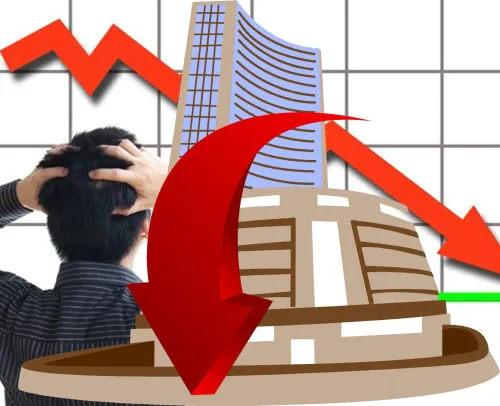
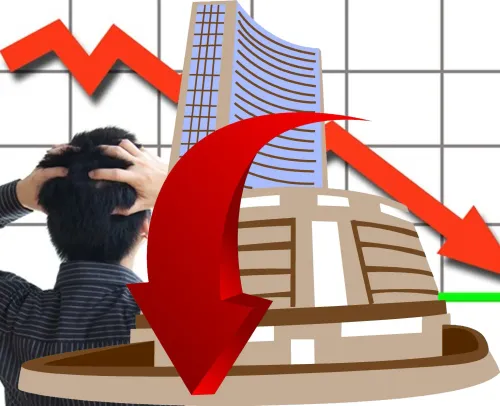
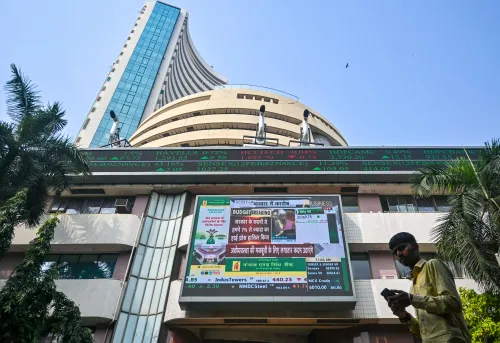
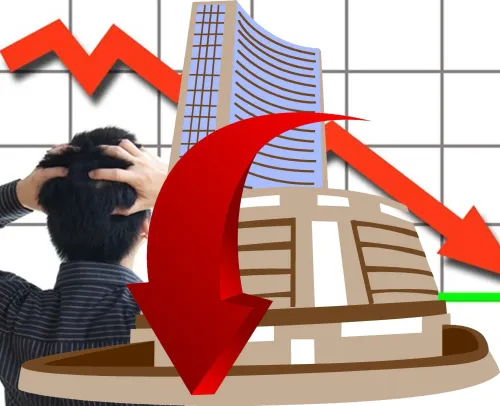
Mumbai, March 23 (NationPress) The Indian stock markets experienced a significant downturn on Monday, with the Sensex plummeting by 1,836 points and the Nifty declining by 2.6 percent, primarily due to escalating tensions between the US and Iran that unnerved investors.
The Sensex concluded at 72,696.39, reflecting a drop of 2.46 percent or 1,836.57 points, while the Nifty ended at 22,512.65, down 601.85 points or 2.60 percent.
Market analysts noted that the technical outlook for the Nifty indicates a predominantly bearish trend, characterized by a consistent pattern of lower highs and lower lows, which suggests robust downward momentum.
“The immediate resistance now lies within the 22,650–22,700 range, while the 22,900–23,000 zone poses a significant supply barrier, corresponding with earlier breakdown points,” remarked one analyst.
The steep decline was driven by heightened geopolitical uncertainty in the Middle East, prompting aggressive sell-offs across various sectors.
Market volatility surged sharply, with the India VIX rising by over 17 percent to close at 26.73.
Broader market indices suffered even more substantial losses than the benchmarks. The Nifty MidCap index fell by 3.69 percent, and the Nifty SmallCap index dropped by 4.16 percent.
Construction-related stocks were particularly affected, with the Nifty Construction Durable index decreasing by over 5 percent.
Similarly, real estate and metal stocks witnessed significant declines. However, IT stocks showed relative strength, sustaining the least losses during the trading session.
The market's downturn coincided with a spike in crude oil prices, which surged amidst the intensifying tensions between the United States and Iran.
Brent crude prices climbed to $108.73 per barrel, marking a gain of 2.37 percent, following warnings from US President Donald Trump of severe consequences if Iran did not reopen the Strait of Hormuz within 48 hours.
In retaliation, Iran threatened to target energy infrastructure in the Middle East.
Meanwhile, Prime Minister Narendra Modi, during a session in the Lok Sabha, stated that the government is actively working to ensure a stable energy supply through the Strait of Hormuz, which is crucial for global oil transport.
These developments have heightened concerns over energy security and inflation, leading to increased caution among investors and a notable sell-off in equities.
Point of View
It's crucial to recognize the impact of geopolitical tensions on financial markets. Today's drastic movements in the Sensex and Nifty reflect investor anxiety stemming from uncertainty in the Middle East, underscoring the need for vigilant market analysis.
NationPress
22 Sept 2026
Frequently Asked Questions
What caused the recent decline in the Indian stock market?
The decline was primarily driven by escalating geopolitical tensions between the US and Iran, which spooked investors and led to heavy sell-offs.
How much did the Sensex and Nifty drop?
The Sensex dropped by 1,836 points, while the Nifty fell by 2.6 percent.
What sectors were most affected by the market downturn?
Construction-related stocks were hit hardest, with the Nifty Construction Durable index falling over 5 percent, while realty and metal stocks also experienced significant declines.
How did crude oil prices react to the geopolitical tensions?
Crude oil prices surged, with Brent crude rising to $108.73 per barrel due to the escalating tensions.
What measures is the Indian government taking regarding energy supply?
Prime Minister Narendra Modi stated that the government is working to ensure uninterrupted energy supply through the Strait of Hormuz, a critical global oil transit route.